Remittances and Mobile Money: Somaliland’s Financial Backbone
Somaliland remittances passed US$1.2 billion in 2025, according to official figures. Here is how diaspora money, Somali-run transfer companies and mobile wallets such as Zaad and e-Dahab became the country’s financial infrastructure, and what that means for investors.
OPPORTUNITIES · ECONOMY
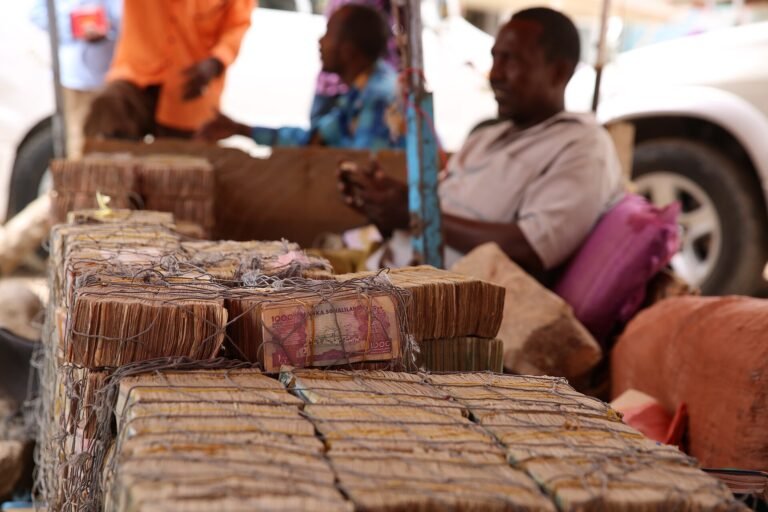
Somaliland’s economy runs on two connected systems. Money arrives from relatives abroad, and much of it then moves around the country by phone. Together they help pay for school fees, medical care and electricity bills. This article looks at the big picture: how large the flows are, who built the channels and how they are regulated. If you are visiting and want to know how to pay for things, read our practical guide to money in Somaliland.
How big are Somaliland remittances?
The government’s Central Statistics Department publishes yearly figures, sourced from the central bank. In 2025, inward remittances reached US$1,287.3 million, the highest level in the five years reviewed. The same report puts 2025 GDP at current prices at US$4,435 million. By our calculation from those two figures, remittances were equal to about 29% of GDP.
The flows are large but not steady. The table below shows the official series.
| Year | Inward remittances (US$) | Change |
|---|---|---|
| 2021 | 852.3 million | – |
| 2022 | 1,248.1 million | +46.4% |
| 2023 | 1,000.0 million | −19.9% |
| 2024 | 1,121.6 million | +12.2% |
| 2025 | 1,287.3 million | +14.8% |
Source: Leading Macro-Economics Indicators, Central Statistics Department, Ministry of Planning and National Development.
The report itself describes remittances as both an important and a vulnerable source of foreign exchange and household income. This is not new. Back in 2012, the World Bank estimated that Somaliland’s trade deficit of about US$496 million was financed through remittances and external aid.
What remittances mean for households
The most detailed household picture comes from a 2012 survey by FSNAU, the FAO-managed food security unit. It found that 44% of Somaliland households received remittances from abroad: 53% in towns and 32% in rural areas. Recipients received an average of US$271 a month.
The money is used for everyday needs. Among households helped by better-off relatives, the same survey found that 62% used the support for school fees and 55% for medical costs. The figures are more than a decade old, so treat them as a guide rather than a current count.
From hawala to Dahabshiil
After the civil war, remittances to the Somali regions flowed mainly through the hawala system, according to a World Bank summary. The same summary counts more than 20 money transfer operators, led by Dahabshiil, Amal Express and Taaj.
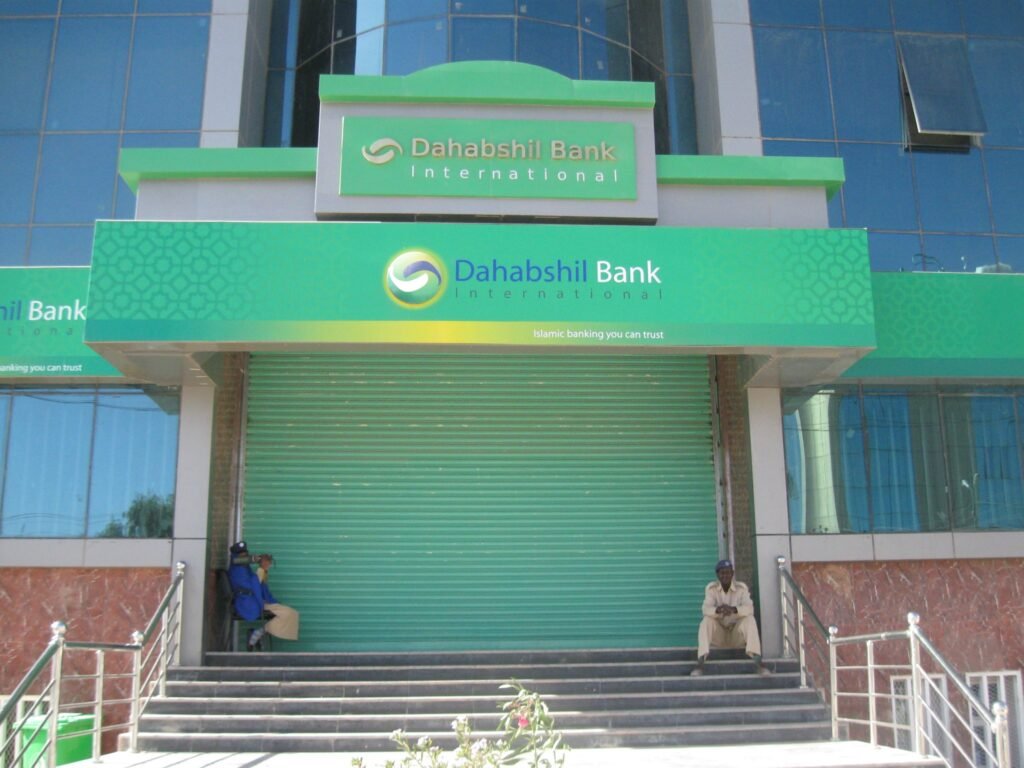
The best known is Dahabshiil, which was founded by Mohamed Said Duale in Burao and is now headquartered in Dubai. In the FSNAU survey, 93% of recipients in Somaliland and Puntland received their money through Somali money transfer companies, with Dahabshiil the largest.
The channels have faced pressure from abroad. In 2013, Al Jazeera reported that Barclays planned to close the accounts of about 250 UK remittance companies, including Dahabshiil. Dahabshiil won a High Court interim injunction on 5 November 2013. The World Bank notes that banks in several countries have de-risked by closing money services business accounts.
Zaad and e-Dahab: the country’s payment rail
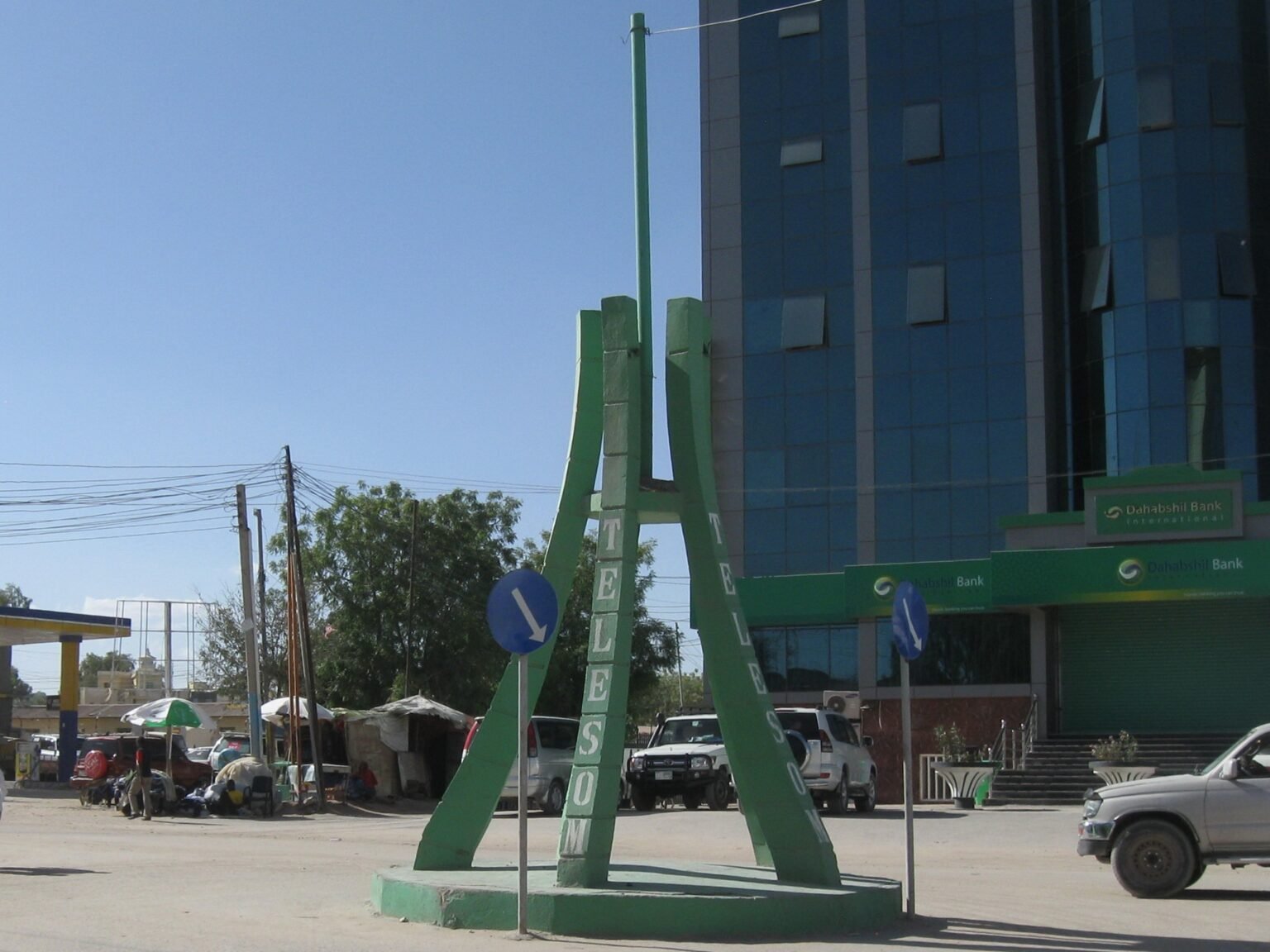
At home, the bigger change came through the phone. Telesom, founded in Hargeisa in 2002, launched Zaad, the country’s first mobile money service, in June 2009, according to a GSMA case study. By April 2013, it had more than 368,000 customers and 8,600 merchants. The same study found that 85% of the 12,000 customers of Kaah, the main electricity provider, paid their bills through Zaad.
Dahabshiil followed with its own service, e-Dahab, in late 2014. By 2018, The National reported that Zaad and eDahab dominated the market and described Somaliland as a candidate for the world’s first cashless society.
World Bank research shows how deep this goes across the Somali regions. World Bank research published in 2017 found that 73% of people used mobile money, against 15% with a formal bank account. Nearly two-thirds of users kept funds in their mobile accounts rather than cashing out, so wallets work as savings too.
Dollars and shillings
Mobile money began in US dollars. Under central bank rules, dollar transfers and merchant payments are limited to amounts above US$100, and smaller payments use Somaliland shillings. In March 2018, Telesom added M-Exchange, which lets Zaad users swap dollars for shillings at rates offered by licensed exchange companies.
Regulation: the Bank of Somaliland’s role
Somaliland declared independence from Somalia in 1991 and governs itself; Somalia regards it as part of its territory, and Israel (December 2025) is so far the only UN member state to recognise it. In practice, Somaliland runs its own central bank and financial laws, separate from Mogadishu.
The Bank of Somaliland was established in October 1994. According to NYU’s GlobaLex guide, Central Bank Law No. 54/2012 took effect in April 2012, and a Law on Islamic Banking was signed in October 2012. A money transfer law, Law No. 86/2019, came into force on 2 May 2019.
Somaliland remittances: what they mean for investors
For investors, Somaliland remittances and mobile money are both a market and a foundation. With nearly three in four people using mobile money in the World Bank survey above, a new shop, school or utility can expect many customers to pay by phone.
The research also points to gaps. The World Bank authors called for trusted know-your-customer systems and shilling-based mobile money, and noted limited interoperability between services. Sending money is also costly. At the end of 2017, the average cost of sending money from the UK to the Somali regions was 7.1%, more than twice the 3% Sustainable Development Goal target.
Those are areas where fintech, compliance and payment services may find room. Rules can change, so check with the Bank of Somaliland before you build a product. Our guides to doing business in Somaliland and how to register a business in Somaliland cover the next steps.
Diaspora money and mobile wallets now underpin much of daily life. To see how Somaliland remittances fit alongside livestock, the port and trade, read Somaliland’s economy explained.
BUSINESS ENQUIRY
Doing business in Somaliland?
Tell us what you need, from a local partner to suppliers or a business visit, and a local partner who knows your field will contact you.
Sources (14)
- Leading Macro-Economics Indicators 2021–2025, Central Statistics Department, Ministry of Planning and National Development, Somaliland, 2026 (accessed 7 November 2026).
- New World Bank GDP and Poverty Estimates for Somaliland, World Bank, 29 January 2014.
- Family Ties: Remittances and Livelihoods Support in Puntland and Somaliland, Laura Hammond et al., FSNAU (FAO), 5 June 2013.
- Somali Poverty and Vulnerability Assessment, Summary of Chapter 6: Remittances, World Bank (accessed 7 November 2026).
- Dahabshiil, Wikipedia (accessed 7 November 2026).
- UK banking ‘tragedy’ plays out for Somalis, Al Jazeera, 2 October 2013.
- Telesom, Wikipedia (accessed 7 November 2026).
- Innovative Inclusion: How Telesom ZAAD Brought Mobile Money to Somaliland, Claire Pénicaud and Fionán McGrath, GSMA Mobile Money for the Unbanked, 2013.
- Mobile money in Somalia, Wikipedia (accessed 7 November 2026).
- Somaliland’s world-leading move towards a cashless culture, Charlie Mitchell, The National, 17 October 2018.
- A game changer: the prospects and pitfalls of mobile money in Somalia, Rachel Firestone, Tim Kelly and Axel Rifon, World Bank Blogs, 25 May 2017.
- Developing a currency exchange functionality to drive mobile money usage, Claire Scharwatt, GSMA (accessed 7 November 2026).
- Researching the Somaliland Legal System, Prof. Mohamoud Hussein Farah, GlobaLex, NYU School of Law, May/June 2020.
- Israel’s first ambassador presents credentials in Somaliland, Africanews, 2 November 2026.
Last checked 7 November 2026. Found an error or something out of date? Tell us.