Traditional Somali Clothing: What People Wear in Somaliland
Traditional Somali clothing is light, colourful and made for the heat. Here is what men and women wear in Somaliland, from the macawiis sarong to the dirac, and how the styles keep changing.
CULTURE · TRADITIONS
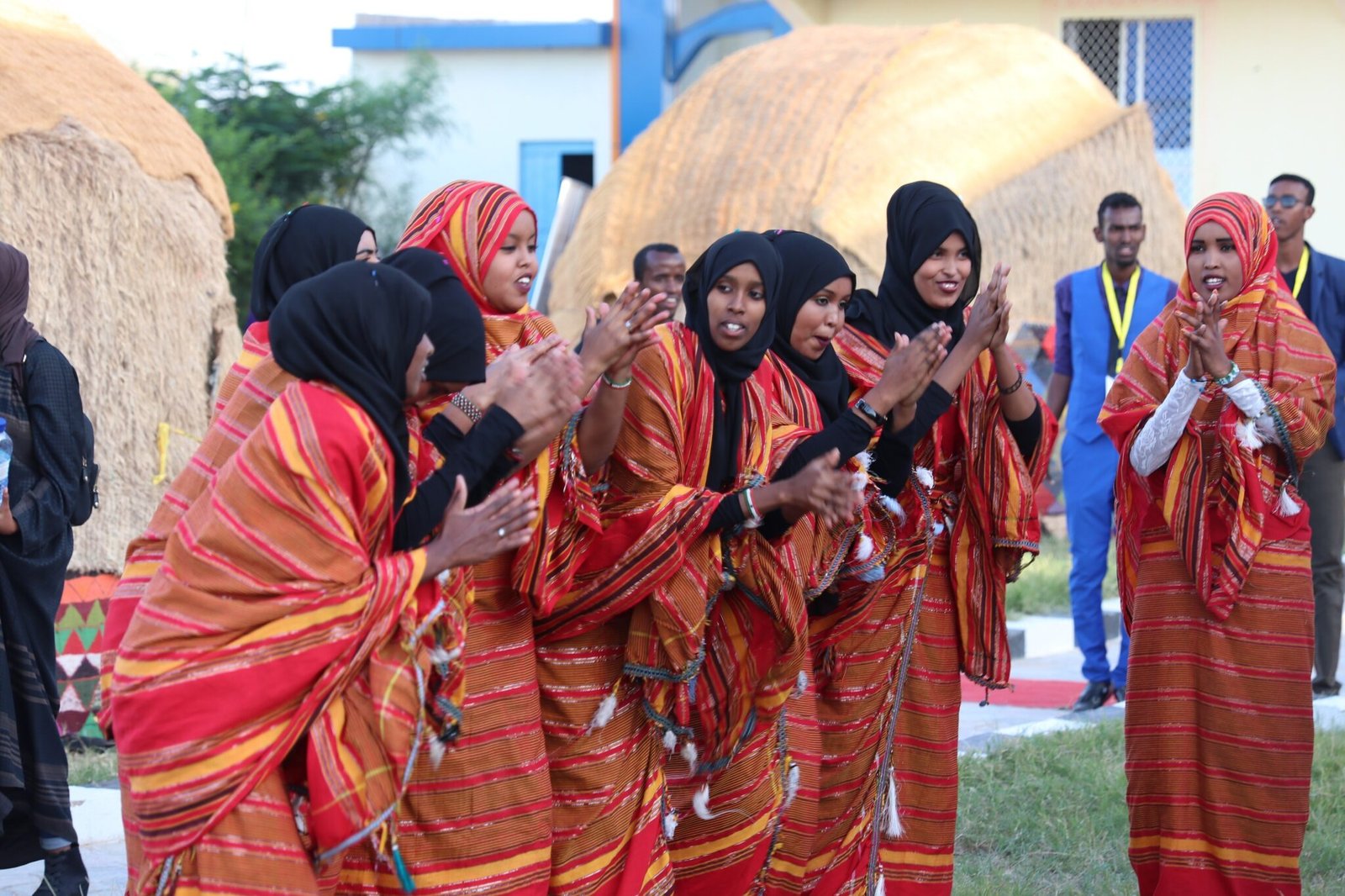
On a busy day in Hargeisa, the clothes on the street tell their own story. Men pass in checked sarongs and embroidered caps. Women’s long dresses and shawls add colour to the markets. This guide explains the garments you will see, what they are called, and how fashions are changing.
Most of these garments are worn by Somalis well beyond Somaliland. The dirac, for example, was popularised in Somalia and Djibouti and then spread to other Somali regions. So where a source covers Somalis in general, we say “Somali”.
Traditional Somali clothing at a glance
Here are the main garments and their Somali names.
| Garment | Worn by | What it is |
|---|---|---|
| Macawiis | Men | A colourful sarong, folded at the waist |
| Koofiyad | Men | An embroidered cap |
| Khamiis | Men | A long robe |
| Guntiino | Women | A long cloth tied over the shoulder and draped around the waist |
| Dirac | Women | A long, light dress for celebrations |
| Gorgorad | Women | An ankle-length underskirt worn with the dirac |
| Garbasaar | Women | A shawl over the head or one shoulder |
| Baati | Women | A cotton house dress |
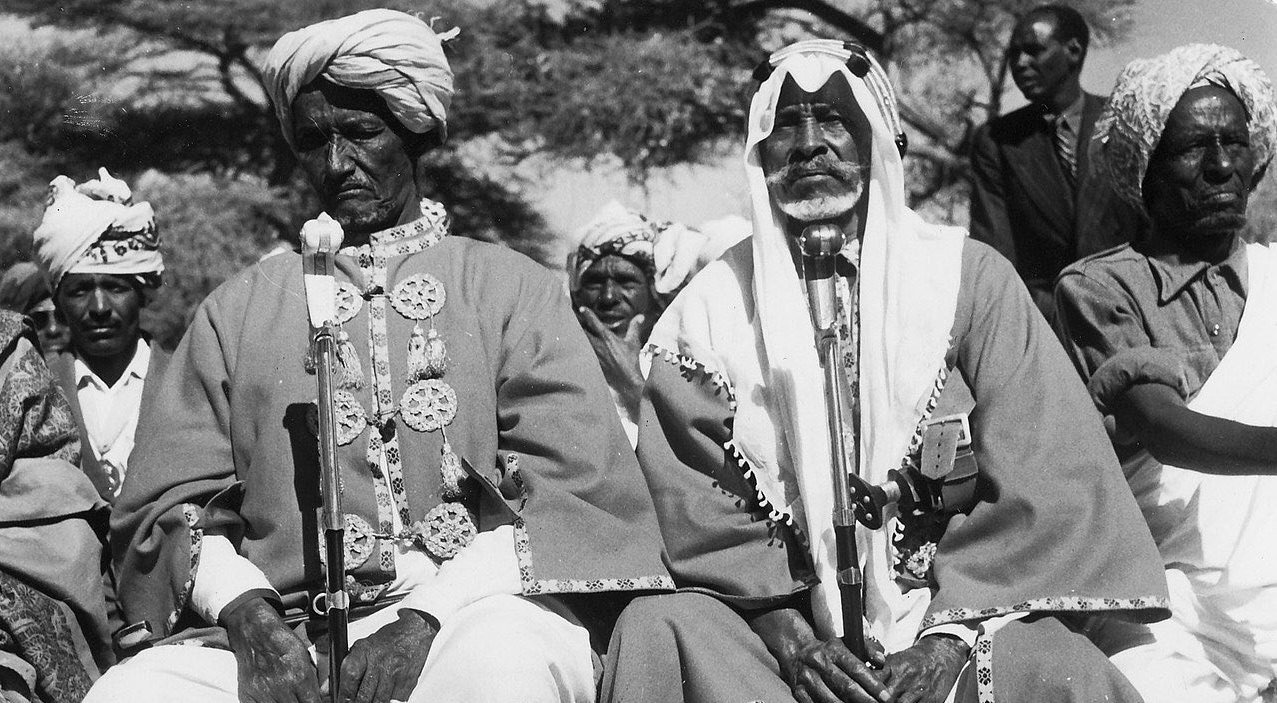
Men’s dress: the macawiis and the koofiyad
Men in Somaliland wear either trousers or the macawiis, a flowing, sarong-like wrap. Somali men have worn the sarong for centuries, originally as a plain white skirt. Today’s macawiis is usually bright, with checks, plaids or simple geometric lines. In fact, black ones are rare.
It is folded several times at the waist to hold it in place. Most are sold pre-sewn as a long circular cloth. Before the 1940s most were cotton, but polyester, nylon and silk are now common too. Over time, Somali men began pairing the macawiis with button-down shirts, writes the dress historian Heather Marie Akou.
Many men add an embroidered cap called the koofiyad. The cap even has a place in a presidential museum. In November 1962, Abdirashid Ali Shermarke, prime minister of the Somali Republic, gave one to President John F. Kennedy at the White House. It is a woven cotton skullcap with a geometric pattern in green, gold and brown. On the southern coast, the town of Barawa is known for its woven caps, the koofiya baraawi.
Most men wear shirts, often with an embroidered shawl. Some wear a long robe known as the khamiis, or khameez. Meanwhile, suits and ties have become more common, especially among the upper class and in government.
Women’s dress: guntiino, dirac and garbasaar
The guntiino is the classic wrap in traditional Somali clothing. It is a cloth of about four yards, tied over the shoulder and draped around the waist. For much of the past, Somali women’s wrappers were plain white.
The dirac is the dress many people picture first. It is long, usually ankle length, and made for hot weather. Underneath goes the gorgorad, an ankle-length underskirt. Chiffon and silk make the sheerest versions, while velvet is one of the least see-through.
Over it goes the garbasaar, a shawl worn loosely over the head or neatly over one shoulder. Akou suggests it may be related to the Indian sari.
How old is the dirac? Accounts differ. Wikipedia’s article says it began in northern Somalia and spread in the early to mid 1900s. The same article also says it only became fashionable in the 1960s, and Akou links it to the years after independence in 1960, when light textiles from India and Japan replaced plain white wrappers. Either way, in the diaspora it has come to stand for traditional Somali dress.
At home, many women wear the baati. It is a loose, short-sleeved cotton house dress, often worn with a matching garbasaar.
Traditional Somali clothing for weddings and Eid
The dirac is above all festive wear. It appears most often at weddings, parties and festivals, and the fanciest sets are sought for weddings. It is also worn for Eid. To see how the holy month and the feast that ends it unfold, read Ramadan in Somaliland.
Weddings are when the best clothes come out. Al Jazeera’s 2020 film Two Weddings, Somali Style follows one wedding in a village and one in Hargeisa. Both involve buying outfits. The preparations include ornate henna, too. For the customs behind the day, from negotiations to the contract, read Inside a Traditional Somaliland Wedding.
Wedding dress keeps evolving, wherever Somalis live. In 2023, London’s Hackney Museum displayed a red and orange outfit typically made and worn for Somali weddings. It has a skirt, a shawl, a waistcoat and orange beads. Its maker bought the fabric locally and worked with a tailor, using Somali dress-making techniques.
Head coverings and changing fashions
In Somaliland, traditional practice requires women to cover at least their hair in public. Somali custom offers several ways to do it. Married women often wear the shash headscarf and the garbasaar, while younger and unmarried women commonly wear the hijab. The jilbab, a longer covering, is also common.
The jilbab has older roots than many assume. In Somali culture it was called the shuka, a word for something that conceals the body.
Traditional Somali clothing has always moved with the times. Akou’s book traces it from the 19th century to today. As one review sums it up, she argues that very few Somali dress practices can be considered “traditional”, because few have a long and continuous history.
Recent decades show both trends. In 2016, IPS reported from Hargeisa that some residents saw colourful Somali robes increasingly replaced by black abayas. Women it interviewed described covering as a personal and religious choice. As one dentist put it: “It’s about what’s inside your head, not what’s over your head.”
Colour has its champions too. In 2012, AFP reported on a London-trained designer who opened a shop in Hargeisa. She sold long, flowing robes in loud colours. She also said she had to persuade customers “that they are not obligated to be in all black”.
Handmade cloth faces its own pressure. In 2018, Africanews reported that cheap imports were pushing Somali textile craftsmen to the brink. Older Somalis were their main customers.
Fabrics and tailors for traditional Somali clothing in Hargeisa
Hargeisa’s Waheen market is the largest market in Somaliland. Before 2022 it had about 2,000 stalls, including tailor shops, and most of the people who worked there were women. One trader the UN spoke to sold clothing, perfumes and cosmetics alongside vegetables.
A fire swept through the market on 1 April 2022. The rebuilt market, with 644 shops, reopened in December 2024. By December 2025, Horn Tribune reported, work on the new meat and vegetable section was about 20% complete. For more of the city’s markets and sights, see things to do in Hargeisa.
Seeing traditional Somali clothing as a visitor
You do not need to wear Somali dress to visit. What matters is modest, comfortable clothing, which our guide to Somaliland etiquette explains.
Still, traditional Somali clothing makes a lovely souvenir. A macawiis or a garbasaar is light and easy to carry home. And if you would like a photo of someone’s outfit, always ask first.
Traditional Somali clothing is at its brightest at celebrations, when the dirac comes out for weddings and festivals. If you are lucky enough to be invited to one, you will see it at its best.
Sources
- Culture of Somaliland, Wikipedia (accessed 28 October 2026), dress-code section citing the Government of Somaliland’s “Our Culture” page.
- Sarong, Wikipedia (accessed 28 October 2026), “Somalia” section.
- Nationalism without a Nation: Understanding the Dress of Somali Women in Minnesota, Heather Marie Akou, in Jean Allman (ed.), Fashioning Africa: Power and the Politics of Dress, Indiana University Press, 2004, pp. 51–63 (via IU ScholarWorks).
- Kofia Hat (MO 63.4915.1), John F. Kennedy Presidential Library and Museum (accessed 28 October 2026).
- Kofia (hat), Wikipedia (accessed 28 October 2026), citing Mohamed Haji Mukhtar, Historical Dictionary of Somalia (2003).
- Dirac (dress), Wikipedia (accessed 28 October 2026).
- Baati (garment), Wikipedia (accessed 28 October 2026).
- Women in Somalia, Wikipedia (accessed 28 October 2026), citing Mohamed Diriye Abdullahi, Culture and Customs of Somalia (2001).
- Two Weddings, Somali Style, Al Jazeera, 6 May 2020.
- Hido Iyo Dhaqan (2024.137), Hackney Museum Collections Online (accessed 28 October 2026).
- The Art of Covering Up in Somaliland, James Jeffrey, Inter Press Service, 10 June 2016.
- Jilbab, Heather Marie Akou, Encyclopedia of Clothing and Fashion, via Encyclopedia.com (accessed 28 October 2026).
- Review of The Politics of Dress in Somali Culture, MacKenzie Moon Ryan, Museum Anthropology Review, vol. 9.
- Culture shock awaits Somali returnees, AFP via Dawn, 22 November 2012.
- Somalia’s traditional textiles fray at the seams as cheap imports flood markets, Victor Muisyo with Mohammed Ibrahim, Africanews, 26 May 2018.
- Waheen Market, Wikipedia (accessed 28 October 2026), citing The Guardian and Al Jazeera (April 2022).
- Nimo Abdillahi Muhumed: Rebuilding from the ashes of the Waheen market fire, United Nations in Somalia (accessed 28 October 2026).
- Hargeisa: Huge fire destroys market in Somali breakaway region, AFP via Al Jazeera, 2 April 2022.
- Central Bank Director General Inspects Progress on Waaheen Market Reconstruction Project, Maxamuud Walaaleeye, Horn Tribune, 24 December 2025.
- Waaheen Market Rebuilt: Somaliland’s Symbol of Resilience and Modernization, Horn Diplomat, 3 December 2024.
Last checked 28 October 2026. Found an error or something out of date? Tell us.