Burao: A Profile of Somaliland’s Second City
Burao is Somaliland’s second-largest city and the capital of the Togdheer region. Here is its story: a seasonal river, some of the largest livestock markets in the Horn of Africa, and a central place in the events of 1991.
PLACES · CITY PROFILE
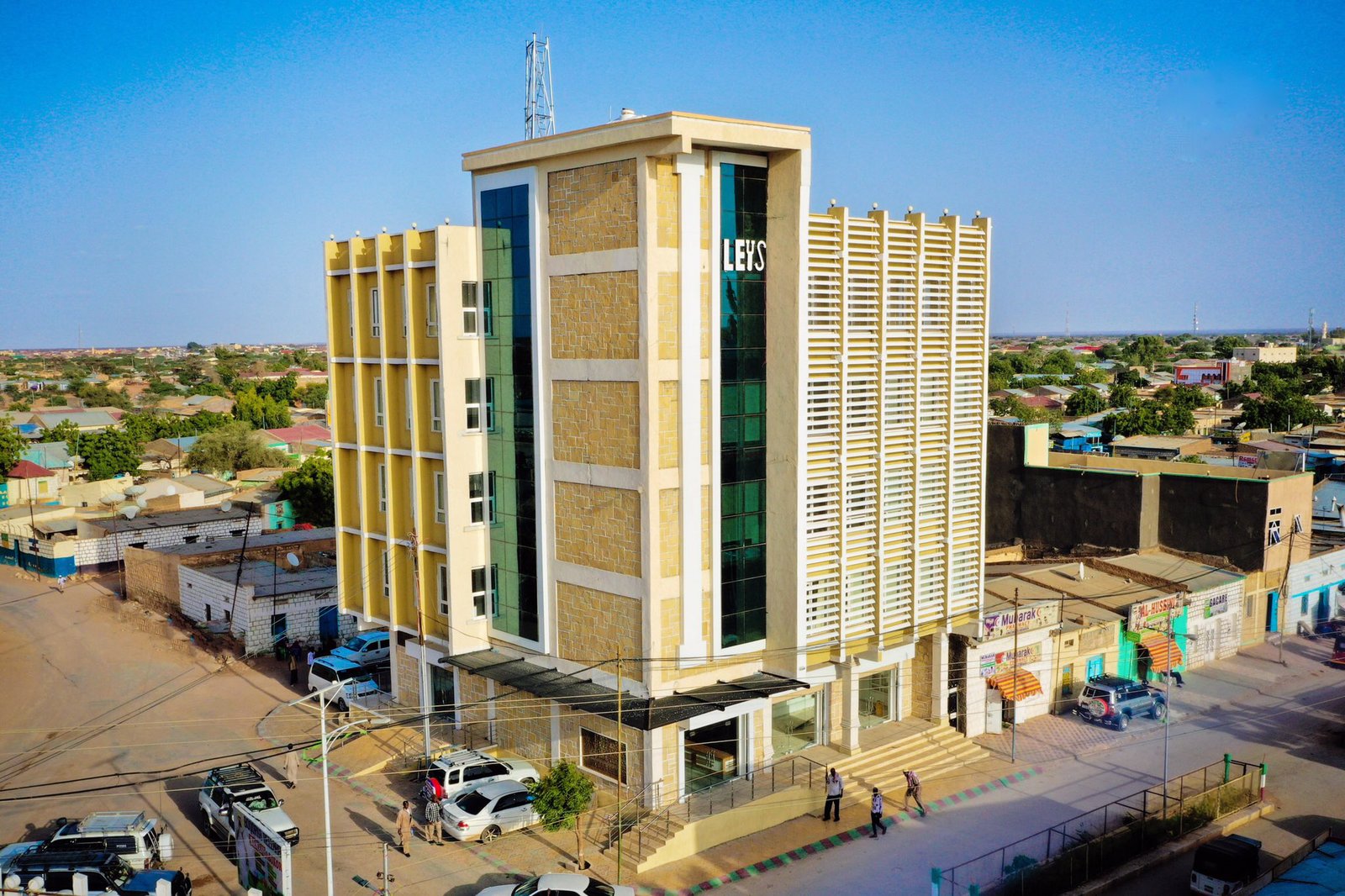
Burao, also written Burco, is the capital of the Togdheer region and the second-largest city in Somaliland. A seasonal river runs through its centre, and its livestock markets link herders across the region to ships at Berbera. In 1991 the city hosted the conference that led to Somaliland’s declaration of independence.
A note for travellers. Burao lies in Togdheer, a region where current UK travel advice is more cautious than for Hargeisa and Berbera. So this article is a profile of the city rather than a travel guide. For the wider picture, read Is Somaliland safe?
Somaliland declared independence from Somalia in 1991 and governs itself. Somalia regards it as part of its territory. Israel (December 2025) is so far the only UN member state to recognise it (see Somaliland’s foreign relations).
Burao at a glance
Here are the basic facts in one place.
| Somali name | Burco |
| Region | Togdheer (capital) |
| Elevation | About 1,037 m |
| River | The seasonal Togdheer River |
| Population | No census; estimates vary widely |
| Main economy | Livestock, commerce and communication services |
| University | Burao University, founded 2004 |
A city built around a river
Burao grew from water. The city began as a well called Ceel-Gooni, used by nomads in the late 18th century. UN-Habitat’s profile of the city also starts its timeline with a “Ceel-Gooni” period.
The river gave the region its name. In Somali, tog means riverbed and dheer means long. The Togdheer River rises in the foothills of the Golis Mountains. It then flows south through Burao and divides the city in half.
For most of the year the riverbed is dry. However, heavy rain in the mountains can fill it quickly. In April 2020, Gu-season rains made the river overflow and damage public and private buildings, the Somaliland Standard reported. No casualties were reported.
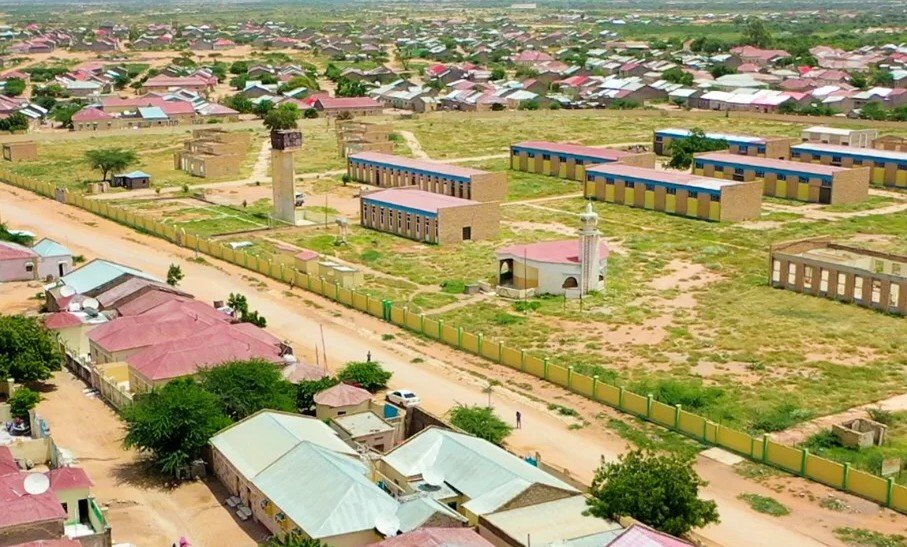
The river also shapes the street plan. According to UN-Habitat, it is “the main structuring element of the city”. Most of the town grew on the southern side, while government offices and public institutions sit to the north.
Burao in history
Burao appears often in the region’s colonial history. Wikipedia notes that the Dervish movement was founded in Burao in 1899, and that British forces burned the settlement in 1900. It was re-established in 1910.
In 1922, a heavy new tax led to unrest. Wikipedia records that the district commissioner was killed, and that RAF aircraft then bombed the town.
The hardest years came later. On 27 May 1988, the Somali National Movement (SNM), fighting the government of Siad Barre, captured Burao. Government bombardment followed, and much of the city’s infrastructure was destroyed. Hundreds of thousands of people from Burao and Hargeisa were displaced, many to refugee camps in Ethiopia.
The 1991 Burao conference
Burao holds a special place in Somaliland’s modern story. In 1991, the SNM called a conference of clan elders in Burao, according to the Center for Justice and Accountability.
The meeting ran from 27 April to 18 May 1991. It brought together clan leaders from across the north, building on a peace conference in Berbera in February. Its delegates agreed that the north would revoke its union with the rest of Somalia.
On 18 May 1991, the SNM Central Committee, supported by a meeting of elders, declared the restoration of the Republic of Somaliland. An interim administration followed, led by Abdirahman Ahmed Ali Tuur for two years.
The role of elders at Burao reflects a long tradition of settling disputes by agreement. Read more in our guide to xeer, Somali customary law.
The livestock markets of Burao
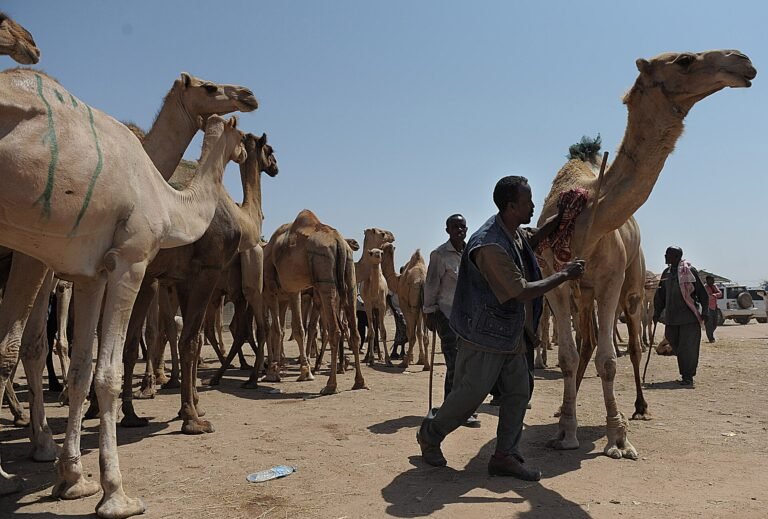
Today, Burao’s economy rests mainly on livestock. A 2014 report by the International Livestock Research Institute (ILRI) named Burao as one of three main markets in the Berbera corridor, alongside Hargeisa and Tog Wajaale. Animals arrive through supply routes reaching into eastern Ethiopia.
The numbers are large. The same report found that about 80% of sheep and goats exported from Somaliland are traded through Hargeisa and Burao. In 2012, Burao’s market handled about 1.6 million sheep and goats, more than Hargeisa’s.
Nearby Yirowe, about 20 km east of the city, also has a major market. Wikipedia reports that as many as 10,000 sheep and goats a day are sold there, many shipped to the Gulf through Berbera. The ILRI team also collected price data on camels in Burao. For more on these animals, read Camels in Somaliland.
Trade follows the seasons. In May 2016, Radio Ergo reported that the Burao market had reopened after a two-month closure. Drought had left the animals in poor condition. About 1,500 people, it reported, depended directly on the market. Buyers were preparing for strong demand in Saudi Arabia around Ramadan, Eid and the Hajj.
The market has its own customs, too. National Geographic described traders signalling prices with their fingers, keeping the bargaining private under a scarf. Livestock is central to the wider country as well; see our overview of the Somaliland economy.
Work, learning and poetry
Beyond livestock, UN-Habitat lists commerce and communication services as the city’s main activities. The same profile notes that high unemployment remains a critical problem.
How many people live in Burao Somaliland? Nobody knows exactly. In 2009, UN-Habitat wrote that no census had been carried out. It gave a common estimate of 150,000, with others as high as 300,000. More recent figures on Wikipedia range from about 425,000 to 750,000 for 2023, and they conflict with each other.
The city is also a place of learning. Burao University opened in 2004, with faculties from animal science and agriculture to medicine, engineering and Sharia and law.
Burao also has links to Somali poetry. The poet Hadrawi, who died in 2022, later lived in Burao, according to Wikipedia. One source even gives the city as his birthplace.
Burao today
Burao is a working city, shaped by its river, its markets and its history. It hosted the conference of 1991, and its traders still link herders to the port of Berbera.
We cover Burao here as a profile rather than a destination. To follow the story of 1991 further, read about how Somaliland marks 18 May each year.
Sources
- Burao, Wikipedia (accessed 28 October 2026), citing among others Renders (2012), Prunier (2000), King (2003), UNDP (2005) and Burao local government (2023).
- Somalia travel advice: Regional risks, UK Foreign, Commonwealth & Development Office (updated 4 June 2026; accessed 28 October 2026).
- Burao Profile: First Steps Towards Strategic Planning, UN-Habitat, 2009 (PDF).
- Togdheer River, Wikipedia (accessed 28 October 2026), citing UN-Habitat (2009), ILO (2011) and FAO-SWALIM (2007).
- Somaliland: Floods Take a Heavy Toll on Burao, Somaliland Standard, 28 April 2020.
- Bombardment of Burao and Hargeisa 1988, Wikipedia (accessed 28 October 2026).
- Background on Somaliland, Center for Justice and Accountability (no date; accessed 28 October 2026).
- Somaliland Peace Process, Wikipedia (accessed 28 October 2026), citing Prunier, Le Monde diplomatique (2000).
- Somaliland Declaration of Independence, Wikipedia (accessed 28 October 2026), citing the Academy for Peace and Development, ISS Africa (2009) and Crisis Group (2003).
- Enhancing the provision of livestock marketing information in Somaliland, L.M. Godiah, D. Baker, I.I. Elmi, R. Costagli, I. Gulaid and F. Wanyoike, ILRI Research Report 35, International Livestock Research Institute, 2014.
- Yirowe, Wikipedia (accessed 28 October 2026), citing the Academy for Peace and Development (2002).
- Burao livestock market back in business after two-month closure, Radio Ergo, 31 May 2016.
- Robin Hammond: The Largest Trade on the Hoof, Coburn Dukehart, National Geographic, 16 June 2014.
- Burao University, Wikipedia (accessed 28 October 2026).
- Hadrawi, Wikipedia (accessed 28 October 2026).
Last checked 28 October 2026. Found an error or something out of date? Tell us.