Xeer: The Unwritten Laws That Guided Generations
Long before courts and constitutions, Somali communities kept order through xeer: a body of law that was never written down, held by elders and built on agreement.
HISTORY · SOCIETY
Imagine a legal system with no written code, no police force and no prison, which nonetheless settled disputes over land, livestock, marriage and even killing for centuries. That is xeer, the customary law of Somali society. In Somaliland it still shapes how conflicts are resolved, and it played a decisive role in how the country found peace after war.
Xeer: law made by agreement
Xeer is oral. It is made by consensus, through agreements between clans, and it predates Islam in the region. It is not one single code: different agreements govern relations between different groups, though common principles on compensation, marriage and property run across Somali communities.
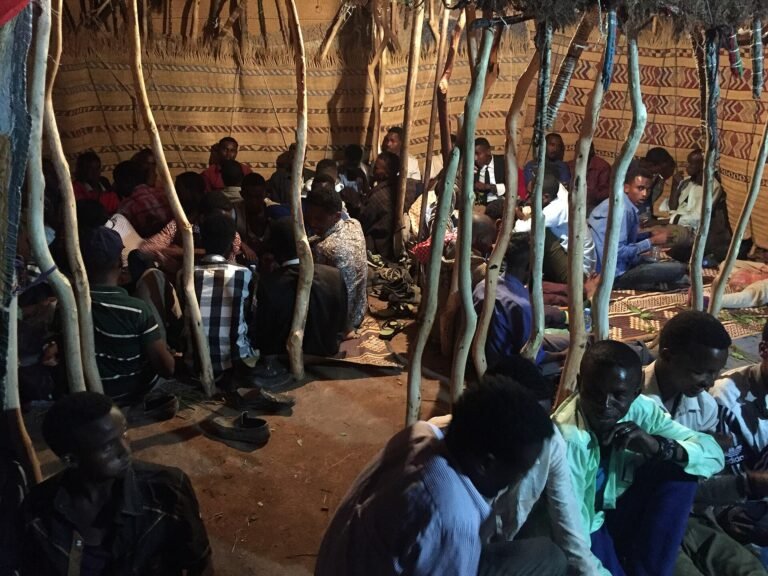
Respected elders hear disputes, acting as mediators and judges and drawing on precedent and on consensus reached in clan assemblies. Their authority comes not from a state, but from the trust of the people they serve.
Repair, not punishment
At the heart of xeer is a simple idea: when harm is done, it must be repaired between groups, so that peace can be restored. Responsibility is collective. Each man belongs to a mag, a group bound by lineage and agreement, which shares the obligation to pay compensation, known as diya, when one of its members causes harm. Historically, people measured that compensation in livestock.
“When harm is done, it must be repaired, so that peace can be restored.”
The elders who made peace
Xeer’s most remarkable chapter in recent history came after the civil war, when Somaliland declared independence in 1991. A series of clan conferences led by elders built much of Somaliland’s stability. At the Borama conference of 1993, the elders’ mediation role was turned into a formal institution: the Guurti, or House of Elders, then with 82 members. It helped demobilise armed groups, and under the 2001 constitution it became the upper house of parliament, with special responsibility for matters of religion, tradition and security.
Strengths and limits of xeer
Xeer’s strengths are speed, legitimacy and its focus on restoring relationships. Its critics point to real problems: collective responsibility can punish people for acts they did not commit, and women and minority groups have historically been excluded from its decisions. The Guurti, too, has faced criticism, including over the fact that its seats have passed down within families rather than through elections.
Xeer reformed from within
Some of the strongest push for change has come from the elders themselves. In Somaliland’s Togdheer region, elders feared that revenge killings between sub-clans could escalate into wider conflict. They formed a local NGO, Haqsoor. With support from the Danish Refugee Council, they held workshops in 2003 and 2004 on harmful xeer and on the rights of women and children, a 2006 study reports. The first declaration was signed in September 2003, and cross-clan groups of elders then visited more than 100 villages to explain it.
A conference in Burao went further. Its resolution replaced old bilateral agreements on revenge killing with a xeer shared across clans, kept compensation at 100 camels, paid entirely to the victim’s family, and affirmed a widow’s right to inherit and to marry a man of her choice. The elders said revenge killings fell significantly as a result.
Today xeer lives alongside Islamic law and the state’s courts, each with its own domain. To understand the culture of persuasion that makes it work, read When Words Were Mightier Than Weapons. For family life, see Inside a Traditional Somaliland Wedding. And for everyday courtesies, see our friendly guide to Somaliland etiquette.
Sources
- Statute, Shari’ah and Xeer: a history of the Somali legal system, Mogadishu Law Office.
- Debating reform of Somaliland’s House of Elders, The New Humanitarian, 18 July 2013.
- Towards a culture of peace, Maxamed Daahir Afrax, Accord 21, Conciliation Resources, 2010.
- The predicament of the ‘Oday’: The role of traditional structures in security, rights, law and development in Somalia, Joakim Gundel, Danish Refugee Council and Novib/Oxfam, November 2006.
Last checked 28 October 2026. Found an error or something out of date? Tell us.