Frankincense and Myrrh Trees of Somaliland Today
Somaliland frankincense still comes from wild trees growing on steep mountain slopes, tapped by hand much as it was centuries ago. Here is how the trees grow, how the resin is gathered and sold, and what is being done to keep the harvest alive.
NATURE · TREES AND RESIN
Frankincense has a long history in this corner of Africa, and we tell the ancient story in how frankincense linked Somaliland to Rome. This article looks at the present. The trees still grow, families still harvest them, and the resin still sails to markets across the world. Yet the forests face real pressure, and researchers, harvesters and officials are looking for ways to protect them.
The trees behind Somaliland frankincense
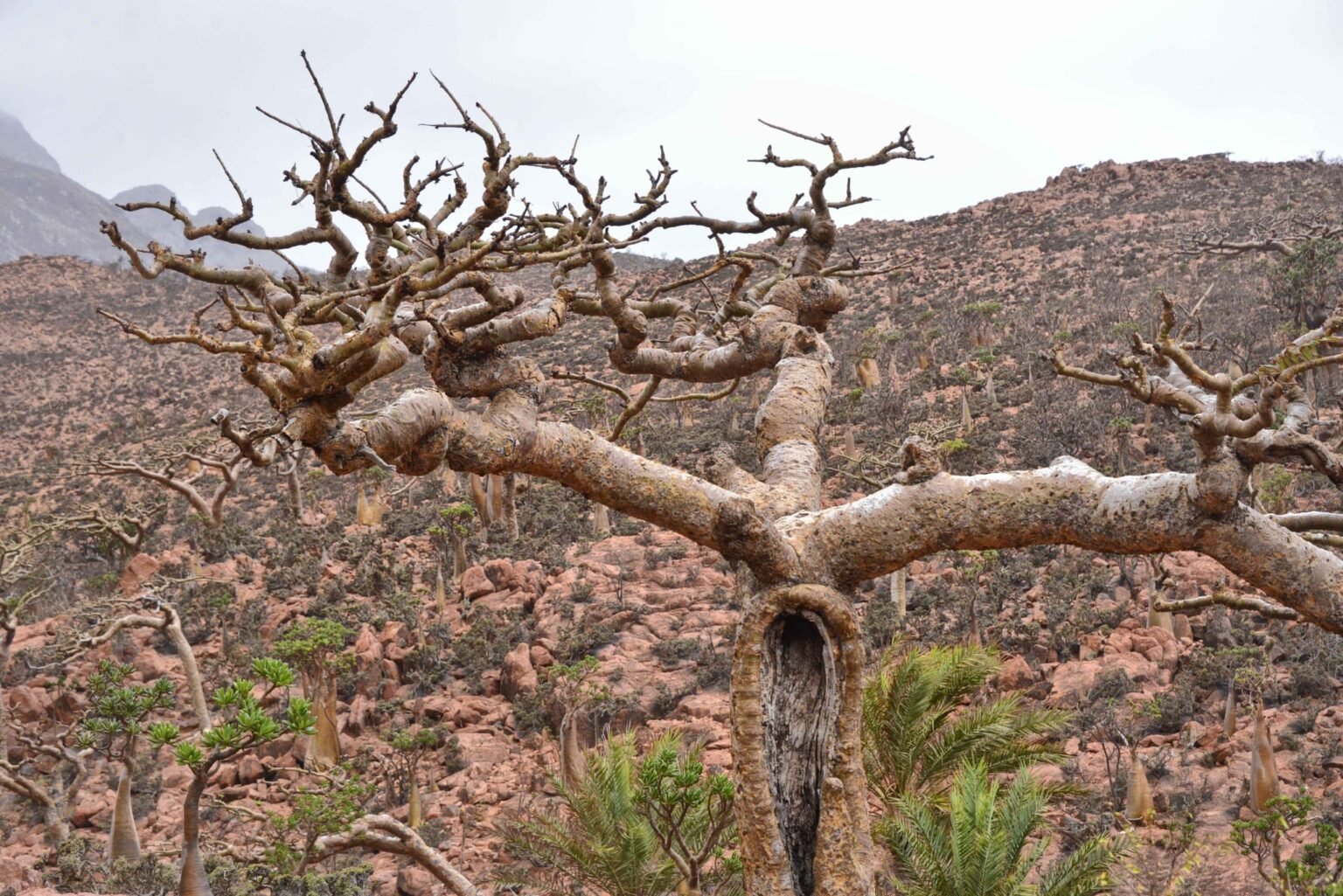
Frankincense is the dried resin of Boswellia trees. In 2025, BBC Future reported that there are 24 species of Boswellia around the world. Two of them matter most here.
The first is Boswellia frereana. The same BBC report says it is native to northern Somalia and Somaliland, and that international buyers call it “the king of frankincense”. Its resin is known locally as maydi, while fooh is the general word for all frankincense, according to Wikipedia. In the West it is sold as Coptic frankincense, because the Coptic Church of Egypt uses this grade.
The second is Boswellia sacra, which grows in Somalia and southern Arabia. Older books call it Boswellia carteri, a name now treated as a synonym. Science is still catching up, too. Researchers described Boswellia occulta, a species known locally but new to science, whose resin contains a signature chemical not found in frankincense from other species.
Myrrh: the thorny neighbour
Myrrh comes from a different tree, Commiphora myrrha. Wikipedia describes it as very spiny and about 5 metres tall, with silvery, papery outer bark. It grows on slopes and in valleys between about 250 and 1,300 metres, often in thin limestone soil. Its range covers Somalia, Djibouti, the Somali regions of Ethiopia and Kenya, and parts of Arabia.
Like frankincense, myrrh is a resin. It seeps from cuts in the bark and dries into small clumps. Today it flavours foods and scents soaps, mouthwash and perfume.
Where the trees grow
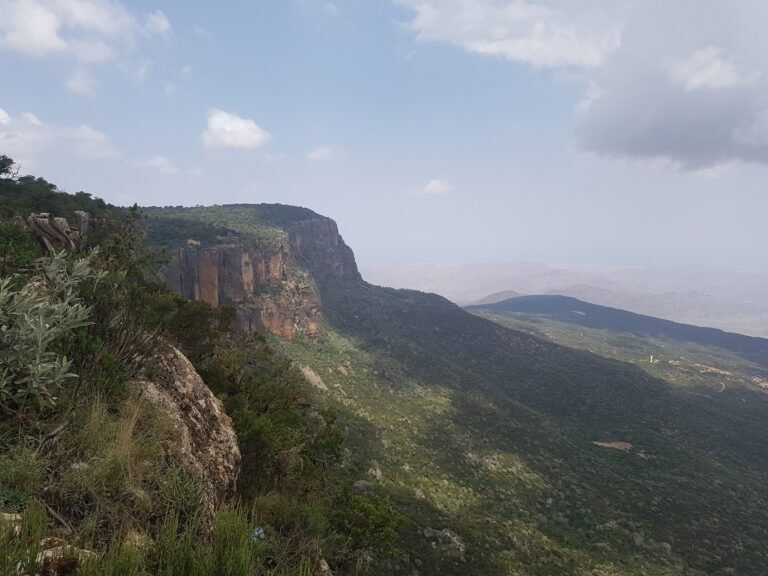
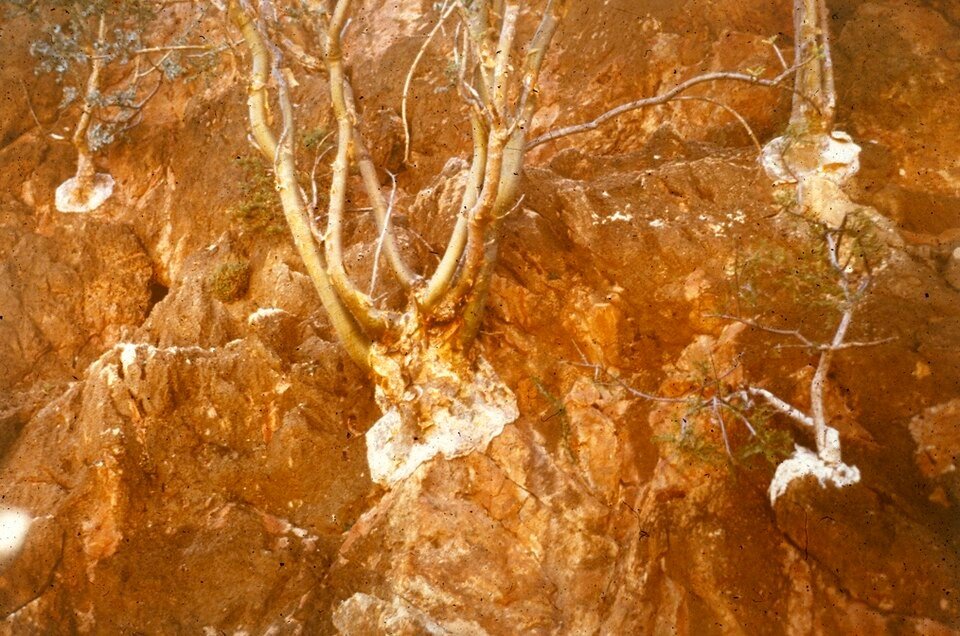
The richest frankincense woodland lies in the mountains of the north-east. In 2016, the Associated Press described harvesters working in the Cal Madow mountains, whose cliffs rise more than 2,440 metres from the Gulf of Aden. That same year, VOA photographed frankincense forests in the canyons of the Daalo escarpment.
Somaliland’s government places the trees in the same area. Its 2025 investment guide says Boswellia grows across the Sanaag mountains. It calls Somaliland one of the global centres of premium frankincense.
How the resin is harvested
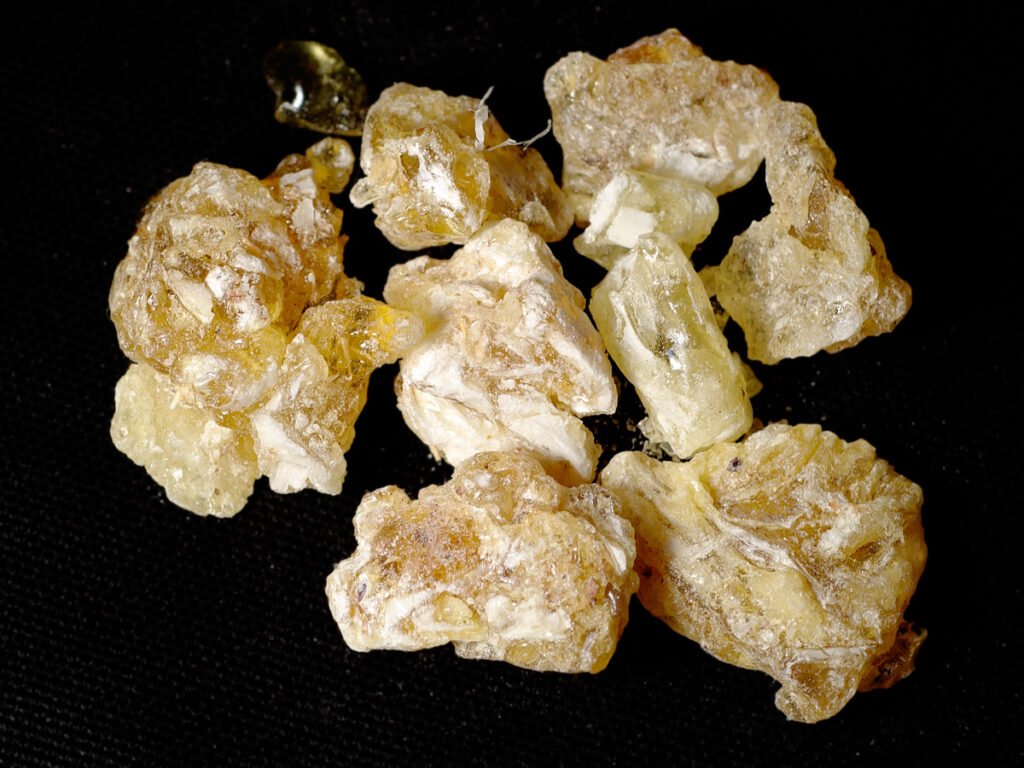
Harvesting is called tapping. The BBC explains that cuts in the bark let resin seep out and harden into “tears” over several weeks, which harvesters then scrape off.
It is skilled and physical work. The AP reported that men climb at dawn and scrape the bark with metal tools, often on rocky outcrops. One harvester told the AP that his father and grandfather did the same job. Afterwards, women sort the resin by colour and size. VOA showed sorting under way in Erigavo and Burao, and noted that maydi is the most expensive kind.
Tradition sets careful limits. Research by scientist Anjanette DeCarlo records these customary rules:
- Tree size: a tree should be at least 10 centimetres across before tapping.
- Number of cuts: between 3 and 13 shallow cuts per tree.
- Seasons: some trees are tapped in xagaa (April to October) and others in deyreed (September to June).
- Respect for the tree: under customary law, trees should not be harmed unnecessarily or cut for animal feed.
That customary law is known as xeer; read more in our guide to xeer, Somali customary law.
From mountain to market
Somaliland frankincense travels a long way. The BBC estimates that Somaliland exports at least 1,000 tonnes a year, making its trade one of the largest in the world. In 2016, the AP reported that resin was shipped to Yemen and Saudi Arabia, and from there to Europe and America.
The global market is sizeable. The BBC puts it at US$363m in 2023, trading 6,000 to 7,000 tonnes a year. Little of that value reaches the mountains, however. The same report says harvesters typically receive US$2 to 5 per kilogram, about 3% of the final value. By contrast, Western incense suppliers can sell it for up to US$60 to 100 per kilogram.
Frankincense also matters to public finances. In 2016, Somaliland’s environment minister told the AP it was the largest source of government revenue after livestock. For the wider picture, see Somaliland’s economy explained.
Why the trees are under pressure
Demand has grown fast, and the trees pay the price. A 2020 study in the journal Sustainability found significant overharvesting in Somaliland, linked to a breakdown of the traditional management system. Prices tell the same story. They were around US$1 per kilogram in 2010 and almost ten times higher by 2016.
Field surveys found some trees with more than 100 cuts. At one site, only a third of adult trees were healthy and more than a quarter were dead. Harvesters also reported an insect, known locally as xare, that bores into wounded trees.
Wounded trees struggle to reproduce. According to Wikipedia, seeds from heavily tapped trees germinate at only 16%, against more than 80% for untapped trees. The BBC adds climate change and a report suggesting over-tapped trees may need 10 years or more to recover.
A sustainable future for Somaliland frankincense
There are hopeful signs. Researchers argue that traceability can let buyers choose sustainably harvested resin. They report that one supplier is FairWild certified and that others are adopting tracking technology. DeCarlo also suggests harvester cooperatives, noting that wealth has become concentrated in the hands of exporters rather than harvesters.
The government sees opportunity in the same direction. Its investment guide lists sustainable harvesting, reforestation and processing into essential oils as openings for investors. Doing more processing at home could keep more of the value in Somaliland.
The main harvesting areas lie in the eastern regions. The UK Foreign Office currently advises against all travel to Togdheer, Sanaag and Sool, so check the latest official advice and read is Somaliland safe? before planning any trip.
Somaliland frankincense is a living link to a very old trade. With care from harvesters, buyers and officials, the trees can keep giving it for generations to come.
Sources (10)
- Why the world is running out of frankincense, Lauren Hadeed, BBC Future, republished by Namibian Sun, 23 December 2025.
- Boswellia frereana, Wikipedia (accessed 7 November 2026).
- Frankincense, Wikipedia (accessed 7 November 2026).
- Commiphora myrrha, Wikipedia (accessed 7 November 2026).
- Save frankincense: overharvesting a precious commodity and approaches to ensure sustainability, Dr Anjanette DeCarlo, Research Outreach, 22 May 2020 (updated 8 November 2023).
- Ecological and Economic Sustainability of Non-Timber Forest Products in Post-Conflict Recovery: A Case Study of the Frankincense (Boswellia spp.) Resin Harvesting in Somaliland (Somalia), Anjanette DeCarlo, Saleem Ali and Marta Ceroni, Sustainability 12(9), MDPI, 2020.
- Last wild frankincense forests are under threat from overharvesting, Jason Patinkin, The Associated Press via Global News, 24 December 2016.
- Somaliland Frankincense Industry Threatened by High Demand, Voice of America (photos: J. Patinkin), 23 December 2016.
- Somaliland Invest In: Your Gateway to Investment in the Horn of Africa, Ministry of Investment and Industrial Development, Republic of Somaliland, 2025 (accessed 7 November 2026).
- Somalia travel advice: regional risks, Foreign, Commonwealth & Development Office (GOV.UK), updated 4 June 2026 (accessed 7 November 2026).
Last checked 7 November 2026. Found an error or something out of date? Tell us.