Hargeisa 1988: The Destruction and Rebuilding of a City
Hargeisa 1988 is a date that still shapes Somaliland. This is a careful account of what happened, how different sources count the cost, and how the city came back.
HISTORY · 1988
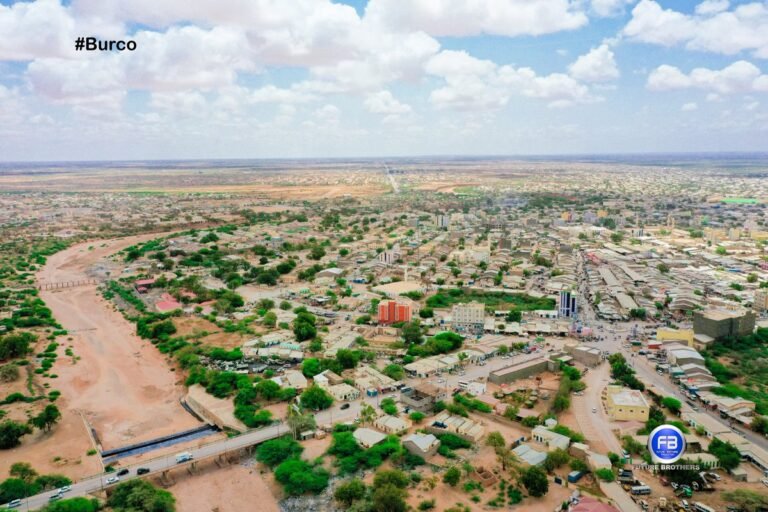
Today Hargeisa is a busy city of new buildings, markets and traffic. In 1988 much of it was reduced to ruins, and most of its people fled. This article sets out what happened, using the reports of the time and later research. Where sources disagree, we say so.
Somaliland declared independence from Somalia in 1991 and governs itself. Somalia regards it as part of its territory. Israel (December 2025) is so far the only UN member state to recognise it (see Somaliland’s foreign relations).
Hargeisa 1988 at a glance
Here are the key points, each with its source.
| Conflict | Somali National Movement (SNM) against the government of Siad Barre |
| SNM offensive | Burao on 27 May, Hargeisa from 31 May 1988 |
| Damage in Hargeisa | Estimates range from 70% to up to 90% |
| People who fled to Ethiopia | An estimated 300,000 to 500,000 (US State Department report, 1989) |
| Deaths | From at least 5,000 unarmed Isaaq civilians (a conservative 1989 estimate) to 50,000 to 60,000 by early 1990 (Human Rights Watch, for the war in the north); later estimates run higher |
| Today | A population of about 1.2 million (2019 estimate) |
Before Hargeisa 1988: the road to war
Siad Barre came to power in a military coup on 21 October 1969. His government later faced armed opposition from several groups. One was the Somali National Movement, founded in April 1981, in London by most accounts. Its stated aim was to overthrow the Barre government, and it later moved its bases to Ethiopia.
That changed in 1988. On 3 April 1988, Ethiopia and Somalia signed an agreement not to assist rebels based on each other’s soil. The SNM then moved into the north. Its fighters captured Burao on 27 May, and the attack on Hargeisa began early on 31 May. By 1 June, the SNM had overrun the city except the airport.
The bombardment of Hargeisa and Burao
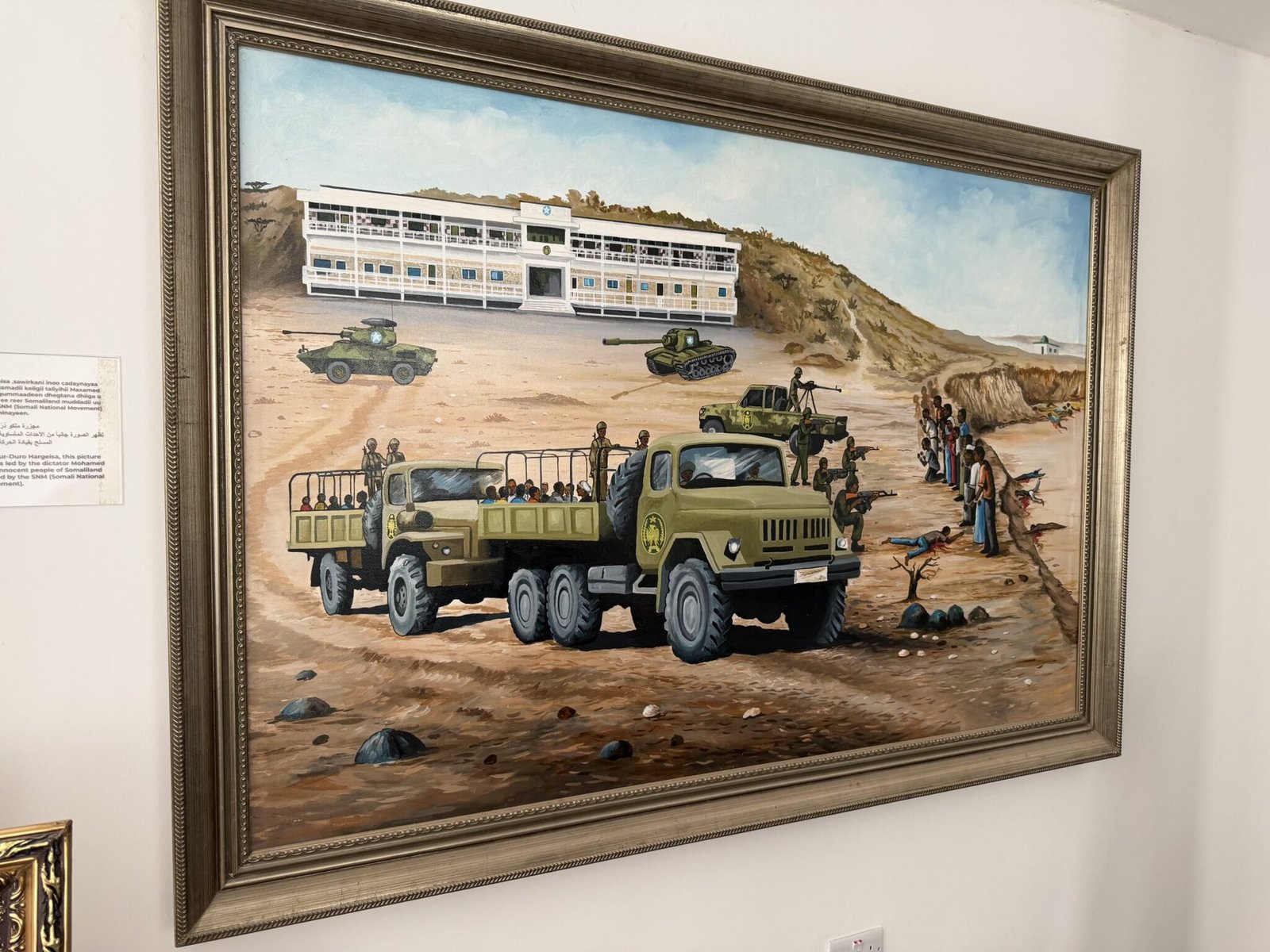
Human Rights Watch later described it as a savage counterinsurgency campaign, including indiscriminate aerial bombardment.
A report written for the US State Department in 1989, known as the Gersony report, gathered refugees’ accounts. It found that the armed forces used military aircraft to strafe and bomb residential areas where SNM forces were dispersed. It added that both sides used artillery in the battle. Aircraft took off from Hargeisa’s own airport for repeated bombing runs, according to accounts cited on Wikipedia.
Figures for the damage vary. A US Embassy estimate cited in a 1989 US government report put it at 70 per cent of Hargeisa damaged or destroyed. Other sources say up to 90 per cent. In 1993, the Christian Science Monitor reported estimates that 80 per cent of buildings were destroyed. Burao suffered too, as our profile of Burao, Somaliland’s second city, explains.
A city in exile: the camps in Ethiopia
After Hargeisa 1988, people left in huge numbers. The Gersony report estimated that 300,000 to 500,000 refugees had arrived in eastern Ethiopia, sometimes at a rate of 4,000 a day. Human Rights Watch reported that some 450,000 fled to Ethiopia, Djibouti and Kenya, and about 600,000 more were displaced within Somalia.
The city itself emptied. In May 1989, a US government report quoted the governor. He put the population at about 70,000, down from 370,000 before the conflict.
Many families settled in camps across the border. The best known was Hartisheik. UNHCR has called it the world’s largest refugee camp, with more than 250,000 refugees at its peak. It closed on 30 June 2004, when the last UNHCR convoy took 719 refugees home to Hargeisa.
How many died? Counting with care
No full count exists, and the estimates differ widely. The differences come from different periods, places and methods.
- 1989, the Gersony report. It “conservatively estimated” that at least 5,000 unarmed Isaaq civilians were “purposefully murdered”. It also noted that crossfire deaths in Hargeisa may have reached the thousands.
- 1990, Human Rights Watch. Africa Watch, part of Human Rights Watch, published a 268-page report in January 1990. By early that year, HRW wrote, an estimated 50,000 to 60,000 had been killed.
- Later estimates. Wikipedia summarises estimates of 50,000 to 200,000 civilian deaths between 1987 and 1989. In 2018, The Nation cited an estimated 200,000 Isaaq killed over the same period.
Every figure here is an estimate. Each one stands for real families and lives.
Isaaq genocide: how sources describe the term
Human Rights Watch reported that the army sought to deprive the SNM of support by forcing Isaaq noncombatants out of the country, including through indiscriminate aerial bombardment. Most of those killed and displaced were Isaaq. Many writers now call the events the Isaaq genocide. Here is who says so, and how.
A United Nations investigation in 2001 concluded that the crime of genocide was conceived, planned and perpetrated by the Somalia Government against the Isaaq, The Nation reported. Wikipedia says the inquiry was commissioned by the UN Coordination Unit and OHCHR, led by investigator Chris Mburu. The same article lists scholars who use the term, including Israel Charny, Gregory Stanton, Deborah Mayersen and Adam Jones. In 2022 the Lemkin Institute for Genocide Prevention issued a statement on the Isaaq genocide.
Other accounts use different terms. Reports written at the time spoke of a war and a counterinsurgency campaign. In 2020, Somalia’s then president, Mohamed Abdullahi Farmaajo, acknowledged a dark chapter in our history. He spoke of regret for the suffering in the north. The conflict, he said, was not based on clan but on the government system of the time. Africanews reported that commentators were divided on whether this amounted to an apology.
For the wider political background, read Somaliland vs Somalia: What’s the Difference?
Mass graves and the search for answers
In 1997, heavy rains exposed graves in and around Hargeisa. That April, Physicians for Human Rights assessed the sites under the auspices of the UN High Commissioner for Human Rights. It confirmed two mass graves, at the Malko Durduro school site and at Badhka.
Somaliland set up a War Crimes Investigation Commission to find graves, give victims proper burials and seek justice. AP dated its creation to 1997. In 2014, the commission estimated more than 200 mass graves, AP reported. Since 2012, the Peruvian Forensic Anthropology Team (EPAF) has supported the commission’s forensic work. By 2018 the commission had exhumed 11 mass graves and reburied 318 skeletons, its chairman told The Nation. He called the work woefully underfunded.
Remembering Hargeisa 1988
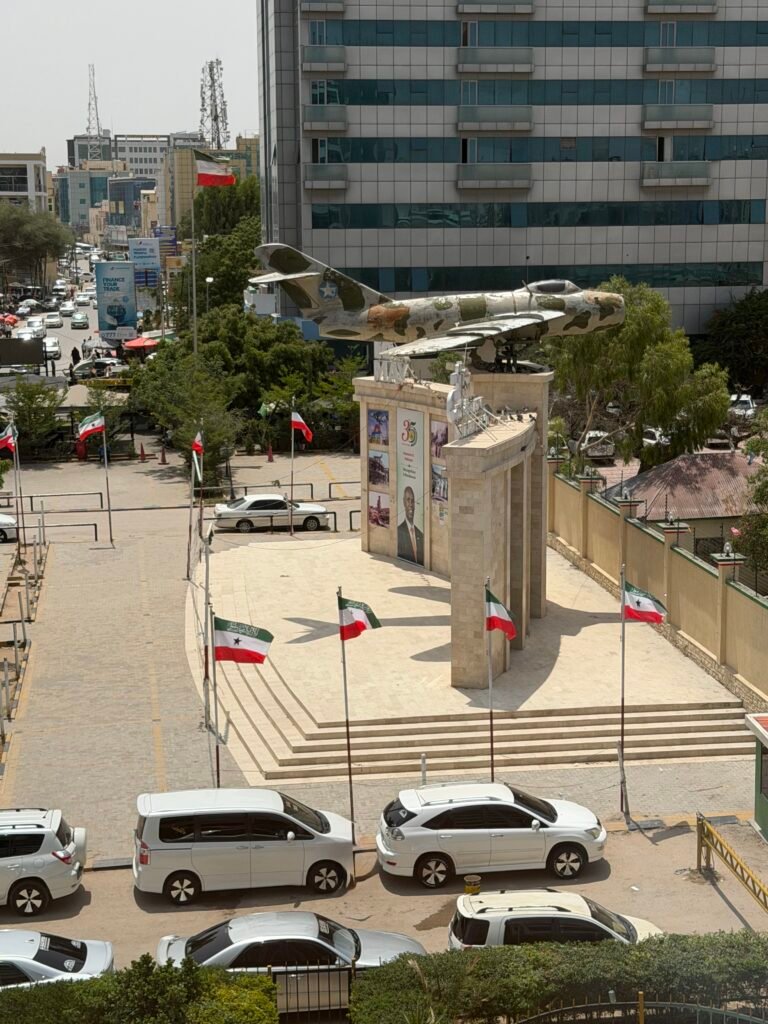
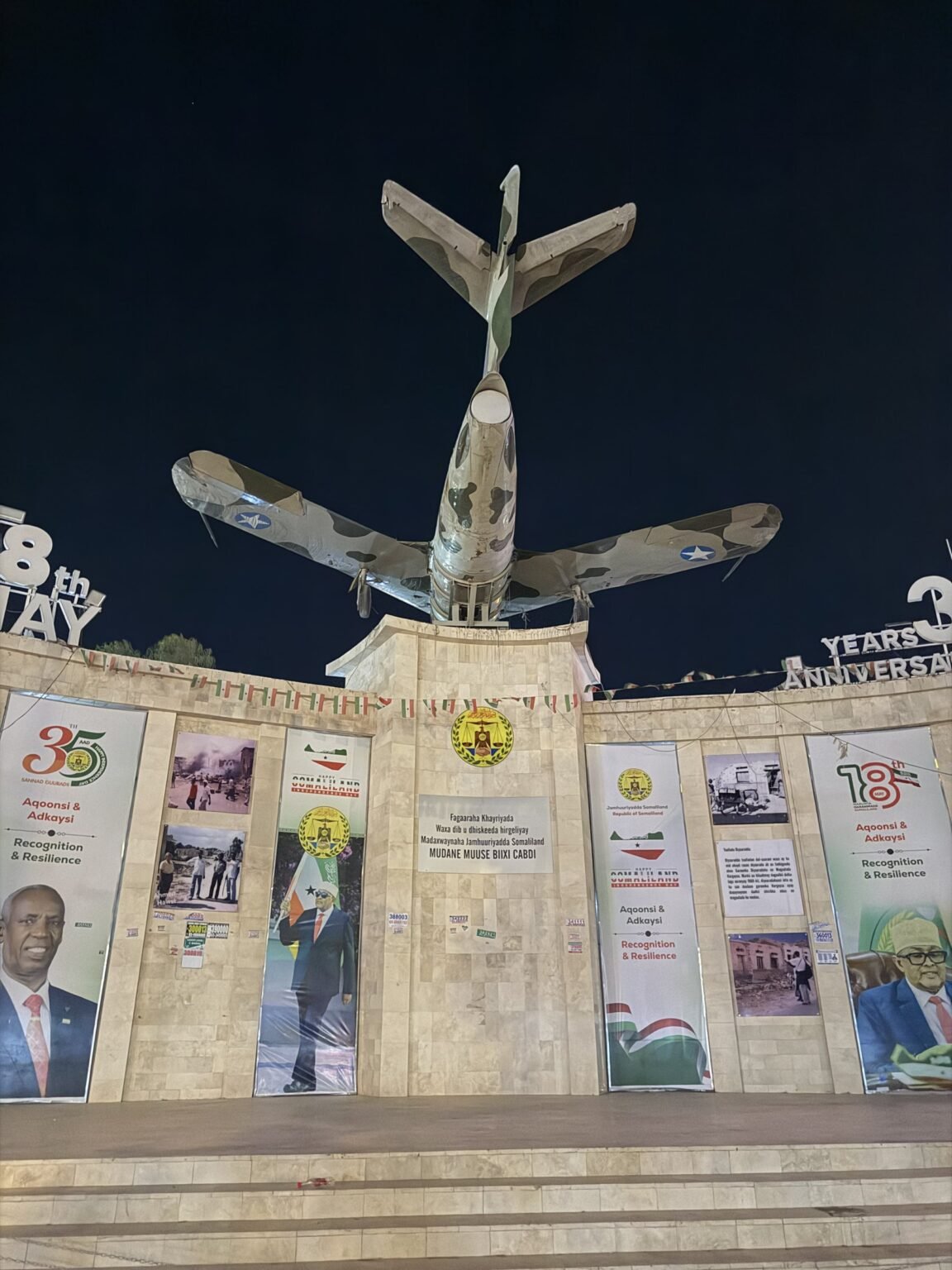
The city’s best-known memorial stands in Freedom Square. It is built around a Somali Air Force MiG-17 that, according to the BBC, crashed nearby. Beneath it, a painted scene shows a woman holding the flag of Somaliland, looking towards the sky. For practical tips on visiting, see our Hargeisa travel guide.
Rebuilding Hargeisa after 1988
The return began slowly. In 1993, the Christian Science Monitor found people rebuilding homes and businesses, often with money earned abroad. Many first cleared one room and lived in it until they could afford the rest. Schools already ran among the ruins.
Refugees came home over the following years. Between 1997 and 2004, 230,147 refugees returned on UNHCR convoys in the Somali repatriation movement.
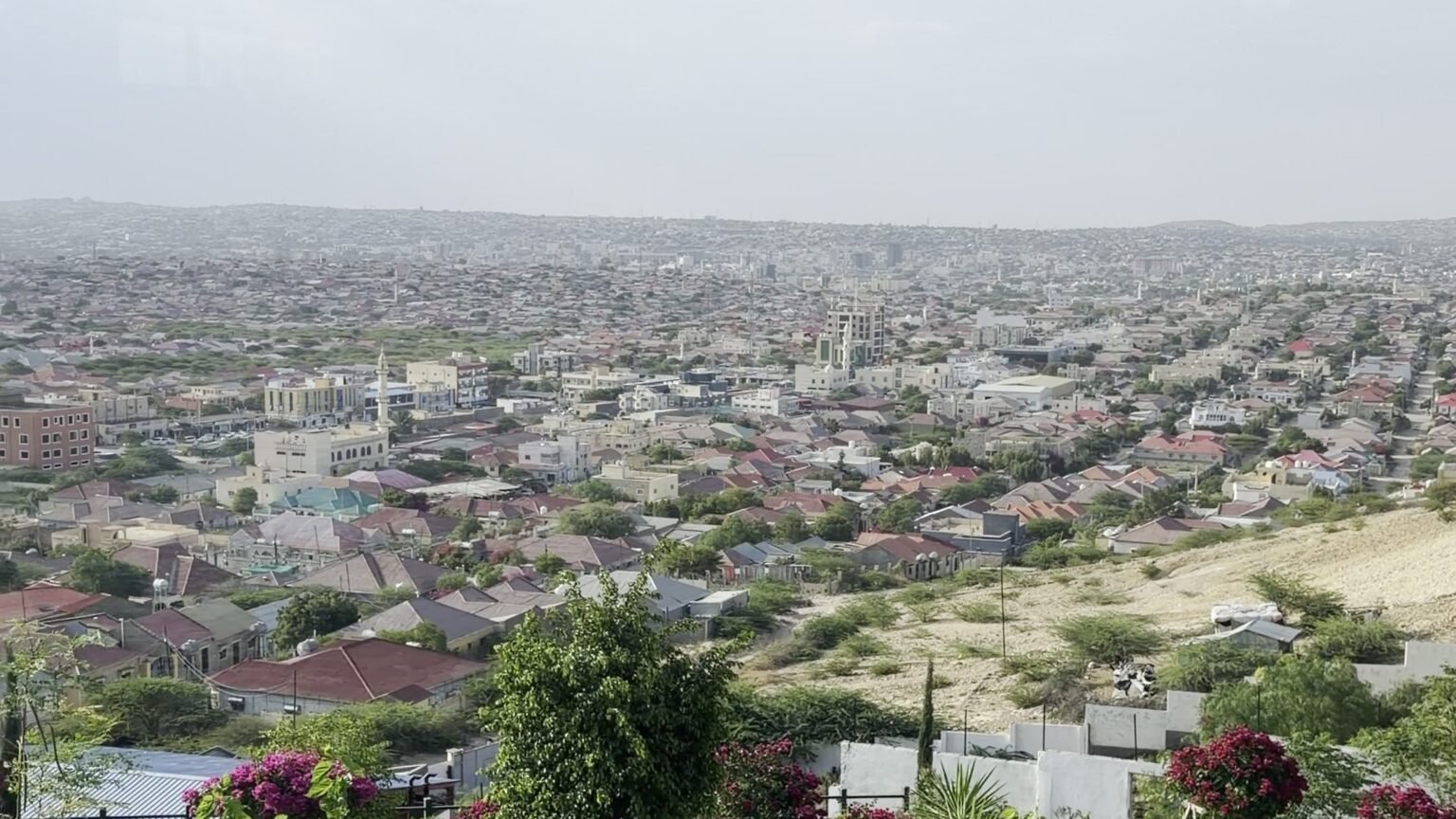
The diaspora played a central role. One former politician told researchers that the diaspora helped start the rebuilding. In 2019, a Brenthurst Foundation study put remittances at more than US$700 million a year, much of it flowing to or through Hargeisa. The same study described an almost completely rebuilt city.
Everyday money changed too. Telesom’s ZAAD mobile money service launched in 2009 and is now part of daily life. Our guide to money in Somaliland explains how it works for visitors.
Today, older single-storey buildings downtown are gradually giving way to multi-storey ones. Hargeisa 1988 is not forgotten. It sits alongside a city that chose to rebuild.
The defining moment that followed came in 1991. To understand it, read 18 May: Somaliland’s Independence Day Explained.
Sources
- Human Rights Watch World Report 1990: Somalia (events of 1990), Human Rights Watch (published 1991, via Refworld).
- Human Rights Watch World Report 1989 – Somalia, Human Rights Watch (published 1990, via Refworld).
- Why Somalis Flee: Synthesis of Accounts of Conflict Experience in Northern Somalia, Robert Gersony for the US Department of State, Bureau for Refugee Programs, August 1989.
- “World’s largest refugee camp” closes in Ethiopia, UNHCR, 1 July 2004.
- Somaliland transitional justice initiative, Center for Justice and Accountability (accessed 28 October 2026).
- In search for mass graves, Somaliland looks to unearth mystery, Jason Straziuso, AP via Star Tribune, 7 March 2014.
- In the Valley of Death: Somaliland’s Forgotten Genocide, Ismail Einashe and Matt Kennard, The Nation, 22 October 2018.
- Somali prez admits ‘dark chapter’ in Somaliland under Siad Barre, Africanews, 14 February 2020.
- Statement on the Isaaq Genocide committed between 1987 and 1989 by the Somali Government, Lemkin Institute for Genocide Prevention, 13 August 2022.
- Renewal Amid the Ruins, Robert M. Press, The Christian Science Monitor, 12 April 1993.
- Informal economies, conflict recovery and absent aid, Peter Mackie, Alison Brown and others, Environment and Urbanization 29(2), 2017.
- Hargeisa, Somaliland – Invisible City, David Kilcullen, The Brenthurst Foundation, Discussion Paper 4/2019.
- 1988 Hargeisa–Burao offensive, Wikipedia (accessed 28 October 2026), citing Africa Watch (1990), the US GAO (May 1989) and Prunier (2021).
- Isaaq genocide, Wikipedia (accessed 28 October 2026).
- Hargeisa War Memorial, Wikipedia (accessed 28 October 2026), citing BBC News (26 January 2011).
- Hargeisa, Wikipedia (accessed 28 October 2026).
- Siad Barre and Somali National Movement, Wikipedia (accessed 28 October 2026).
Last checked 28 October 2026. Found an error or something out of date? Tell us.