Khat in Somaliland: Culture, Economy, Health and the Law
Khat in Somaliland is part of everyday life: a green leaf, trucked in from Ethiopia and chewed in long afternoon sessions. Here is what it is, why it matters to the economy, what health researchers say, and what visitors need to know.
CULTURE · EVERYDAY LIFE
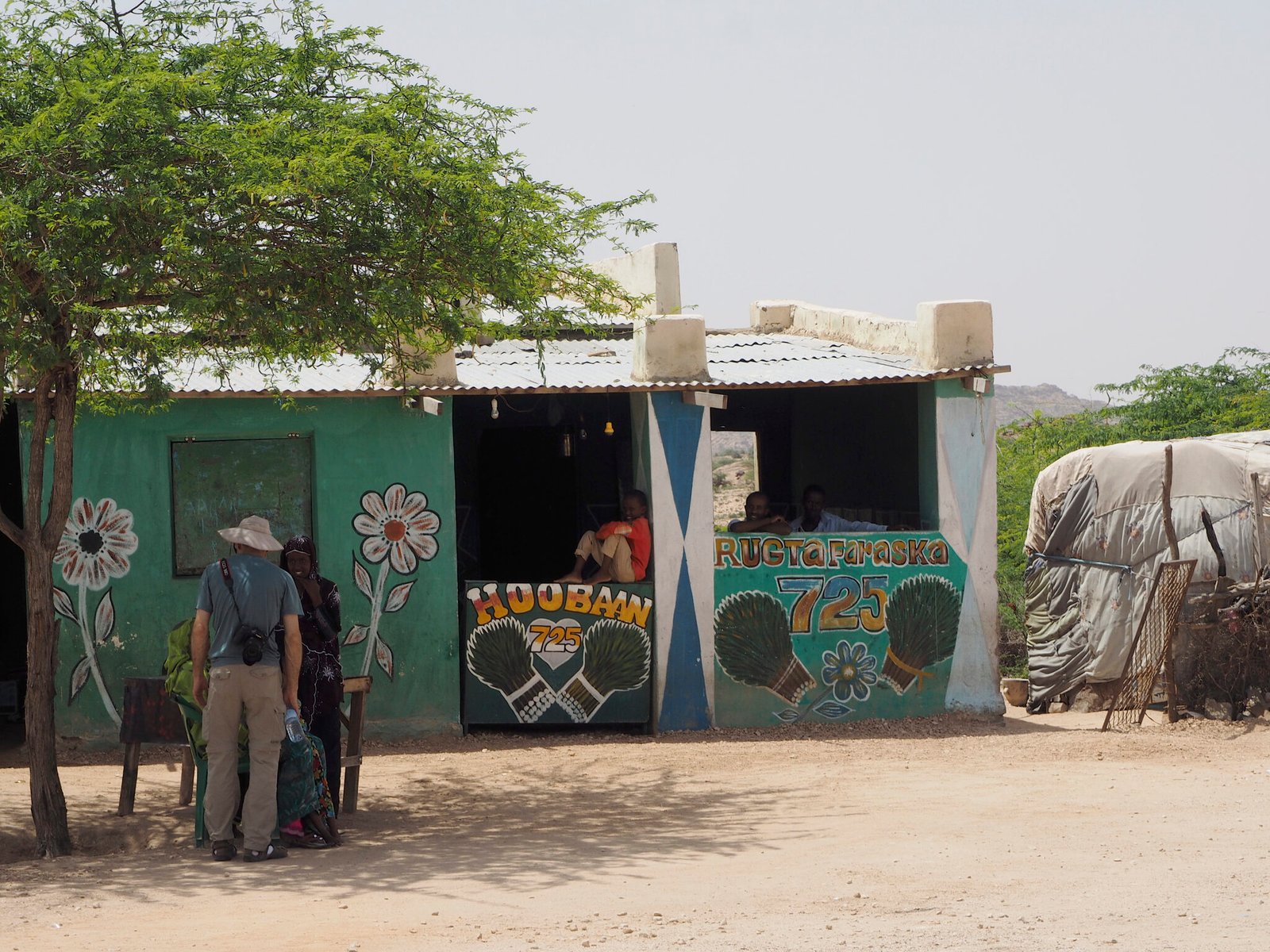
In Somaliland, the early afternoon has a rhythm of its own. It is the time when men gather to chew khat and talk, often with leaves bought from women sellers. This guide explains the custom plainly, without judgement and without encouragement.
A note on spelling. English sources use both khat and qat. In Somali it is qaat or jaad. We use “khat”, the spelling of the World Health Organization, the EU drugs agency and the UK government.
What khat is
Khat is the leaves and fresh shoots of Catha edulis, an evergreen shrub grown in East Africa and the south-west of the Arabian Peninsula. Its main active substances are cathinone and cathine. Cathinone breaks down within a few days of harvest, which is why khat is chewed fresh.
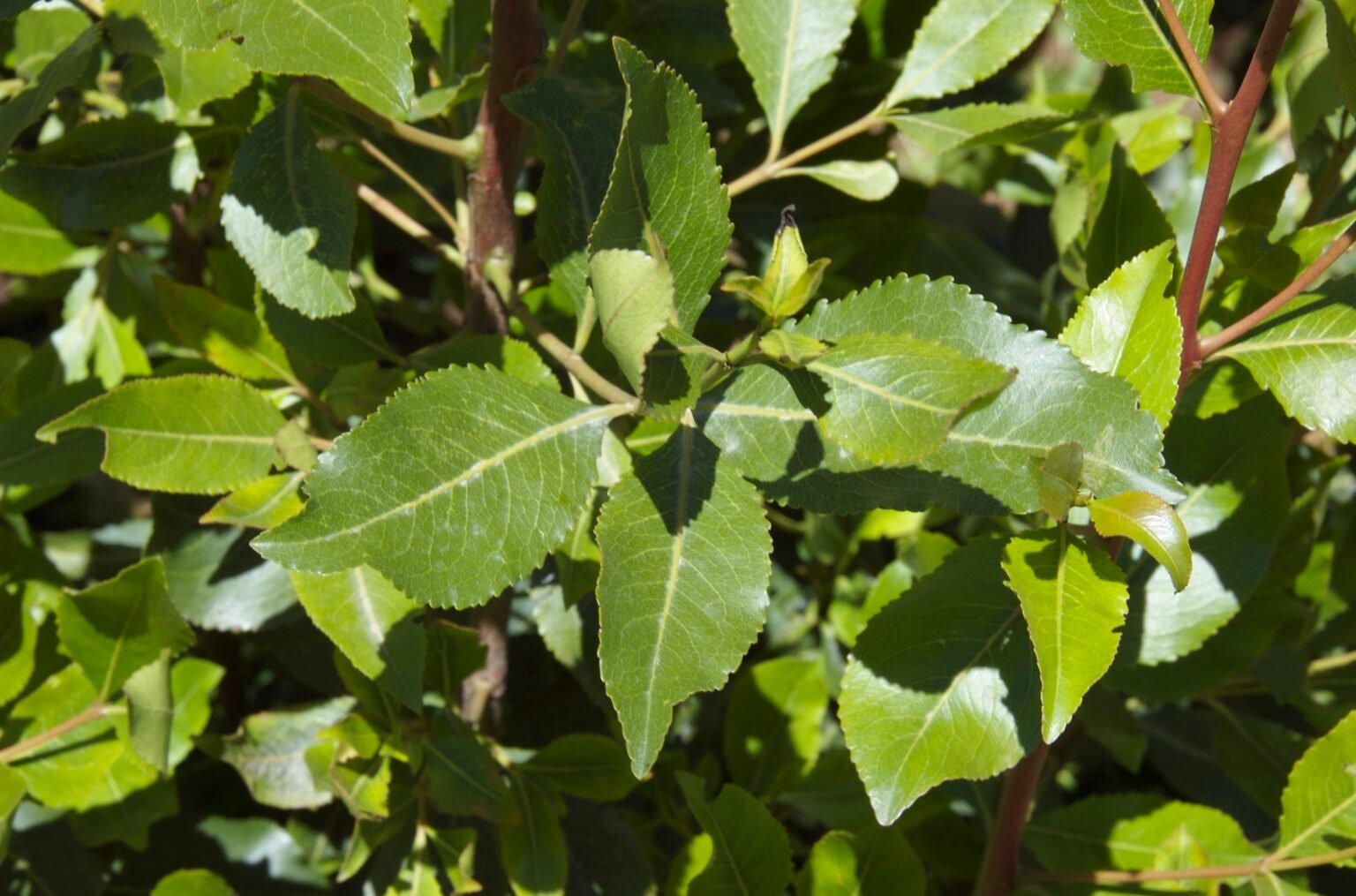
That freshness explains the trade. Growing conditions across the Somali region are too hot and dry for the water-hungry crop, so nearly all of Somaliland’s khat is imported. Ethiopian khat, known as hareeri, is the most popular in Somaliland and mostly arrives by land. Trucks loaded with leaves from Ethiopia cross the desert roads every day, Al Jazeera reported in 2015.
The afternoon ritual of khat in Somaliland
Traditionally, chewing was a social occasion. Adult men, and more rarely women, gathered to chew together, usually in the afternoons and at weekends, until the evening prayer. Researchers in Hargeisa noted in 2005 that habits were changing, with chewing in tea shops and among teenagers.
Supporters say the sessions build community. One supporter told Al Jazeera that khat fosters discussion and ties between people. Another man told PRI’s The World that people sit down, chew and talk through conflicts.
How common is it? In 2015, Al Jazeera cited an estimate that about 90% of adult men chew khat. A local campaigner put the share of women at about 20%, usually out of public view. These are estimates, not survey results.
Khat and the Somaliland economy
Khat is big business, though nobody agrees on exact figures. Here are the main estimates, with their dates.
| Estimate | Source | Year |
|---|---|---|
| More than $1m spent on khat each day | Ministry of Finance, via Al Jazeera | 2015 |
| $524m a year, about 30% of GDP | Ministry of Finance official, via Al Jazeera | 2015 |
| About $180m a year, roughly $500,000 a day | University of Hargeisa economist, via Hiiraan Online | 2024 |
Khat also matters to the state. In 2014, khat sales generated 20% of the $152m government budget, according to the Ministry of Finance. In 2020, the Global Initiative Against Transnational Organized Crime put khat taxes at about 30% of revenue, or roughly $35m a year. The two figures come from different years and sources.
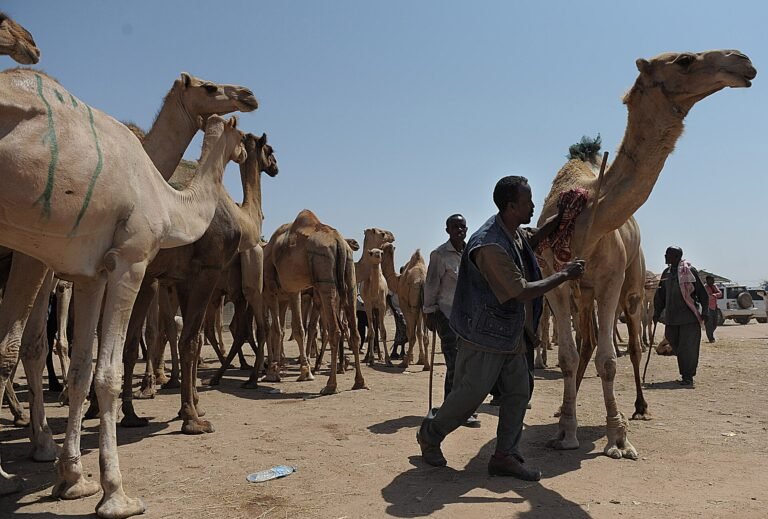
The trade supports many livelihoods. In 2017, Inter Press Service reported an estimated 8,000 to 10,000 jobs in Hargeisa, making khat the city’s largest employer. Many women became khat sellers after the civil war to support their families. Even camels can depend on it. In the 2023 drought, one Hargeisa herder fed his animals leftover khat from restaurant floors.
Prices move with politics and supply. In late 2024, a bundle that sold for $4 cost $8, Hiiraan Online reported. For the wider picture of trade and livestock, read our guide to the Somaliland economy.
What health researchers say
The World Health Organization reviewed khat in 2006. Its expert committee judged the potential for abuse and dependence to be low. It did not recommend international control. However, it recognised that excessive use causes social and some health problems. It also suggested national campaigns to discourage harmful use.
Medical reviews list several concerns. A review in the WHO’s Eastern Mediterranean Health Journal listed raised blood pressure, mouth problems and constipation. It also linked chewing in pregnancy to low birth weight. The EU drugs agency adds low mood, irritability and sleep problems after the effects wear off.
Mental health is the most debated issue. A 2005 study in Hargeisa, published in BMC Medicine, found that early and excessive chewing seemed linked to psychotic symptoms. The authors stressed that this did not prove cause and effect. They also argued that, given khat’s place in Somali culture, the problem should be tackled by means other than prohibition.
Somaliland has taken its own approach. Since 2021, a small tax on khat has funded mental health care. It started at about 200 shillings per kilogram and later rose to 500, bringing in about $2m a year. By early 2025, Devex reported, it had paid for 316 mental health professionals.
Is khat legal in Somaliland?
Yes. Khat is legal in Somaliland, where it is taxed rather than banned. Somaliland declared independence from Somalia in 1991 and governs itself. Somalia regards it as part of its territory. Israel (December 2025) is so far the only UN member state to recognise it (see Somaliland’s foreign relations). For this reason, the UK covers Somaliland in its advice for Somalia, which states that khat is legal there.
The picture abroad is very different. The plant itself is not under international control, but many countries ban it.
- United Kingdom: khat became a Class C drug on 24 June 2014. Supplying it can bring up to 14 years in prison.
- United States: its active ingredients are controlled. Cathinone is a Schedule I substance and cathine Schedule IV, citing the US Department of Justice.
- Europe: khat is controlled in Belgium, Denmark, Finland, France, Germany, Greece, Ireland, Italy, Latvia, Lithuania, Norway, Poland, Slovenia, Sweden and Switzerland, according to the EU drugs agency.
- Canada: listed by the UK Home Office in 2014 among the countries that have banned khat.
What visitors should know about khat in Somaliland
You are likely to see khat on sale, so a few practical notes help.
- Do not take it home. It is an offence to take khat out of the country, according to the UK government.
- Expect bag checks. Officials regularly search bags at Hargeisa airport, so leave any khat behind before you fly.
- Check your home country’s rules. Khat is illegal in many of the countries visitors come from, as the list above shows.
- Be a respectful observer. Chewing sessions are social gatherings. Ask before photographing people, and see our notes on Somaliland etiquette.
Khat in Somaliland is best understood as part of daily life, with real benefits and real costs. You do not need to chew it to see that side of the country. Busy markets, tea shops and long conversations are all part of things to do in Hargeisa.
Sources
- Khat, Wikipedia (accessed 28 October 2026).
- WHO Expert Committee on Drug Dependence: thirty-fourth report, World Health Organization, Technical Report Series 942, 2006 (copy hosted by the Health Research Board, Ireland).
- Khat drug profile, European Union Drugs Agency (EUDA, formerly EMCDDA), undated (accessed 28 October 2026).
- Somalia: entry requirements, UK Foreign, Commonwealth & Development Office, updated 4 June 2026 (accessed 28 October 2026).
- Somalia’s khat ban has led to the emergence of a contraband industry, Global Initiative Against Transnational Organized Crime, Risk Bulletin 9, June–July 2020.
- Somaliland abuzz from Ethiopia’s khat convoys, James Jeffrey, Al Jazeera, 21 April 2015.
- Khat use as risk factor for psychotic disorders: a cross-sectional and case-control study in Somalia, Michael Odenwald et al., BMC Medicine 3:5, 2005.
- Somaliland’s addict economy, Tristan McConnell, The World (PRX), 10 March 2017.
- Ethiopia’s khat revenue drops, Somaliland economy hit, Hiiraan Online (with files from the BBC), 5 December 2024.
- Khat in the Horn of Africa: a scourge or blessing?, James Jeffrey, Inter Press Service, 12 March 2017.
- Cactus and khat keep camels alive in Somaliland, Radio Ergo, 23 January 2023.
- Khat (Catha edulis): health aspects of khat chewing, N. A. G. M. Hassan, A. A. Gunaid and I. M. Murray-Lyon, Eastern Mediterranean Health Journal 13(3), 2007.
- In Somaliland, a sin tax for mental health relief, Cecilia Butini, Devex, 28 January 2025.
- Khat fact sheet for England and Wales, Home Office, first published 30 May 2014.
- Ban on khat comes into force, Home Office press release via Wired-Gov, 24 June 2014.
- What is khat? The stimulant behind an 847-pound Maryland airport seizure, Tyler Thrasher, FOX 5 DC, 20 August 2026.
Last checked 28 October 2026. Found an error or something out of date? Tell us.