Somali Phrases for Travellers: Greetings, Numbers and Food Words
A few Somali phrases for travellers go a long way in Somaliland. Say hello, thank your host and order tea in Somali, and you will see faces light up.
CULTURE · LANGUAGE

Somali is the language of daily life in Somaliland. The constitution states that the official language is Somali and the second language is Arabic. English is not constitutionally recognised, but most universities use English as the primary medium of instruction, so English is widely taught. Even so, a few words of Somali are the best gift a visitor can bring.
Good news for visitors to Somaliland: Northern Somali forms the basis for Standard Somali. The phrases below come mainly from an English-Somali phrasebook by the Center for Applied Linguistics, whose translators chose the northern pronunciation.
Somali greetings
Start every conversation with a greeting; it is the polite way to begin.
| Somali | English |
|---|---|
| Iska warran? | How are you? (informal) |
| Sidee tahay? | How are you? |
| Subax wanaagsan | Good morning |
| Galab wanaagsan | Good afternoon |
| Habeen wanaagsan | Good evening / good night |
| Nabadgelyo | Goodbye |
You will also hear the Arabic greeting as-salamu alaykum (peace be upon you), used across the Muslim world. The reply is wa alaykumu s-salam, “and peace be upon you”. For more on greetings, handshakes and hospitality, read our guide to Somaliland etiquette.
Polite Somali phrases for travellers
These Somali phrases for travellers will carry you through most days:
| Somali | English |
|---|---|
| Mahadsanid | Thank you |
| Waad mahadsantahay | Thank you very much |
| Adaa mudan | You’re welcome |
| Fadlan | Please |
| Raalli iga ahow | Excuse me |
| Waan ka xumahay | I’m sorry |
| Haa / Maya | Yes / No |
| Waan fahmay | I understand |
| Ma fahmin | I don’t understand |
| Fadlan aayar u hadal | Please speak slowly |
If you learn only one word, make it mahadsanid. You will use it at every meal, in every taxi and at every tea stall.
Shopping and finding your way
Markets are where your Somali will get the most practice. Prices are often given in both dollars and shillings, so our guide to money in Somaliland is worth reading first.
| Somali | English |
|---|---|
| Waa immisa intani? | How much is this? |
| Lacag | Money |
| Suuq | Market |
| Halkee? | Where? |
| Musqushu waa halkee? | Where is the toilet? |
| Halkan | Here |
| Dhow / Fog | Near / Far |
Somali numbers 1 to 10
Numbers help with prices, times and phone numbers. Here they are, as listed in Wikipedia’s Somali language entry:
| Number | Somali |
|---|---|
| 1 | kow |
| 2 | laba |
| 3 | saddex |
| 4 | afar |
| 5 | shan |
| 6 | lix |
| 7 | toddoba |
| 8 | siddeed |
| 9 | sagaal |
| 10 | toban |
You may also see 7 written as todoba, as in the Center for Applied Linguistics phrasebook.
Food and drink words in Somali
Breakfast often starts with tea (shaah) or coffee (qahwa), and these words will help you order the rest:
- Shaah: tea, usually sweet and spiced.
- Bun: coffee, the word used in the northern phrasebook; you will also hear qahwa.
- Biyo: water. Caano: milk. Sonkor: sugar.
- Canjeero or laxoox: a pancake-like bread, the classic breakfast.
- Malawax: a sweet, crepe-like flatbread.
- Sambuus: a triangular snack, a Somali variation of the samosa.
- Bariis: rice. Hilib ari: goat meat.
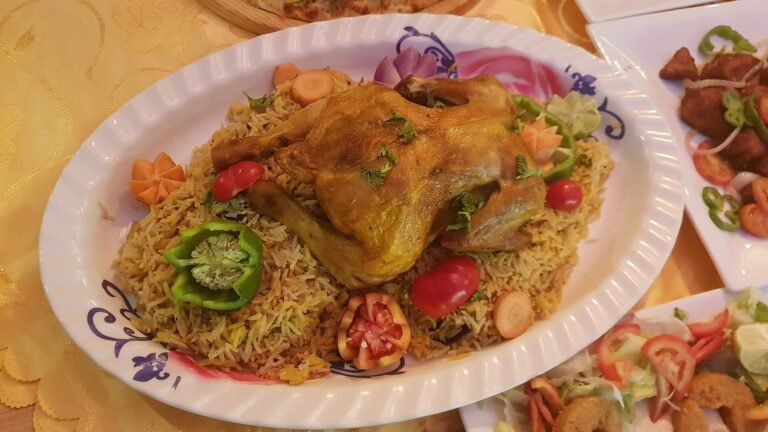
Our guide to Somaliland food explains what to eat and how.
How to pronounce Somali

Somali is written in the Latin alphabet, which was adopted as the official national alphabet in 1972. It uses every English letter except p, v and z, but a few letters stand for sounds English does not have:
- c is a sound made deep in the throat, like the Arabic ʿayn: a pharyngeal sound, as in caano (milk).
- x is a breathy “h” from the throat, as in xalwo, a sweet halva.
- q is a “k” made further back in the throat, as in qahwa.
- dh is a “d” made with the tongue curled back, as in dhow (near).
- kh sounds like the “ch” in Scottish loch.
- Double vowels are long: long vowels are written by doubling the vowel, so subax wanaagsan stretches the “aa”.
Do not worry about getting it perfect. People will be delighted that you tried.
A language of poets

Somali has a rich oral tradition, and poetry is still loved across Somaliland. To understand why words carry such weight here, read When Words Were Mightier Than Weapons.
Pack a few of these Somali phrases for travellers along with your passport. Mahadsanid for reading, and nabadgelyo until the next story.
Sources
- Constitution of the Republic of Somaliland, Chapter One, Government of Somaliland (accessed 30 October 2026).
- The English language and Somaliland: a strategic relationship, Sairah Rees, Windle Trust International (accessed 30 October 2026).
- Somali language, Wikipedia (accessed 30 October 2026).
- English-Somali Phrasebook with Useful Wordlist, Susan D. Somach (ed.), Center for Applied Linguistics, 2000.
- As-salamu alaykum, Wikipedia (accessed 30 October 2026).
- Wa alaykumu s-salam, Wikipedia (accessed 30 October 2026).
- Somali cuisine, Wikipedia (accessed 30 October 2026).
- Somali Latin alphabet, Wikipedia (accessed 30 October 2026).
Last checked 30 October 2026. Found an error or something out of date? Tell us.