Somali Tea: Shaah, Coffee and Café Culture in Somaliland
Somali tea is sweet, spiced and never far away. From street stalls with cow-skin stools to diaspora cafés, here is how Somaliland drinks its tea and coffee.
CULTURE · FOOD AND DRINK
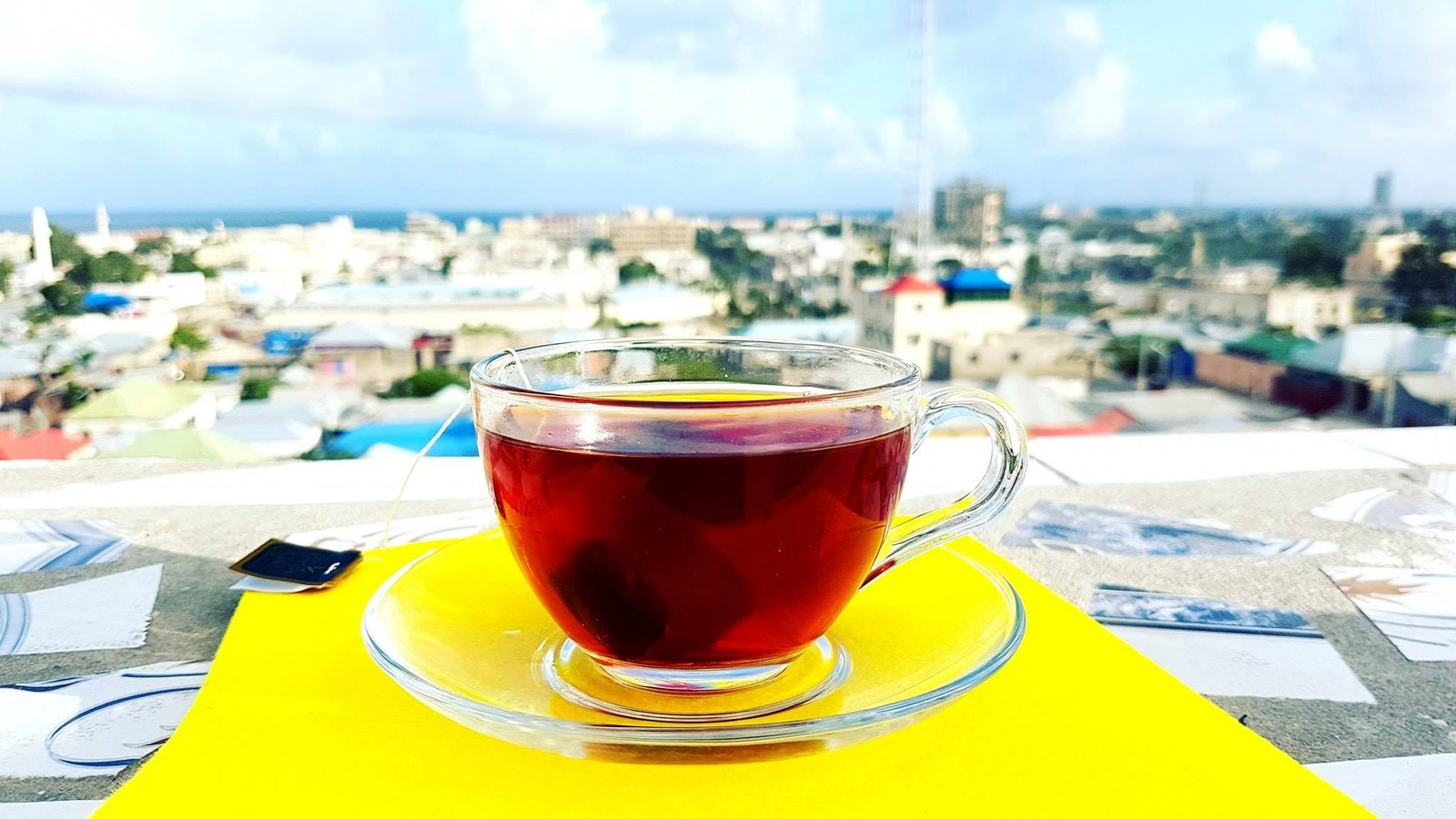
In Somaliland, the day often begins and ends with a glass of tea. Somalis often start the day with tea (shaah) or coffee (qahwa), and the breakfast bread canjeero is washed down with a cup of tea. If someone offers you a glass, it is usually the start of a long conversation.
What is Somali tea?
Somali tea, or shaah, is brewed from black tea leaves. It is flavoured with spices such as ginger, cardamom and cinnamon, and unlike many spiced teas, it is made without black pepper. Cloves are often added too; a visiting cook who learned to make it in Hargeisa described a very sweet blend of black tea, cardamom, cinnamon, ginger and cloves. Every household has its own mix.
There are two main ways to drink it:
- Shaah rinji: plain spiced tea, served as it is.
- Shaah cadeeys: milky tea. The milk is added after the brewing, not during it.
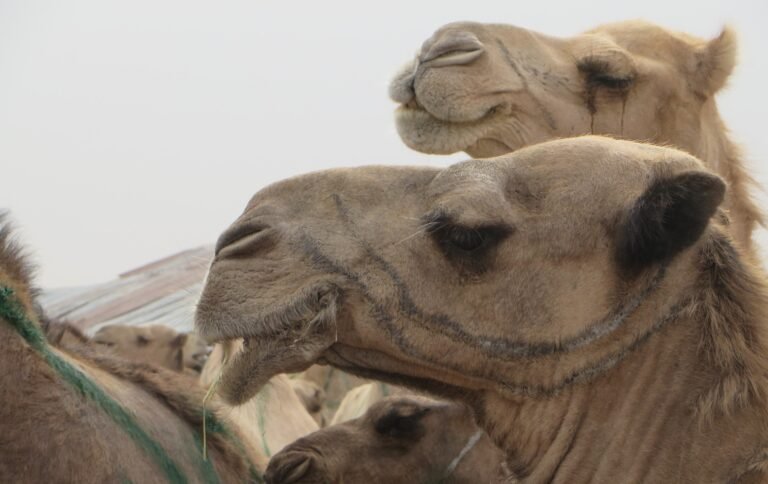
In Hargeisa, look out for a local speciality: sweetened Somali tea made with camel milk. Our story on camels in Somaliland explains why camel milk matters so much here. And before bed, many families drink a glass of milk spiced with cardamom.
Where to drink Somali tea in Hargeisa
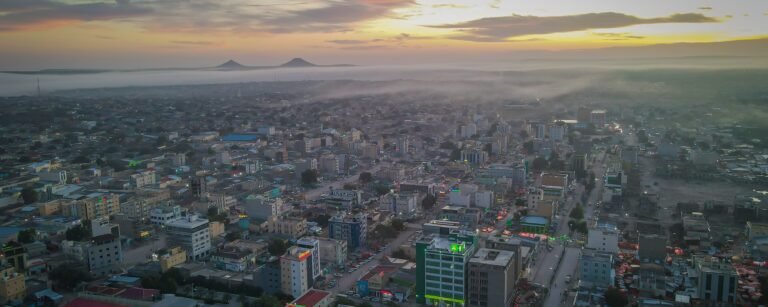
Tea is not only drunk at home. In 2017, a World Bank blog counted hundreds of tea stalls across the city, with plastic chairs or stools made from cow skin. They are among the best places to watch Hargeisa go by.
The stalls run on mobile money, too. In 2018, The National met a seller who had sold sweet Somali tea on the streets of Hargeisa for decades. His customers paid almost entirely by phone. “I never see cash,” he said. Our guide to money in Somaliland explains how paying by phone works.
Fadhi ku dirir: the art of talking over tea
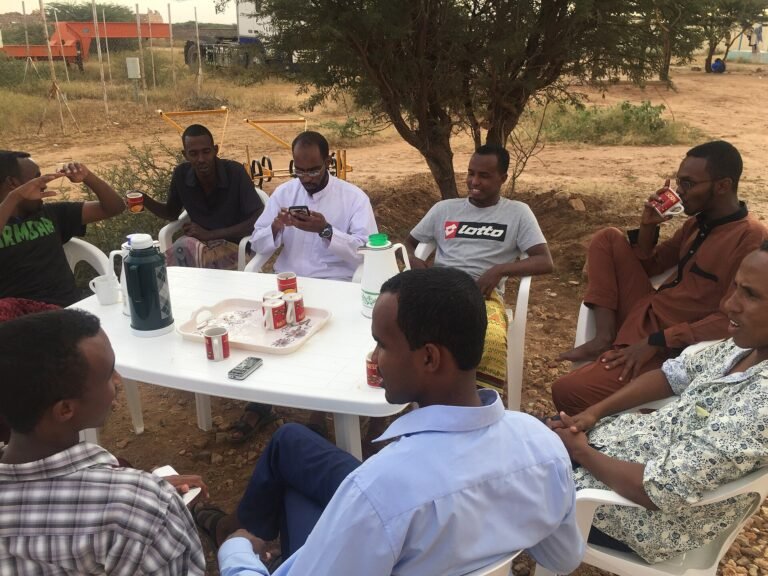
Around the tea glasses, something else happens. Somalis call it fadhi ku dirir, literally fight while sitting down. It describes how men gather to sit, sip tea or coffee, and engage in conversations that can last for hours. Talk usually starts with politics and the news, then wanders into history and family stories. The World Bank blog put it simply: no trip to Hargeisa is complete without a quick fadhi ku dirir session in the shade.
Some tea shops are famous for it. In the Kheyria area of Hargeisa, the Dulcad tea shop is named for its exposure to the sunlight. People from every walk of life meet there to drink tea and argue about politics, and reporters from international news agencies drop in to hear the news.
Coffee in Somaliland: from Berbera to the café
Coffee has deep roots on this coast. The original domesticated coffee plant is said to have been from Harar, in today’s Ethiopia, and much of it reached the world through Somali ports. Historians record that Mocha imported up to two-thirds of its coffee from Berbera-based merchants. On the international market, the beans were sold as Berbera Coffee. In 1856, a trade journal even judged them superior to Mocha in Bombay.
Berbera’s trade had its own calendar. The port held an annual fair during the cool, rain-free months between October and April, when caravans brought goods to the coast. Today it is a modern port, and our story Berbera: Where the Desert Meets the Sea shows what the town is like now.
The new café scene
In modern Hargeisa, coffee has a new home: the café. Somalis returning from abroad have helped. Ayan Hussein, who returned after years in London, opened Kulan Art Café in Hargeisa. Another returnee set out to bring the Italian Café Barbera brand to Hargeisa in 2016, and by 2017 the World Bank blog was recommending it for good coffee. Coffee shops are also stages; one Hargeisa singer sings at one of the coffee shops in Hargeisa, where residents come to listen.
How to drink tea like a local
- Say yes: when tea is offered, accept it. Our guide to Somaliland etiquette explains the basics of hospitality.
- Expect it sweet: Somali tea is usually very sweet. Ask for less sugar if you prefer.
- Pair it with breakfast: try it with canjeero; our guide to Somaliland food explains what else to order.
- Learn the words: shaah is tea and mahadsanid is thank you. See our Somali phrases for travellers.
Somali tea is more than a drink. It is how Hargeisa slows down, meets friends and settles the day’s arguments. Pull up a stool, take a glass and listen. Then plan the rest of your stay with our 48 hours in Hargeisa.
THE SOMALILAND LETTER
Get the next story by email
New stories, travel updates and photos from Somaliland. Free, once a month.
No spam. Unsubscribe anytime. See our Privacy Policy.
Sources (11)
- Somali cuisine, Wikipedia (accessed 30 October 2026).
- A Line Cook in Hargeisa, Sam Chapple-Sokol, Praxis, The Fletcher School, Tufts University, 1 January 2013.
- 24 hours in Hargeisa, Somaliland, World Bank Blogs, 22 December 2017.
- Somaliland’s world-leading move towards a cashless culture, Charlie Mitchell, The National, 17 October 2018.
- Fadhi ku dirir: cultural symbol or symptom of despair?, Mahbub M. Abdillahi, Geeska, 20 June 2024.
- Somaliland: The Chatham House in Hargeisa, Dulcad Tea-shop, Horn Diplomat, 20 January 2019.
- History of coffee, Wikipedia (accessed 30 October 2026).
- Berbera, Wikipedia (accessed 30 October 2026).
- Reverse brain drain: heading home to Somalia, Tristan McConnell, PRI The World, 31 July 2016.
- Somaliland: Cafe Barbera brings centuries-old coffee traditions to Hargeisa, Pendo Mwajuma, Somaliland Sun, 6 January 2016.
- Digital media and coffee shops are helping to nurture aspiring Somali singers, Said Isse, Global Voices, 25 February 2022.
Last checked 30 October 2026. Found an error or something out of date? Tell us.