Somaliland Wildlife: Gazelles, Antelopes and Where They Live
Somaliland wildlife includes thirteen recorded antelope species, from Salt’s dik-dik to the long-necked gerenuk. Here is what lives on the plains and hills, how each species is doing, and where people have seen them.
NATURE · WILDLIFE
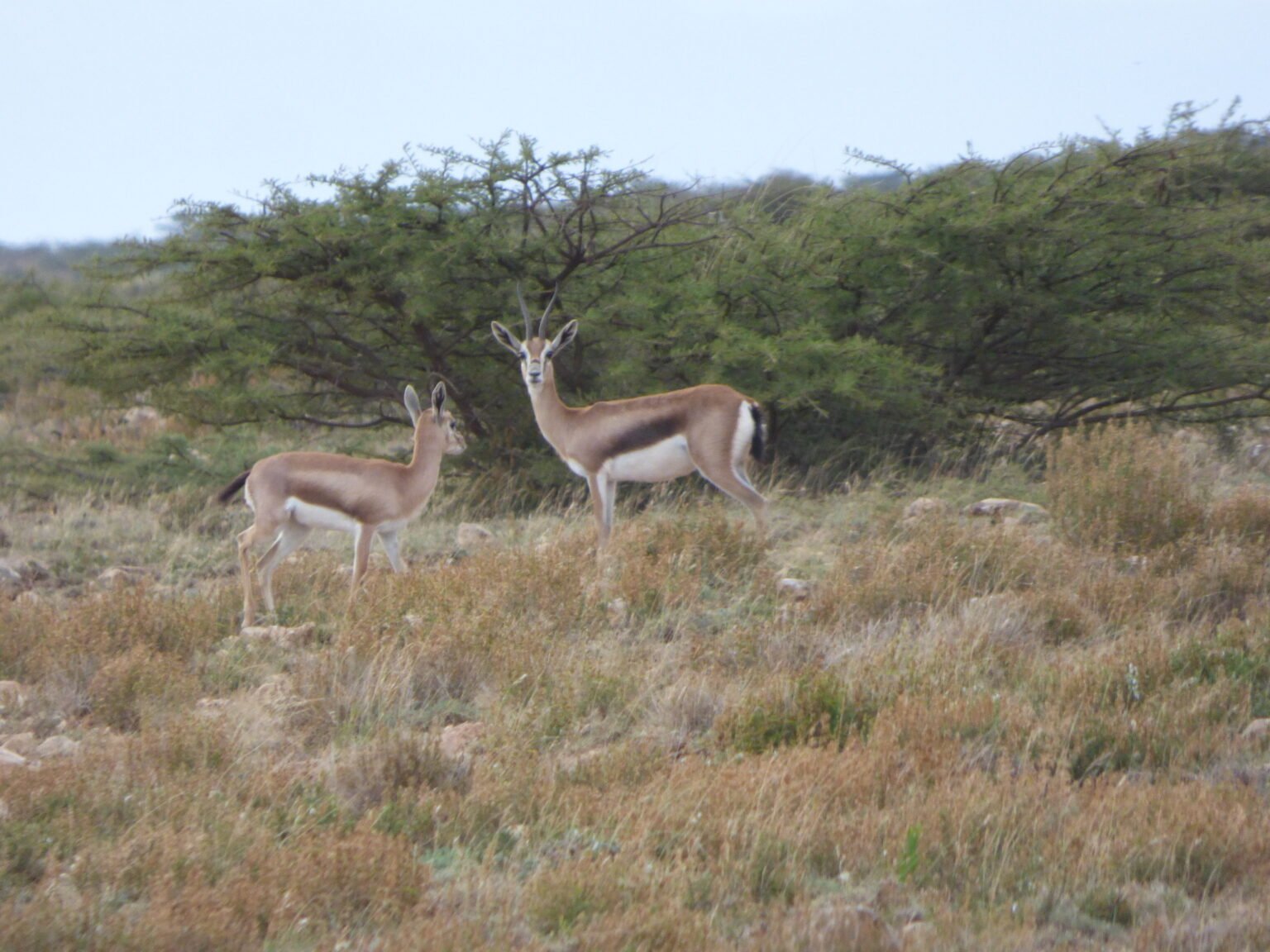
In July 2010, two scientists drove about 2,000 km across Somaliland in search of antelopes. Their report, Current Status of Antelopes in Somaliland, was published in December 2015 by the IUCN Antelope Specialist Group and Nature Somaliland. It is the most detailed survey we found. The report records thirteen antelope species, counts three as locally extinct, and finds that all except Salt’s dik-dik have declined sharply in range and numbers.
The picture is mixed, though. The same report also found gazelles, beira and gerenuk still living on the plains and hills. This guide follows its findings species by species.
Somaliland wildlife at a glance
The table below summarises what the 2015 IUCN report says about the main species. Statuses are those listed in the report, so check the IUCN Red List for any later change.
| Species | Status in the report | Where it was recorded |
|---|---|---|
| Speke’s gazelle | Endangered | Plains from about 44.6°E eastwards, including Aroori, Ban Cade and Sarar |
| Pelzeln’s gazelle | Vulnerable | Northern coastal plain only |
| Soemmerring’s gazelle | Vulnerable | Giriyaad and Aroori plains, and near Zeila |
| Beira | Vulnerable | Plateau hills and the Golis range |
| Gerenuk | Near Threatened | Bush from west of Hargeisa eastwards |
| Salt’s dik-dik | Common and widespread | Widespread |
| Klipspringer | Least Concern | Steep mountain slopes, including Daallo |
| Dibatag | Locally extinct (may survive in the Nogaal Valley) | No recent reports |
Speke’s gazelle, the plains specialist
Speke’s gazelle is the smallest of the gazelle species, according to Wikipedia. It has inflatable nasal passages, which it uses to make a loud honking sound. The species is confined to the Horn of Africa and has been listed as Endangered since 2007.
In 2010, the survey team recorded 145 Speke’s gazelles in groups of one to nine. They were scattered across the plains, including Ban Cade, Sarar, Aroori and the lower slopes of Ga’an Libaax. However, none were seen in the red sand bush of the southern Haud.
Pelzeln’s and Soemmerring’s gazelles
Pelzeln’s gazelle, a form of the dorcas gazelle, is found only on the northern coastal plain. The report says it is still present there, but apparently in low numbers. A 1999 survey estimated 281 animals across 10,000 km² of north-west Somaliland. This is the hot lowland around Berbera, where the desert meets the sea.
Soemmerring’s gazelle is now rarer still. In 2010, the team counted up to 50 on the Giriyaad plains, near the Djibouti border, and a group of 21 on the Aroori plains south of Burao. Villagers on the central plains told them the species no longer occurred there.
Beira and klipspringer, antelopes of the hills
The beira is a small antelope with disproportionately large ears and a reddish-grey back. It weighs about 9–11.5 kg. It lives on rocky hillsides in southern Djibouti, Somaliland, northern Somalia and the far north-east of Ethiopia. Remarkably, it does not need to drink, because it gets its water from the plants it eats.
The 2010 survey saw ten groups of beira, each of two to six animals. The species is widely but thinly spread across the plateau hills and the Golis range. In the Beira Hills, east of Hargeisa, the report says it is regularly observed.
The klipspringer lives on steep slopes along the main mountain range. In 2010 the team saw a group of three on the Daallo escarpment. Our guide to the Daallo mountains covers that landscape in detail.
Gerenuk and dik-dik, the browsers of the bush
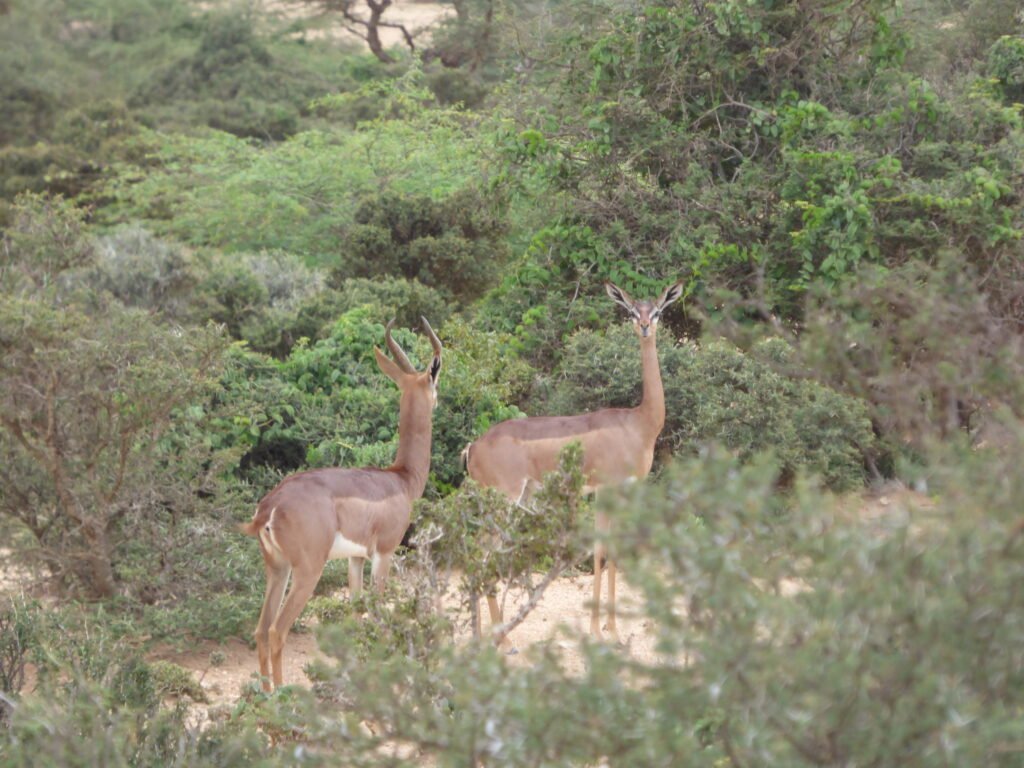
The gerenuk takes its name from Somali, where it means giraffe-necked, according to Britannica. It stands on its hind legs to reach leaves too high for other antelopes.
In 1910, the naturalist Drake-Brockman called it the commonest antelope in Somaliland. In 2010, the survey team saw it at seven places, in groups of one to twenty. These sightings stretched from west of Hargeisa eastwards, in acacia and mixed bush.
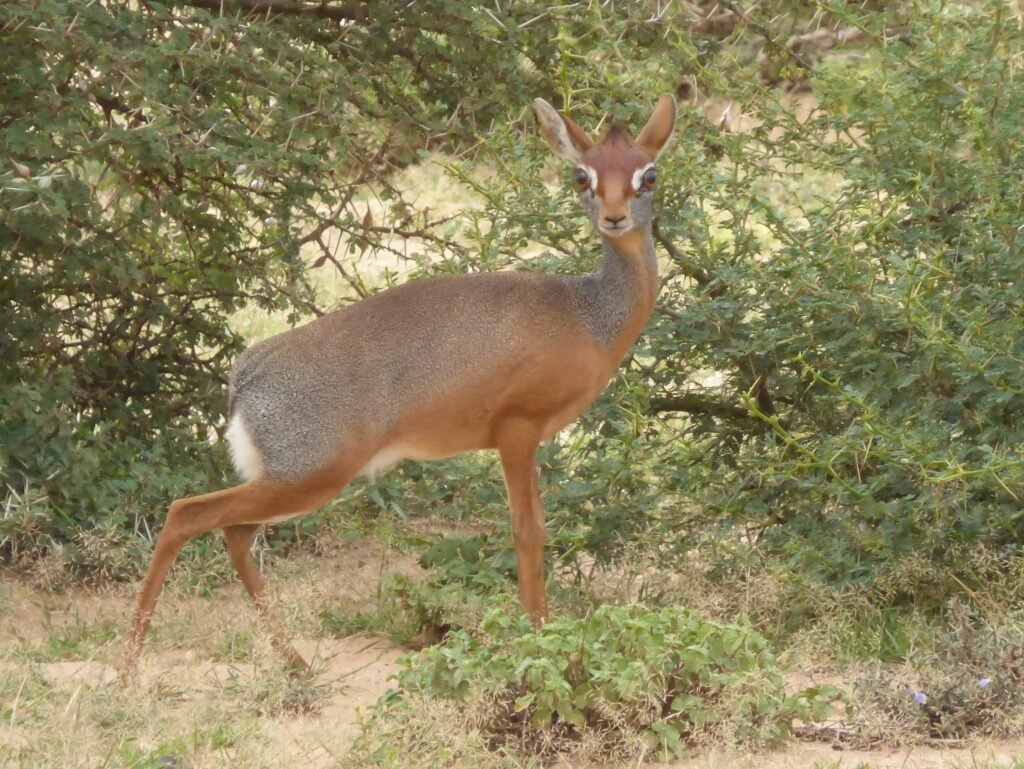
Salt’s dik-dik is the good news. The report calls it a common and widespread species, and it is the only antelope that has not declined. A second species, Guenther’s dik-dik, has been confirmed only near Hurayda in the south.
Rare and lost: dibatag, kudu and oryx
The dibatag is a slim antelope with a long neck. It holds its black tail straight up when it runs, and its name comes from the Somali words for “tail” and “erect”. It once lived in southern Somaliland. Local people told the survey team it had not been seen for about 40 years, although local reports suggest it may survive in the Nogaal Valley.
The kudus are also hard to find. In 2010 the team found greater kudu tracks and droppings at Ga’an Libaax, but no confirmed sightings. Lesser kudu was not seen in the wild, although captive animals were seen in Hargeisa. The beisa oryx appears to no longer occur in Somaliland. Swayne’s hartebeest was considered extinct by the early 1900s, reportedly because of rinderpest.
What threatens Somaliland wildlife?
The report names several pressures on Somaliland’s antelopes:
- Charcoal. Cutting acacia for charcoal is widespread. A 2004 study found that 65% of the charcoal in Hargeisa and Berbera came from live trees. Losing these trees removes shade the beira depends on.
- Live trade. The authors consider live capture for trade to the Gulf countries a bigger threat, and trapping for export has increased.
- Overgrazing. About 36% of Somaliland is degraded, and perennial grasses have largely disappeared from the Aroori plains.
- Invasive plants. Prosopis juliflora has spread across much of the coast and western Somaliland.
Whether hunting is still a major threat is, in the report’s words, unclear. On the positive side, the government has tried to control tree cutting and charcoal production. Its National Vision 2030 also plans national reserves and game parks, and anti-poaching laws.
The cheetah connection
Antelopes are not the only animals caught up in trade. The IUCN report notes that Somaliland became a regional centre for illegal trade in cheetahs. More than 40 cheetahs were confiscated in the Horn of Africa between 2011 and 2013, mostly in Somaliland.
Today the Cheetah Conservation Fund cares for confiscated cats near Hargeisa. At the end of 2025, its rescue centre was caring for 128 cheetahs, including 30 cubs under a year old. Read the full story in our article on the Somaliland cheetah rescue centre.
Where to look for Somaliland wildlife
Sightings are never guaranteed, but the survey points to these areas:
- Beira Hills, east of Hargeisa: beira are regularly observed there.
- Bush west and east of Hargeisa: gerenuk and Salt’s dik-dik.
- The coastal plain: Pelzeln’s gazelle, in low numbers.
- Open plains further east: Speke’s gazelle.
A few simple habits help. Travel with a local driver who knows the area, keep your distance, and never buy a wild animal or animal product. Bird lovers will find plenty more in our guide to the birds of Somaliland.
Before heading east, check the latest official advice. The UK Foreign Office advises against all travel to Togdheer, Sanaag and Sool, and our guide Is Somaliland safe? explains the rest.
Somaliland wildlife is a story of hardy survivors. Several of these antelopes, such as Speke’s gazelle and the beira, live only in the Horn of Africa, which makes every sighting special.
Sources (7)
- Current Status of Antelopes in Somaliland, David P. Mallon and Abdi A. Jama, IUCN/SSC Antelope Specialist Group and Nature Somaliland, December 2015.
- Speke’s gazelle, Wikipedia (accessed 7 November 2026).
- Beira (antelope), Wikipedia (accessed 7 November 2026).
- Dibatag, Wikipedia (accessed 7 November 2026).
- Gerenuk, Encyclopaedia Britannica (accessed 7 November 2026).
- Cheetah Strides, Issue 31, Cheetah Conservation Fund, Q1 2026.
- Somalia travel advice: regional risks, Foreign, Commonwealth & Development Office, UK Government (accessed 7 November 2026).
Last checked 7 November 2026. Found an error or something out of date? Tell us.