Birds of Somaliland: Rare Endemics, Seabird Islands and a Lost Lark
Somaliland birds include a pigeon that almost no one has seen, a finch found only in these mountains and islands that hold huge seabird colonies. Here is what lives where, and when to look.
NATURE · WILDLIFE
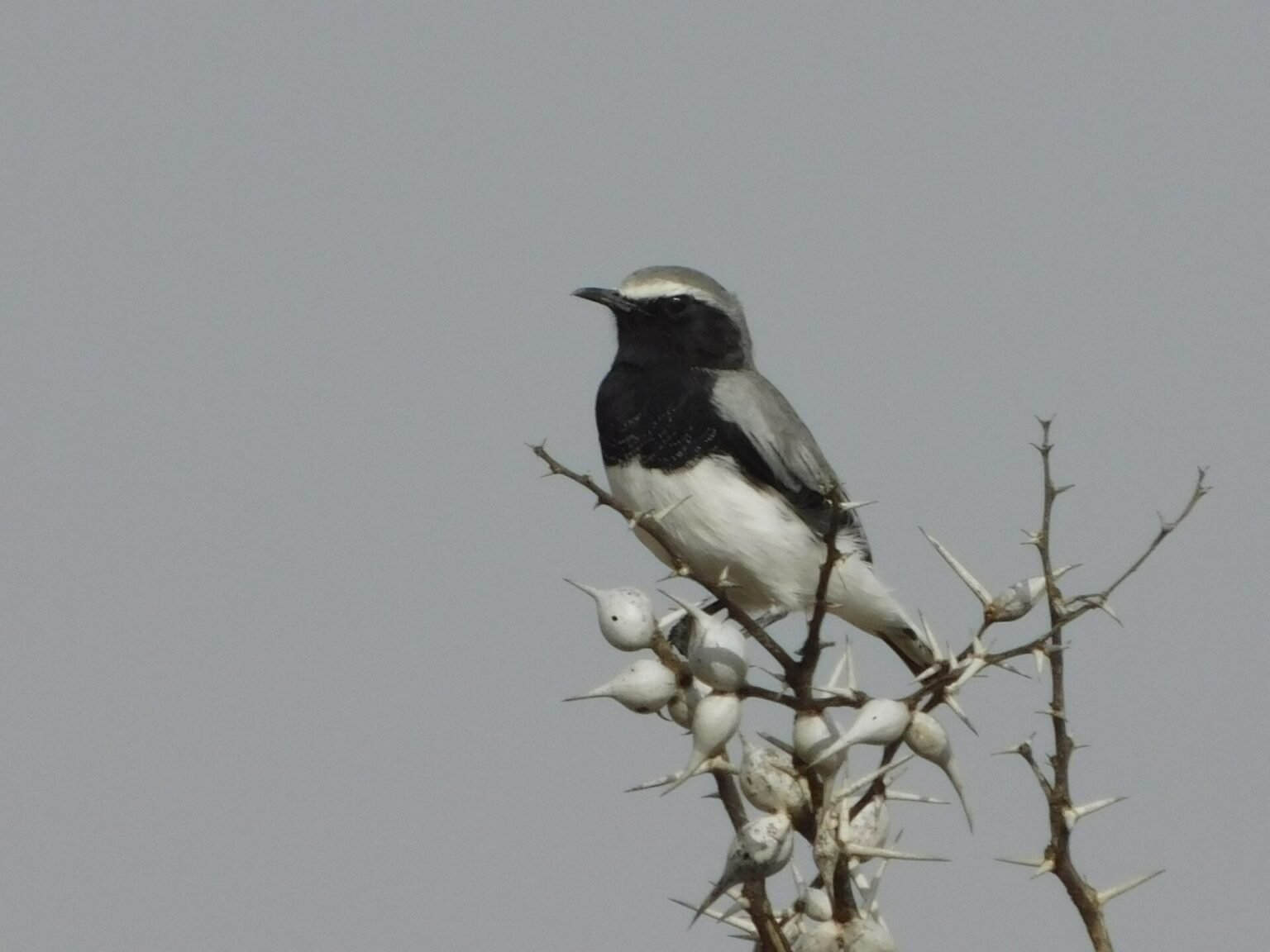
Most visitors come for the rock art, the markets and the coast. Birdwatchers come for something rarer: species that live in this corner of the Horn of Africa and almost nowhere else.
How many birds live in Somaliland?
More than 700 species have been recorded. The Cheetah Conservation Fund, which works in Somaliland, puts the number at over 727 bird species. A Wikipedia checklist lists 725 species, including rare visitors.
Most of these birds are African. However, the African Bird Club notes that the region also has a Middle Eastern component, which makes sense for a coast that faces Arabia across the Gulf of Aden.
Somaliland birds found nowhere else
The mountains of the north form what BirdLife International calls the North Somali mountains Endemic Bird Area. It covers about 32,000 km², from 300 to 2,100 metres above sea level. Three birds there have very small ranges: the Somali pigeon, the Somali thrush and the Warsangli linnet.
The Somali pigeon is a pale grey pigeon with a mauve cap and yellow eyes. It lives on dry coastal cliffs and hills with little vegetation. It is so rarely reported that, as of February 2022, eBird held only six observations of it from the whole of Africa. It even appears on money: Somaliland’s 1-shilling coin, first minted in 1994, depicts a Somali pigeon.
The Warsangli linnet is a small finch with a tiny world range: BirdLife’s Red List assessment records it only in the Somali lands. It lives in dry forest and high shrubland, and it is listed as Near Threatened, mainly because of habitat loss.
The Somali thrush shares the same high ground. According to BirdLife, both the thrush and the linnet depend on juniper forest that survives at only a handful of sites.
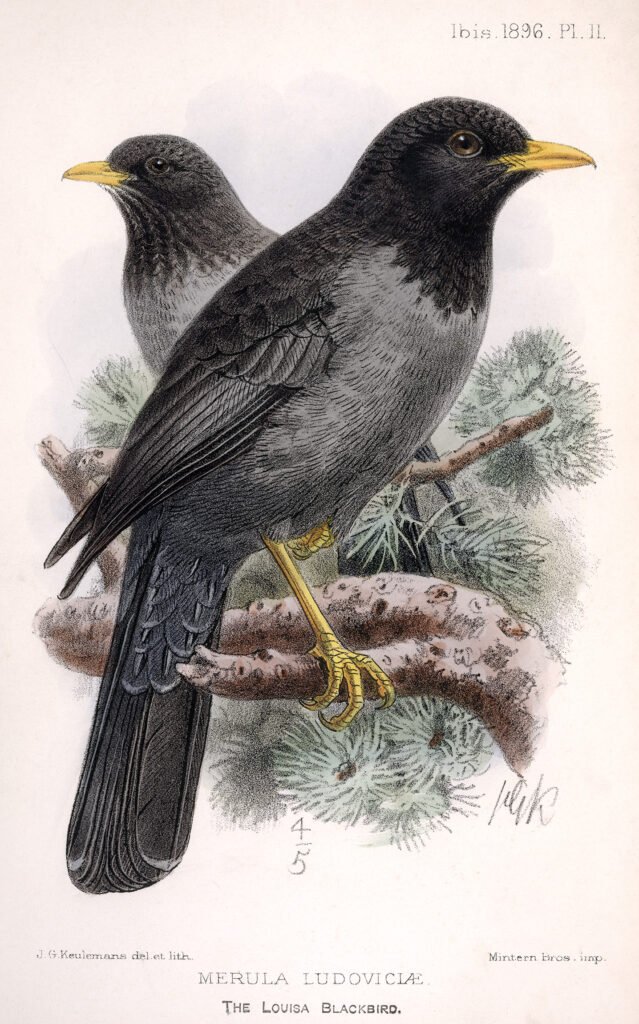
Daallo: a forest for rare Somaliland birds
The best of that juniper forest grows on the Daallo escarpment, near Erigavo. BirdLife has named the area an Important Bird Area, and its notable birds include the Warsangli linnet and the Socotra golden-winged grosbeak.
The forest may hold even more. The African Bird Club lists a “Daallo” scops owl and a “Daallo” cisticola as forms that scientists have not yet formally described. For the trees, the mist and the story of the forest, read our guide to the Daallo mountains.
The UK Foreign Office currently advises against all travel to Sanaag, the region that includes Daallo. Check the latest official advice and read Is Somaliland safe? before making plans for the east.
The lark that went missing
Somaliland’s most mysterious bird is a lark. Archer’s lark, also called the Liben lark, was described in 1920 and named after Geoffrey Archer, a British colonial official. It lives in open grassland, and it is Critically Endangered, with an estimated 50 to 250 mature birds left.
One of its old sites is the Wajaale plain, on the border with Ethiopia. In May 2010, a team of ornithologists spent three days searching the Tog Wajaale Plain. They found no Liben larks, although three other lark species were present and displaying. The team noted that past farming and an invasive weed, Parthenium hysterophorus, may have changed the grassland.
So the lark may still be out there, or it may be gone from Somaliland. Either way, a birder who finds one would make news.
Seabirds and the coast
Off the coast near Zeila, the low, sandy islands of the Zeila Archipelago are home to major bird colonies. Sa’ad ad-Din, the largest island, about six miles offshore, has had more than 100,000 breeding pairs recorded. The African Bird Club also names these islands, and Jasiira Maydh further east, as sites for breeding seabirds. For the old port and its history, see our guide to Zeila.
Closer to the usual travel route, the African Bird Club lists the Berbera area and the Gulf of Aden among the country’s birding sites. A walk along Batalaale beach in the late afternoon is an easy way to start.
When to go birdwatching in Somaliland
The season matters more than almost anything else. The African Bird Club gives this advice:
| Season | What to expect |
|---|---|
| March to May, August to October | The rains, when most birds breed |
| September to October, March to April | The peak for passage migrants |
| May to August | Very hot; the club advises avoiding coastal areas |
That makes April and October strong months for a birding trip. For the weather month by month, read the best time to visit Somaliland.
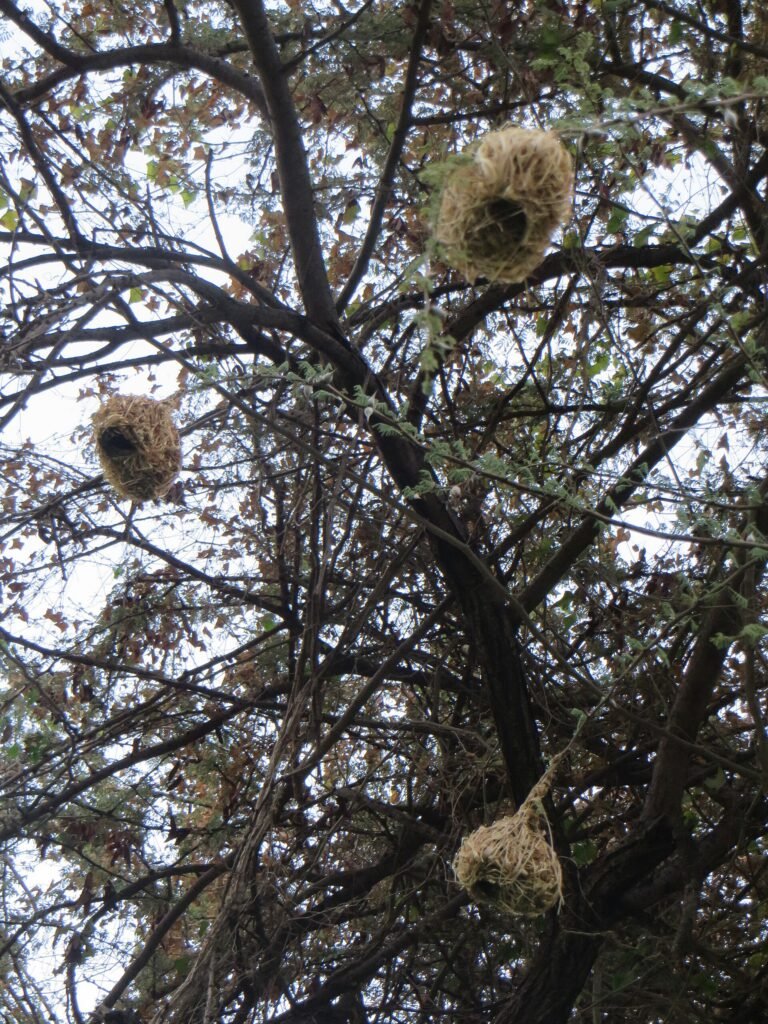
Planning a birding trip
- Binoculars and a field guide. Pack them before you fly; our list of what to pack for Somaliland covers the rest.
- A driver who knows the land. Ask your hotel to arrange transport outside Hargeisa, as our guide to getting around Somaliland explains.
- Ask before you photograph people. A long lens can make people uneasy, so read our notes on Somaliland etiquette.
- Check the latest official advice for every region on your route.
Somaliland birds are not easy to find, and that is part of the appeal. Few places on Earth still hold birds this rare and this little known. Come in the rains, bring patience, and keep an eye on the cliffs and the coast.
THE SOMALILAND LETTER
Get the next story by email
New stories, travel updates and photos from Somaliland. Free, once a month.
No spam. Unsubscribe anytime. See our Privacy Policy.
Sources (12)
- Unveiling Somaliland’s wildlife: insights from the camera trap project, Zilá Motta, Cheetah Conservation Fund, 19 March 2025.
- List of birds of Somaliland, Wikipedia (accessed 6 November 2026).
- Somalia: country introduction, African Bird Club (page updated 25 May 2026; accessed 6 November 2026).
- North Somali mountains, Endemic Bird Area factsheet, BirdLife International (accessed 6 November 2026).
- Somali pigeon, Wikipedia (accessed 6 November 2026), citing BirdLife International (2024) and eBird.
- Somaliland shilling, Wikipedia (accessed 6 November 2026).
- Warsangli linnet, Wikipedia (accessed 6 November 2026), citing BirdLife International (2021), IUCN Red List.
- Daallo Mountain, Wikipedia (accessed 6 November 2026).
- Archer’s lark, Wikipedia (accessed 6 November 2026), citing BirdLife International (2018) and Donald et al. (2010).
- A survey for the Critically Endangered Liben Lark Heteromirafra archeri in Somaliland, north-western Somalia, Michael S. L. Mills, Callan Cohen, Julian Francis and Claire N. Spottiswoode, Ostrich, 2015 (record via FAO AGRIS).
- Zeila Archipelago, Wikipedia (accessed 6 November 2026), citing Redman and Stevenson, Birds of the Horn of Africa (2009).
- Somalia travel advice: regional risks, UK Foreign, Commonwealth & Development Office (accessed 6 November 2026).
Last checked 6 November 2026. Found an error or something out of date? Tell us.