Somaliland’s Economy Explained: Livestock, Remittances and the Road to Berbera
Camels bound for the Gulf, money sent home from abroad, and a port that looks toward Ethiopia. How the small, self-governing Somaliland economy works, and where it could grow.
OPPORTUNITIES · ECONOMY
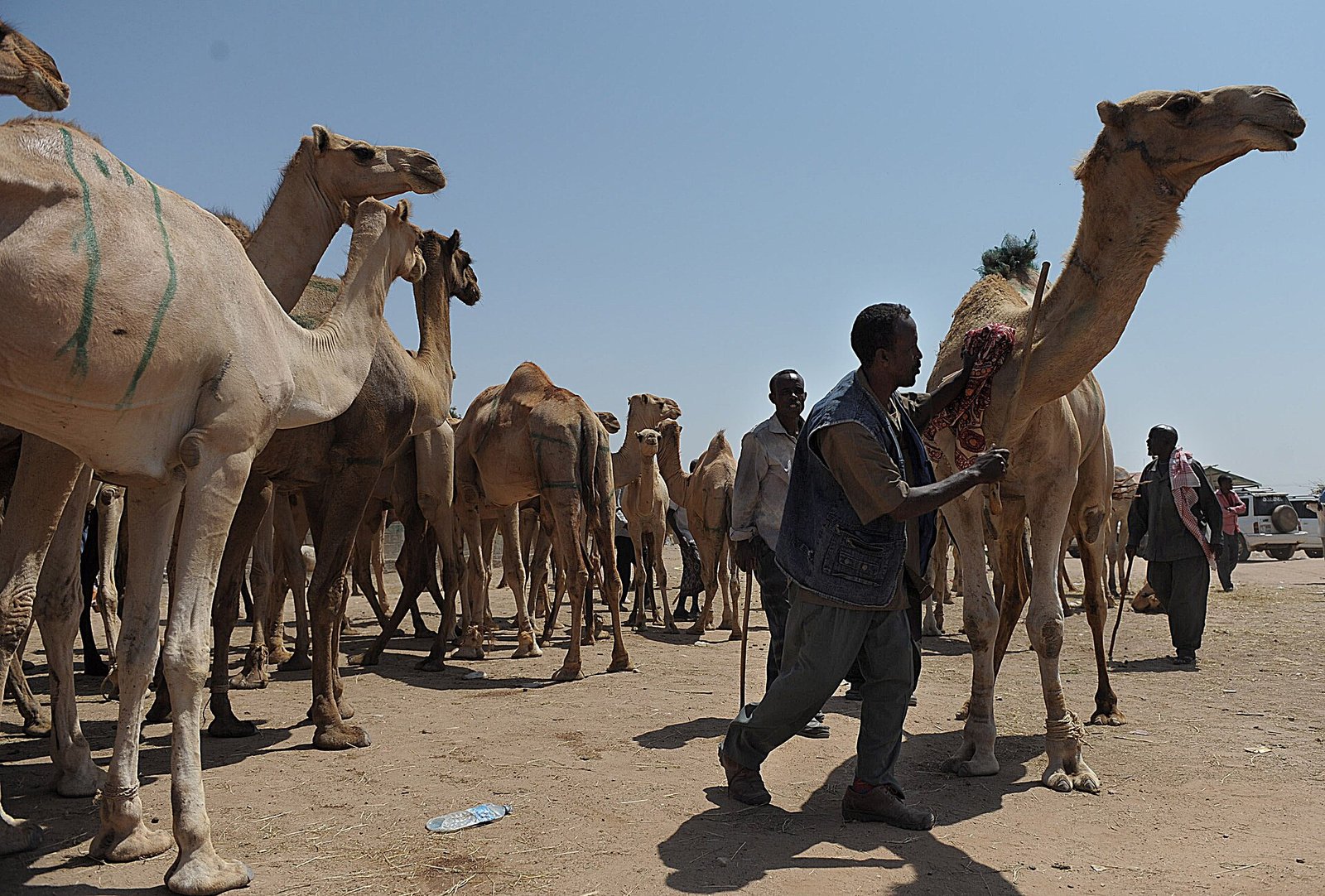
Walk through the livestock market in Hargeisa early in the morning and you are looking at the heart of the Somaliland economy: camels, sheep and goats bought and sold before being trucked to the coast and shipped across the Red Sea. Add the money that Somalilanders abroad send home, a busy import trade through Berbera and a government that has run its own affairs since 1991, and you have the outline of one of the most unusual economies in Africa.
How big is the Somaliland economy?
The honest answer is that estimates vary, because measuring an economy that runs largely on cash, phones and informal trade is hard.
- Somaliland’s Central Statistics Department put nominal GDP at about US$2.93 billion in 2020, or around $697 per person.
- A later Ministry of Planning report cited on Wikipedia gives about $4.58 billion, or $912 per person.
- The Council on Foreign Relations, quoting the government, cites about $7 billion in 2022, much of it driven by remittances.
Whichever figure you take, the economy is small but growing. Official data show average real growth of 1.9% a year between 2012 and 2020, with a dip in the COVID year of 2020, and an analysis of the 2025 budget reports 3.2% growth in 2023.
Livestock: the backbone of the Somaliland economy
Livestock has always been the core of the economy. In 2012 it made up 91% of Somaliland’s exports; by 2020 the share was 59% as other exports grew. A report for ODI valued livestock exports at about $170 million in 2020. For a much older chapter of this coast’s trade, read The Ancient Treasure That Linked Somaliland to Rome.
Most animals are shipped from Berbera to the Arabian Peninsula. Buyers include Saudi Arabia, Oman and other Gulf states, as well as Djibouti and Ethiopia, and demand peaks before the Hajj, when animals are exported to feed pilgrims in Mecca. In the big markets of Burao and Yirowe, up to 10,000 sheep and goats can change hands in a day.
Money from abroad
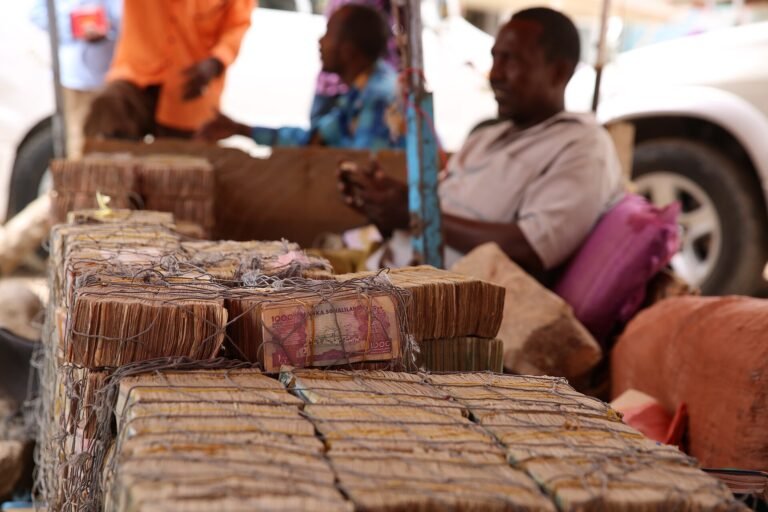
Money sent home by Somalilanders abroad keeps families, businesses and building sites across the Somaliland economy going. The ODI report estimates that remittances reached as much as $1.4 billion in 2020, several times the value of all exports. Much of it arrives through Dahabshiil, the region’s largest money-transfer company, which in 2014 opened the region’s first commercial bank.
Once it arrives, money moves by phone. Mobile money is how Somalilanders pay for almost everything; our guide to money in Somaliland explains how it works for visitors.
Trade, imports and the budget
The Somaliland economy imports far more than it sells. In 2020, imports of goods and services were worth about $1.34 billion, against exports of $229 million. Most imports are consumer goods.
That trade also funds the state. The 2025 national budget was about $556 million, up 11.3% on 2024. Taxes on international trade are the biggest source of central-government revenue, at around 46%, and the port of Berbera collects most of the customs income. On the spending side, security takes the largest share (about 38%), with education at about 7% and health at about 5%.
Berbera: the big bet
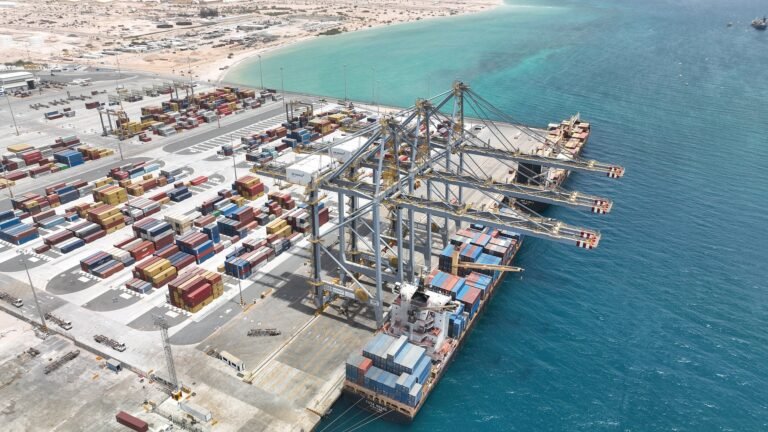
The port of Berbera is where the ambitions of the Somaliland economy are concentrated. DP World, Somaliland and Ethiopia have invested in a modern container terminal, a road corridor to Addis Ababa and an economic zone next to the port. We tell that story in Berbera Port: Why It Matters for the Region, and the practical side of setting up a company in Doing Business in Somaliland.
Oil and minerals: still a question mark
For now, mining in Somaliland is mostly simple quarrying. Oil exploration has a longer history: Genel Energy holds the SL10B13 licence and, in its March 2026 results, said it aims to make progress towards drilling the Toosan-1 prospect in 2027. Until a well is drilled, any oil wealth remains a possibility, not a fact.
Challenges and opportunities for the Somaliland economy
Somaliland’s biggest economic constraint is political. Without broad international recognition, it cannot borrow from the World Bank or the IMF, which limits large public investment. Youth unemployment is described as very high, and the economy depends heavily on livestock and on money from abroad.
The other side of the ledger is what makes investors look twice: a young population, a diaspora with capital and skills, a deep-water port on the Gulf of Aden, and a growing list of sectors (logistics, agriculture, fisheries, energy and services) where competition is still thin. For a first look at the practical steps, start with Doing Business in Somaliland.
Sources
- Somaliland GDP 2012–2020 Report, Central Statistics Department, Ministry of Planning and National Development.
- Somaliland: The Horn of Africa’s Breakaway State, Council on Foreign Relations, updated 21 January 2025.
- Somaliland 2025 Budget Analysis, Ahmedi Yusuf, ISIR Institute, March 2025.
- AfCFTA and the Berbera Corridor: Somaliland, report for ODI.
- Meat for Mecca: Somaliland Exports Livestock for the Hajj, Jason Patinkin, Voice of America.
- Genel Energy issues Full-Year Results, Iraq Business News, 19 March 2026.
- Economy of Somaliland, Wikipedia (accessed 25 October 2026).
Last checked 25 October 2026. Figures are estimates from the sources listed; they differ between sources and change over time. Found an error or something out of date? Tell us.