26 June 1960: The Five Days of the State of Somaliland
On 26 June 1960, British Somaliland became independent as the State of Somaliland. Five days later it joined Somalia. Here is what happened in between, how the union was made, and why the date still matters.
HISTORY · 1960
Somaliland has two independence days. The better known is 18 May, which marks the 1991 declaration. The older one is 26 June. On that day in 1960, the State of Somaliland came into being. It lasted only five days, but those days still shape the debate about Somaliland’s status.
Somaliland declared independence from Somalia in 1991 and governs itself. Somalia regards it as part of its territory. Israel (December 2025) is so far the only UN member state to recognise it (see Somaliland’s foreign relations).
The State of Somaliland at a glance
Here are the key facts in one place.
| Independence | 26 June 1960, from the United Kingdom |
| Union with Somalia | 1 July 1960, forming the Somali Republic |
| Territory | The former British Somaliland Protectorate |
| Prime Minister | Muhammad Haji Ibrahim Egal |
| Parliament | A Legislative Assembly of 33 elected members |
| Recognition | About 30–35 states, by different counts (see below) |
From protectorate to State of Somaliland
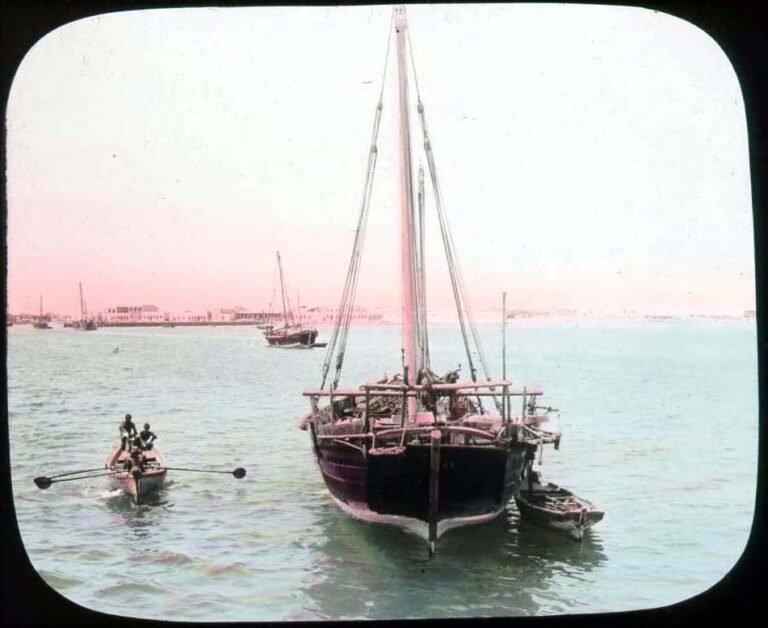
Before 1960, the territory was the British Somaliland Protectorate. Read its story in British Somaliland.
On 17 February 1960, voters elected a new legislature. The Somali National League (SNL) won 20 of the 33 seats. Of the rest, the United Somali Party took 12, and the National United Front one. The SNL leader, Muhammad Haji Ibrahim Egal, emerged as Leader of Government Business, according to the International Crisis Group.
The new leaders wanted more than independence. In April 1960, the Legislative Council passed a resolution asking for independence and union with the Italian-administered Trust Territory of Somalia. Somalia itself was due to become independent on 1 July.
Britain set the date. A royal proclamation, printed in The London Gazette on 24 June 1960, declared that British protection would end on 26 June.
Five days of independence
On 26 June 1960, the State of Somaliland was born. Egal became its first and only Prime Minister, at the head of a five-member Council of Ministers.
That same day, Britain and the new state signed a set of agreements in Hargeisa. They covered a UK aid mission, public officers, the Somaliland Scouts and currency. The UK published them as Treaty Series No. 44 (1960). The names M. I. Egal, A. Dualeh, A. G. Jama and Ibr Noor appear for the Government of Somaliland.
Messages arrived from abroad, too. US Secretary of State Christian Herter sent congratulations dated 26 June to the Somaliland Council of Ministers.
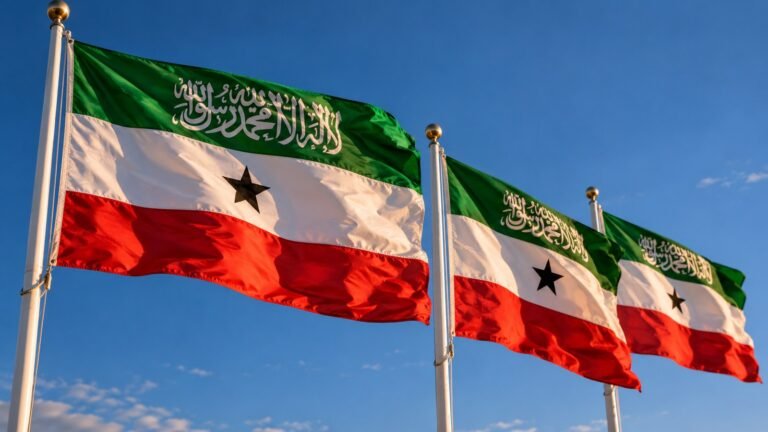
The new state flew a light blue flag with a white star. That flag’s story, and of the wordless 1960 anthem, is told in The Somaliland Flag.
The days were busy. On 27 June, the Legislative Assembly approved a bill to allow the union with Somalia.
How many countries recognised the State of Somaliland?
This is the most quoted fact about 1960, and the figures differ.
- 35 states. The Government of Somaliland says as many as thirty-five states acknowledged its independence. A 2003 Crisis Group report gives the same figure, citing former US ambassador David Shinn.
- 33 states. Wikipedia’s article on the State of Somaliland gives 33 countries, citing a 2010 study in the Emory International Law Review.
- Over 30. A legal research guide published by NYU’s GlobaLex says over 30 countries.
We could not find a full list from 1960 itself. The United States shows why counting is hard. Herter sent his congratulations. Yet the official US diplomatic history says the United States did not extend formal recognition, because Somaliland’s independence was “to be of such short duration”. So “recognition” in 1960 can mean different things in different counts.
1 July 1960 and the Act of Union
On 1 July 1960, the State of Somaliland and the Trust Territory united to form the Somali Republic. How that union was made in law is still debated.
According to the Government of Somaliland, its Assembly approved and signed the Union of Somaliland and Somalia Law on 27 June. On 30 June, Somalia’s assembly approved a different Act of Union “in principle”. On 1 July, the two legislatures met in joint session and elected a provisional president.
The Crisis Group found that the two Acts of Union differed, and that “no single legal document actually bound the two territories”. In January 1961, the National Assembly passed a new Act of Union, retroactive to independence.
Then came a vote. In June 1961, a referendum was held on the new constitution. The SNL leadership campaigned for a boycott, and only about 100,000 northerners voted. More than half of them rejected it. Somaliland’s government puts the “no” vote at 60%.
The legal debate today
Two readings of 1960 sit side by side.
Somaliland’s position. Somaliland sees itself as the legal successor to the State of Somaliland. It argues that the union lacked a legal foundation. A GlobaLex guide by Professor Mohamoud Hussein Farah quotes a 1968 legal study by Cotran. It called the union’s legal validity questionable. In 2026, writing on the EJIL: Talk! blog, the international lawyer Eran Sthoeger argued that Somaliland fits the African rule of keeping colonial-era borders. It lies within the old protectorate’s boundaries.
Somalia’s position. Somalia considers Somaliland part of its territory. In 2026, it condemned Israel’s appointment of an ambassador to Somaliland as a violation of its unity and territorial integrity. Some scholars also reject the view that the union was invalid. In a response dated 2003 in the journal Bildhaan, Abdi Ismail Samatar and Ahmed I. Samatar cite Paolo Contini’s 1969 study. Contini wrote that “a full and lawful union was formed by the will of the people of the two territories”. In their reading, the 1961 Act simply completed the formalities. For the African Union, Sthoeger notes, recognition raises the fear of encouraging secessionist movements across the continent.
For how the two differ in daily life, from currency to visas, read Somaliland vs Somalia: What’s the Difference?
How 26 June is marked today
Today, 26 June is a public holiday in both Somaliland and Somalia. Each side gives it its own meaning.
In Hargeisa, the 65th anniversary in 2025 was marked with a ceremony at the Presidential Palace, with theatre and cultural displays. At midnight, the Somaliland flag was raised and military units saluted. In 2026, the 66th anniversary brought cultural performances and historical exhibitions that ran through the evening.
For Somalia, the day opens Independence Week. In 2026, the information minister said the celebrations would run from 26 June to 1 July. There, 26 June marks the independence of the northern regions, and 1 July the union.
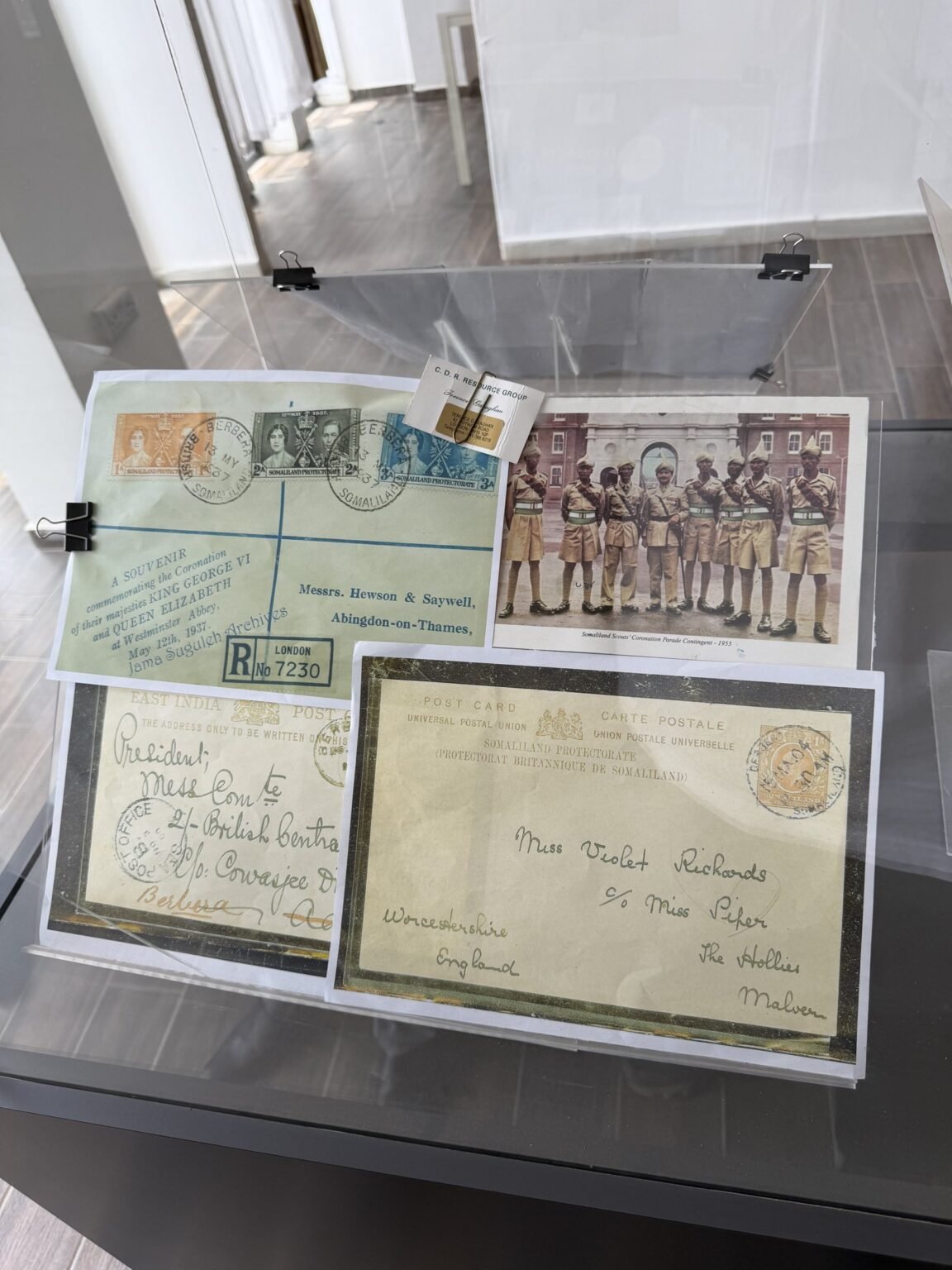
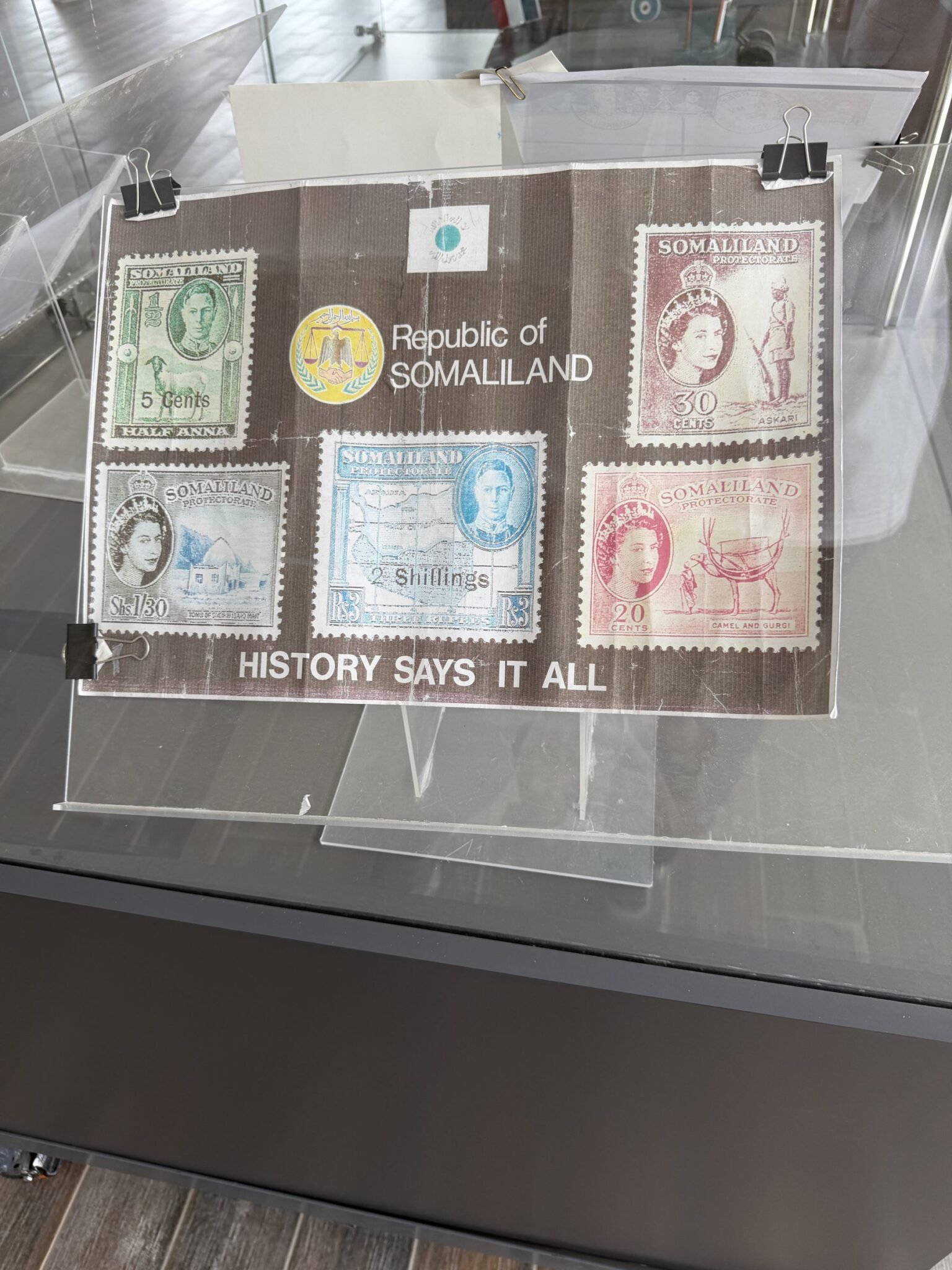
For visitors. Hargeisa’s new museum displays protectorate-era stamps and letters. See them on our first look at the Somaliland National Museum. If you are in town on 26 June, expect flags and evening events. Ask before photographing people, officials or soldiers.
The State of Somaliland lasted five days, but its borders and its date remain central to Somaliland’s case. To see how the story continued in 1991, read 18 May: Somaliland’s Independence Day Explained.
Sources
- State of Somaliland, Wikipedia (accessed 28 October 2026), citing Contini (1969), S.I. 1960/1060, and Farley, Emory International Law Review (2010).
- 1960 British Somaliland parliamentary election, Wikipedia (accessed 28 October 2026), citing Nohlen et al., Elections in Africa (1999).
- Somaliland: Democratisation and its Discontents, International Crisis Group, Africa Report N°66, 28 July 2003.
- The London Gazette, supplement, issue 42074, 24 June 1960 (royal proclamation dated 23 June 1960).
- Somaliland: Agreements and Exchanges of Letters in connexion with the Attainment of Independence by Somaliland, UK Treaty Series No. 44 (1960), Cmnd. 1101, signed Hargeisa 26 June 1960.
- Editorial Note 62, Foreign Relations of the United States, 1958–1960, Africa, Volume XIV, US Department of State, Office of the Historian (accessed 28 October 2026).
- International Relationship, Government of Somaliland (no date on page; accessed 28 October 2026).
- Researching the Somaliland Legal System, Prof. Mohamoud Hussein Farah, GlobaLex, NYU School of Law, May/June 2020.
- The Legality of Recognizing Somaliland, Eran Sthoeger, EJIL: Talk!, 28 January 2026.
- An Alternative Somali Response, Abdi Ismail Samatar and Ahmed I. Samatar, Bildhaan: An International Journal of Somali Studies, Vol. 5 (response dated 12 August 2003).
- Somaliland rejects Government of Somalia’s objection to Israel ties, Dawan Africa, 16 April 2026.
- Independence Day (State of Somaliland), Wikipedia (accessed 28 October 2026).
- Grand celebrations mark Somaliland’s 65th independence anniversary at the Presidential Palace, Goth Mohamed, Somaliland Current, 26 June 2025.
- Somaliland Marks 66th Independence, Reaffirms Sovereignty, Mohamed Duale, Horn Diplomat via allAfrica, 26 June 2026.
- Minister of Information announces preparations for Somalia’s Independence Week celebrations, Somali National News Agency (SONNA), 8 June 2026.
Last checked 28 October 2026. Found an error or something out of date? Tell us.