British Somaliland: A Short History of the Protectorate, 1884–1960
British Somaliland was a British protectorate on the Gulf of Aden for more than seventy years. Here is how it began, what happened under it, and how it came to an end in 1960.
HISTORY · COLONIAL ERA
Many of the things a visitor notices in Somaliland today have roots in the colonial era. Hargeisa is the capital, Berbera is the main port, and the borders follow old lines on a map. All of this goes back to British Somaliland, the protectorate that ran from the 1880s to 1960. Here is its story, told briefly and in order.
Somaliland declared independence from Somalia in 1991 and governs itself. Somalia regards it as part of its territory. Israel (December 2025) is so far the only UN member state to recognise it (see Somaliland’s foreign relations).
British Somaliland at a glance
Here are the basic facts in one place.
| Official name | Somaliland Protectorate |
| First treaties | From 1884, first with the Habr Awal clan |
| Protectorate announced abroad | August 1887 |
| Capital | Berbera until 1941, then Hargeisa |
| Run from London by | The Foreign Office from 1898, the Colonial Office from 1905 |
| Area | About 137,000 km² |
| Independence | 26 June 1960, as the State of Somaliland |
How British Somaliland began
Until 1884, Egypt held ports on the Somali coast. That year, an uprising in Sudan forced Egypt to abandon its Somali territories. Soon after, Britain signed an agreement with the Habr Awal clan that allowed a British presence in Berbera.
More agreements followed. Britain signed treaties with the Gadabuursi, Issa, Habr Awal, Garhajis, Arap, Habr Je’lo and Warsangeli, among others. Under treaties signed in 1886, World History Encyclopedia notes, the Somali people promised not to form ties with other European powers.
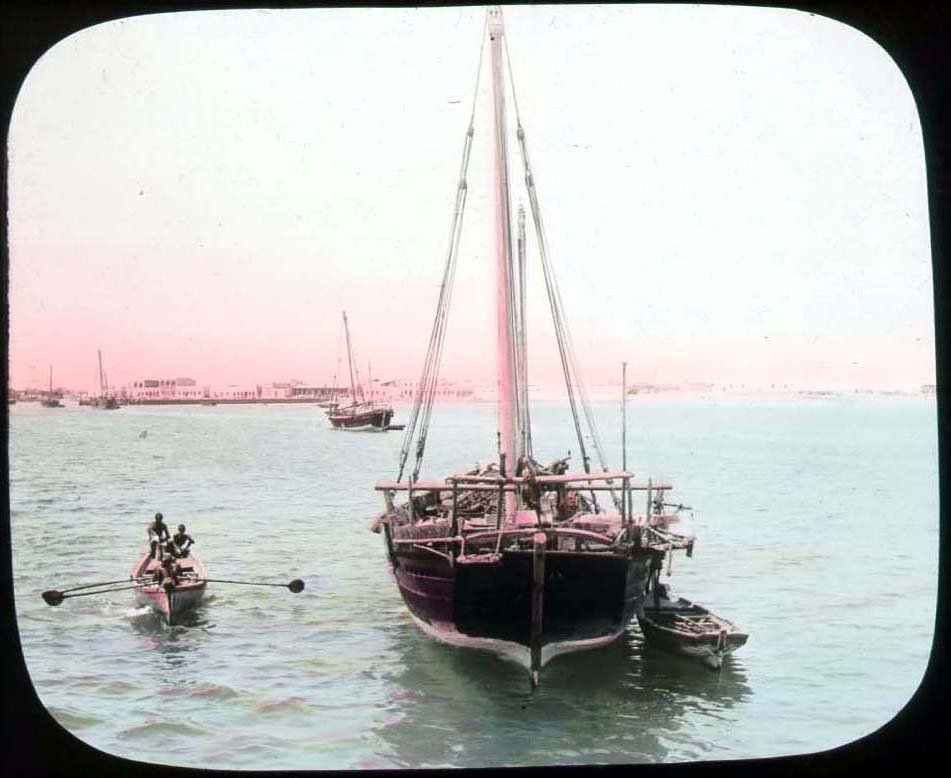
Why did Britain want this coast? Across the gulf lay Aden, a British outpost run from India. The Somali coast supplied it with meat, which earned the territory the nickname “Aden’s butcher’s shop”. The stated aims also included checking the slave trade and keeping other foreign powers out.
In August 1887, Britain told the United States how far its protection reached. It covered the coast from Ras Jiburti, on the Gulf of Tadjoura, to Bunder Ziadeh. Sources date the start differently, though. Wikipedia gives 1884 in its introduction but 1888 later on. World History Encyclopedia gives 1884 for the takeover and 1887 for clearer borders.
At first, the territory was a dependency of British India, run by the British resident at Aden. Vice-consuls were based at Berbera, Zeila and Bulhar, World History Encyclopedia notes, and Berbera was the capital. Control passed to the Foreign Office in 1898 and to the Colonial Office in 1905. The Colonial Office’s Somaliland correspondence at The National Archives starts in that year.
The Dervish wars in British Somaliland, 1899–1920
For twenty years, British rule in the interior of British Somaliland was contested. The challenge came from Mohammed Abdullah Hassan, a scholar, poet and religious leader born in 1856. In 1899 he founded the Dervish movement. Its leaders gathered at Burao in August 1899, and by 1 September they had declared open hostility to the British. Read more in our guide to Burao.
The British called him the “Mad Mullah”, a name Wikipedia describes as pejorative. Several British expeditions failed to end the movement. A peace treaty was signed at Ilig on 5 March 1905, but fighting resumed in 1908. From about 1909, the Dervishes based themselves at Taleh, in the Nugal valley, where they built large stone forts. In August 1913, the British-led constabulary was defeated at Dul Madoba.
The wars were also hard on Somali communities. Wikipedia records Dervish raids on clans as well as British attacks, and British forces burned Burao in 1900.
The 1920 campaign
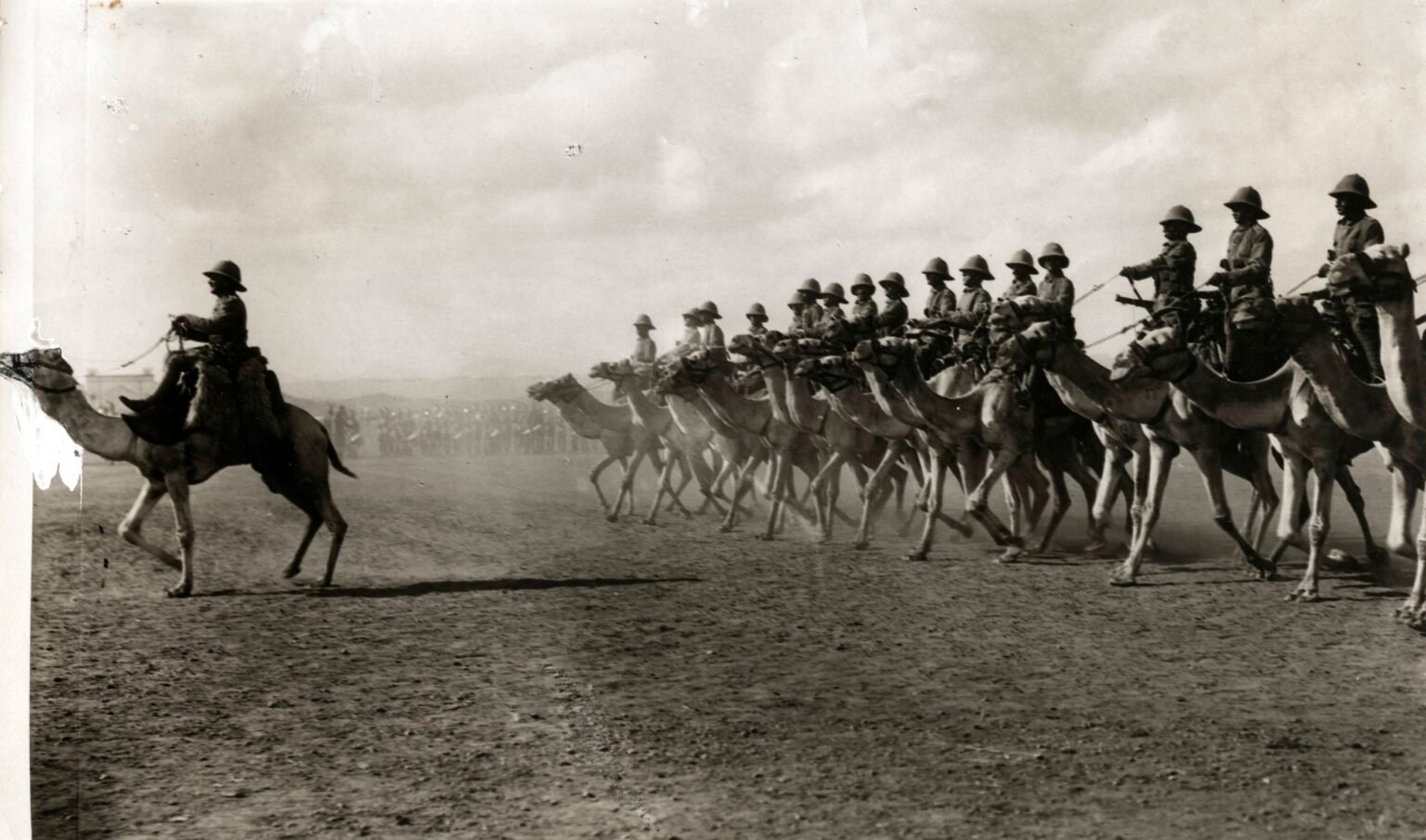
The final campaign came in early 1920. Britain sent “Z Force”, a Royal Air Force unit with 12 DH.9A aircraft, based at a temporary airfield in Berbera. It worked alongside the Somaliland Camel Corps and a battalion of the King’s African Rifles. The British took Taleh on 9 February 1920. Hassan escaped to the Ogaden and died of influenza on 21 December 1920.
According to Wikipedia, the campaign set a pattern of air attacks followed by ground assaults. Today, Hassan is regarded as one of the fathers of Somali nationalism, and he is also remembered as a poet.
Peace did not end every dispute. In 1922, Burao residents rose against a heavy new tax, and a British district commissioner was killed. Aircraft then bombed the town. Afterwards, the British dropped the tax policy.
1940–1941: British Somaliland occupied and retaken
During the Second World War, British Somaliland briefly changed hands. Italian forces crossed the border on 3 August 1940. After the Battle of Tug Argan, fought from 11 to 15 August, British forces left by sea from Berbera. The evacuation was complete by 19 August.
The occupation lasted about seven months. On 16 March 1941, British forces landed at Berbera from Aden in Operation Appearance. The National Archives holds an official photo album titled “Recapture of Berbera by Imperial Forces, March 1941”. Wikipedia’s summary box gives 8 April 1941, however, so the exact date of full recapture is stated differently.
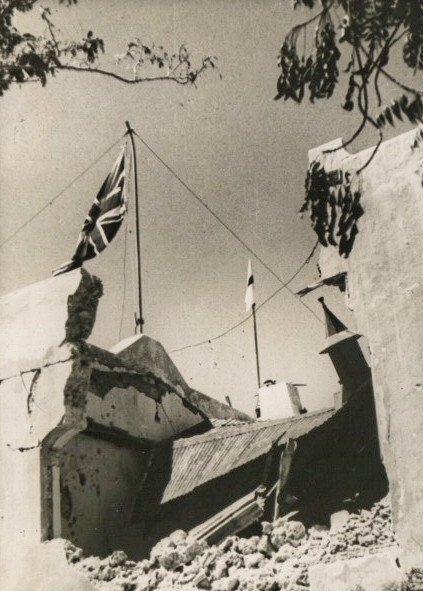
In 1941, the capital also moved inland, from Berbera to Hargeisa. A period of military administration followed until 1948.
The Haud and the Reserved Area
South of the border lay the Haud, wide grazing lands used by herders from British Somaliland. Under an 1897 treaty, Britain regarded these lands as Ethiopian in international law. During and after the war, however, British officials ran them, together with a “Reserved Area” north of Jigjiga. The two areas covered about 65,000 square kilometres, according to the historian Mohamed Trunji.
On 29 November 1954, Britain and Ethiopia signed an agreement ending this British administration. The handover took place on 28 February 1955. Ethiopia undertook to protect grazing rights as far as possible.
The decision caused deep concern in the protectorate. A delegation of two sultans and two politicians travelled to London and New York in 1955. In London, they asked the Colonial Secretary, Alan Lennox-Boyd, to postpone the handover. Sultan Abdillahi called the agreement a “great shock to the Somali people”. Britain replied that it had to keep its international obligations, and Ethiopia declined a delay. To pay for the journey, herders sold 6,500 sheep. Back home, the National United Front campaigned for the return of the lands.
The road to independence in 1960
Self-government came step by step. An advisory council was set up in 1947, and Legislative and Executive Councils followed in 1957. In the February 1960 election, the Somali National League won 20 of the 33 seats. In April, the new council asked for independence and union with the south.
On 26 June 1960, British Somaliland became independent as the State of Somaliland. Five days later, on 1 July, it joined the former Italian-run trust territory to form the Somali Republic. Those five days have a story of their own, told in 26 June 1960: Somaliland’s Five Days of Independence.
Traces of British Somaliland today
The protectorate still shapes Somaliland’s map. Its constitution says the country covers the same area as the former Somaliland Protectorate. It also names Hargeisa as the capital, the city chosen in 1941.
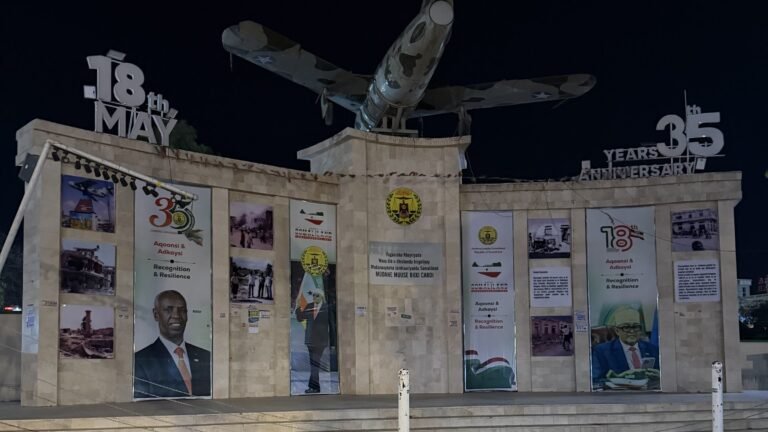
The same chapter dates independence from Britain to 26 June 1960. It then describes independence as regained at the Burao conference of April and May 1991. For how this history divides Somaliland and Somalia today, read Somaliland vs Somalia: What’s the Difference? And to see how the country marks the 1991 date, read 18 May: Somaliland’s Independence Day Explained.
Sources
- British Somaliland, Wikipedia (accessed 28 October 2026).
- Khedivate’s Somali Coast, Wikipedia (accessed 28 October 2026).
- Mr. Porter to Sir L. S. Sackville West, 4 August 1887, Foreign Relations of the United States, 1887, Office of the Historian, US Department of State (accessed 28 October 2026).
- British Somaliland, Mark Cartwright, World History Encyclopedia, 27 February 2026.
- Colonial Office: Somaliland Original Correspondence (CO 535), The National Archives, UK (accessed 28 October 2026).
- Mohammed Abdullah Hassan, Wikipedia (accessed 28 October 2026).
- Burao, Wikipedia (accessed 28 October 2026).
- Fifth Expedition (Somaliland), Wikipedia (accessed 28 October 2026).
- Italian conquest of British Somaliland, Wikipedia (accessed 28 October 2026).
- Recapture of Berbera by Imperial Forces, March 1941 (CO 1069/10), The National Archives, UK (accessed 28 October 2026).
- Hargeisa, Wikipedia (accessed 28 October 2026).
- Somaliland (HL Deb 23 February 1955, vol 191, cc385–7), Hansard, UK Parliament.
- Today in history, February 28, 1955: the disposal of the Haud and Reserved Area, Mohamed I. Trunji, Hiiraan Online, 28 February 2021.
- Haud, Wikipedia (accessed 28 October 2026).
- State of Somaliland, Wikipedia (accessed 28 October 2026).
- Somaliland Independence (HC Deb 25 July 1960, vol 627, cc1068–70), Hansard, UK Parliament.
- Chapter One (Constitution of the Republic of Somaliland, Articles 1–7), Government of Somaliland (accessed 28 October 2026).
Last checked 28 October 2026. Found an error or something out of date? Tell us.