How Somaliland Is Governed: Constitution, Parliament and Elections
The Somaliland government rests on a constitution approved by referendum in 2001. Here is how its three branches work, why only three parties may exist, and how its elections have gone, up to the handover of 2024.
HISTORY · POLITICS
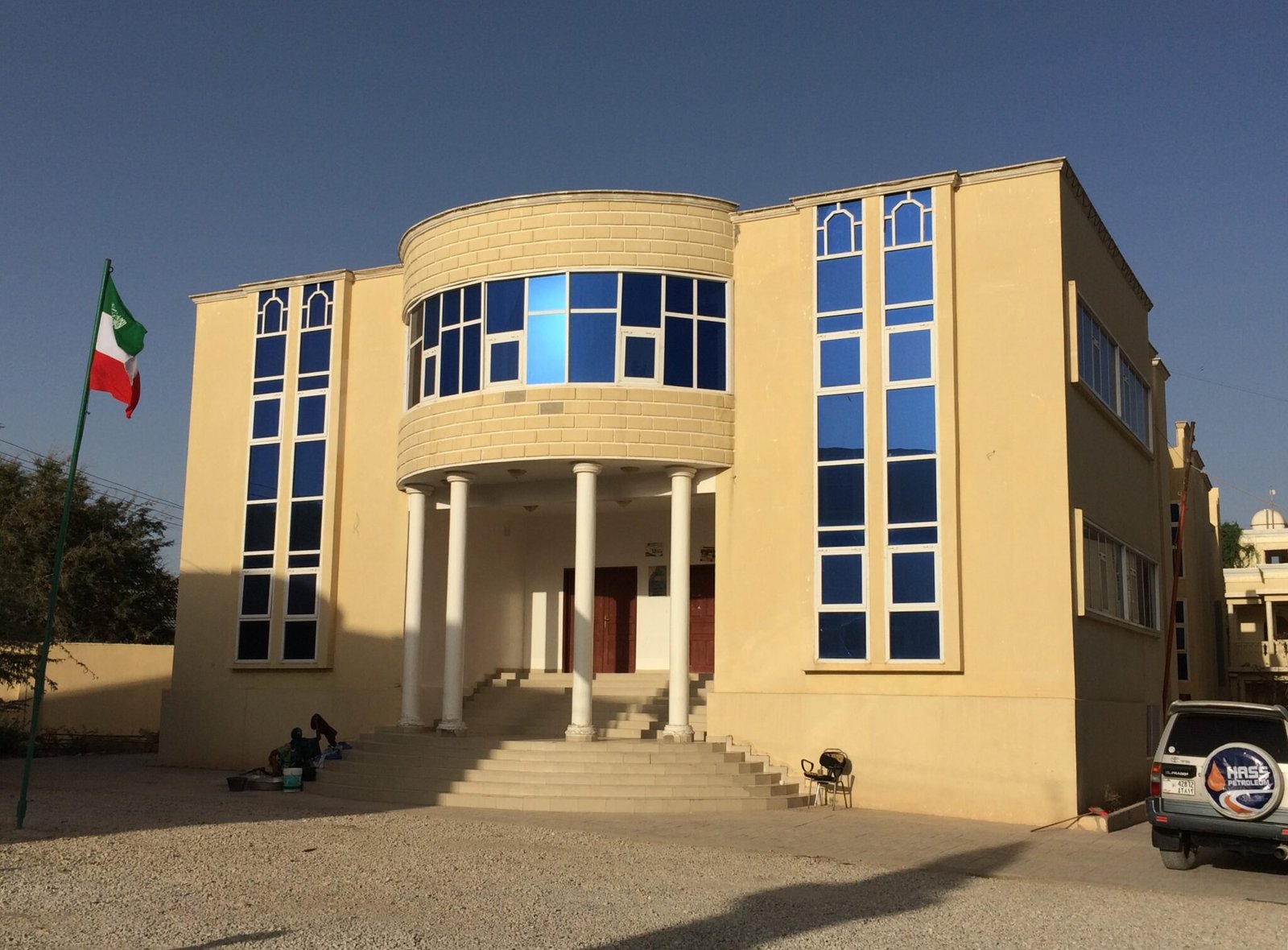
In November 2024, Somaliland voted for a president, and the man in office lost. He conceded within days, and the winner was sworn in the next month. That handover rests on a Somaliland government system built over three decades. Here is how it works, with its strengths and its critics.
Somaliland declared independence from Somalia in 1991 and governs itself. Somalia regards it as part of its territory. Israel (December 2025) is so far the only UN member state to recognise it (see Somaliland’s foreign relations). For how the two compare day to day, read Somaliland vs Somalia.
The Somaliland government at a glance
Here are the main facts in one place.
| Constitution | Approved by referendum on 31 May 2001 |
| Branches | Executive, legislative and judicial |
| President | Five-year term, no more than two terms |
| House of Representatives | 82 elected members, five-year term |
| House of Elders (Guurti) | 82 members, not directly elected |
| Political parties | No more than three |
| President since December 2024 | Abdirahman Mohamed Abdullahi “Irro” (Waddani) |
| Current national parties | Waddani, Kaah and Kulmiye |
The 2001 constitution behind the Somaliland government
The Somaliland government has its roots in 1993. That year, a national conference in Borama turned the clan elders’ council into a formal House of Elders. The elders then nominated Muhammad Haji Ibrahim Egal as president. A written constitution followed later.
Parliament adopted the final text on 30 April 2000, and voters approved it on 31 May 2001. According to the official result, 97.1% voted yes. The same vote endorsed multiparty elections at every level of government. Because the text affirms independence, Wikipedia notes that the referendum in effect also became a vote on independence.
The constitution has 130 articles. It also sets out the national symbols; Article 7, for example, describes the Somaliland flag.
Three branches of the Somaliland government
The constitution divides power three ways. Article 80 states that the executive branch is separate and independent of the legislative and the judicial branches.
The executive. The president and vice-president share a five-year term, and no one may be president more than twice.
The legislature. Parliament has two houses, described below.
The judiciary. The Supreme Court sits at the top. It has a role in elections too: after the 2024 vote, the Chief Justice validated the results on 27 November 2024, domestic observers reported.
Parliament in the Somaliland government: an elected house and a house of elders
The House of Representatives
The lower house has 82 members, elected for five years. Voting uses open party lists, with the six regions as multi-member constituencies.
Only two parliamentary elections have taken place so far. In 2005, UDUB won 33 seats, Kulmiye 28 and UCID 21. In 2021, Waddani won 31, Kulmiye 30 and UCID 21. The two opposition parties then formed an alliance to control the chamber. Crisis Group noted that no women won seats that year.
The House of Elders (Guurti)
The upper house also has 82 members, but they are not directly elected. Seats are allocated by clan and region, and the house has never been re-elected since it was founded in 1993. Its roots lie in xeer, Somali customary law.
The Guurti reviews bills passed by the lower house. If it rejects one, the House of Representatives can pass it again by a two-thirds majority. It has also repeatedly extended the terms of parliament, the president and itself.
Why only three parties?
Under Article 9 of the constitution, the number of parties shall not exceed three, and no party may be based on regionalism or clanism. Crisis Group adds that parties must show at least 20 per cent representation in all regions.
Every ten years, a vote decides which three groups hold the licences. In 2002 and 2012, local elections served this purpose. In 2024, a separate party election ran on the same day as the presidential vote. Three existing parties and seven new political associations took part.
Waddani came first with 33.8%, followed by the new Kaah association (20.6%) and Kulmiye (16.9%). UCID (the Justice and Welfare Party), one of the original three, lost its status, Freedom House reported. The three winners received ten-year licences on 8 January 2025.
Somaliland elections from 2003 to 2024
Somaliland has held four direct presidential elections. Here are the national votes so far.
| Year | Election | Result |
|---|---|---|
| 2003 | Presidential | Dahir Riyale Kahin (UDUB) won by about 80 votes |
| 2005 | Parliamentary | UDUB 33, Kulmiye 28, UCID 21 |
| 2010 | Presidential | Ahmed Mohamed Mohamoud “Silanyo” (Kulmiye) defeated the incumbent |
| 2017 | Presidential | Muse Bihi Abdi (Kulmiye), 55.1% |
| 2021 | Parliamentary and local | Waddani 31, Kulmiye 30, UCID 21 |
| 2024 | Presidential and party | Irro (Waddani), 63.92% |
The 2003 race was extremely close, decided by 80 votes in the count and 214 in the Supreme Court’s figure. Kulmiye rejected the result at first. Its candidate declined to form a rival government, and the party conceded in June 2003.
In 2010, the incumbent lost. Silanyo won close to 50%, and international observers called the vote generally free and fair. At the handover on 27 July 2010, Riyale said: “I solemnly transfer power to the new president, my brother Ahmed Silanyo, who defeated me in the recent elections.”
The 2017 result was disputed. Waddani complained of systematic irregularities, and Kulmiye’s candidate was inaugurated on 13 December 2017.
Iris scans at the ballot box
For 2017, Somaliland registered voters by scanning their irises. VOA described it as the first use of such a biometric system in a national election. The aim was to stop duplicate voting, since paper identification could be forged and ink could wash off. The current register dates from 2016, and between May and December 2023 the electoral commission registered 1,227,048 voters.
The 2024 election and a peaceful handover of the Somaliland government
The 2024 presidential vote was originally due in November 2022. In October 2022, the Guurti postponed it by two years. Voting finally took place on 13 November 2024.
Official results came on 19 November. Irro won 63.92% against the incumbent, Muse Bihi Abdi. Just over half of registered voters took part. Bihi conceded quickly and pledged a smooth transition, wrote the political scientist Scott Pegg for the University of Tartu’s de facto states research unit. Irro was sworn in on 12 December 2024.
Observers gave a mixed verdict. The international mission led by UCL, with 28 observers from 13 countries, found a well-managed and peaceful election day. It also said the process fell short of international standards in several areas, and made 26 recommendations. Domestic observers reported underage voting at some polling stations. Voting did not take place in four eastern districts, including Las Anod, which Freedom House describes as conflict-affected.
The Somaliland government’s record: delays, ratings and the next vote
Delays are a recurring criticism of Somaliland elections. The parliament elected in 2005 served until 2021, a gap of 16 years. Pegg calculates that presidential votes have come about every seven years rather than every five.
In its 2026 report, Freedom House rates Somaliland Partly Free, with 47 out of 100. The 2025 edition had raised the score from 43 after the competitive 2024 vote. The latest report notes that elections have often been postponed and that journalists have come under pressure from authorities.
The 2026 extension
The next parliamentary and local elections were set for 31 May 2026. In February, the electoral commission said that date was not feasible. It cited security, technical challenges and drought, and asked for ten more months. On 28 April 2026, the Guurti went further. With 71 of the 72 members present in favour, it extended the terms of parliament and local councils by 27 months. It lengthened its own term too.
Reactions were divided. President Irro said election delays pose a threat to democracy, political stability, and the international reputation of Somaliland, and urged that the commission’s timeframe be respected. The Kaah party, an ally of Waddani, called the extension detrimental to the national electoral process. Guleid Ahmed Jama, of the Centre for Rule of Law and Good Governance, called the Guurti’s own extension highly unconstitutional.
In July 2026, the president backed a new technology-based voter registration drive and pledged government funding. When we last checked, in late October 2026, no new election date had been announced.
Observers have praised the Somaliland government for peaceful handovers and criticised it for delays, and the next vote will test both. To see the country’s politics at its most festive, read 18 May: Somaliland’s Independence Day Explained.
Sources
- Chapter One (Constitution of the Republic of Somaliland, Articles 1–9), Government of Somaliland (accessed 28 October 2026).
- Chapter Three (Constitution of the Republic of Somaliland), Government of Somaliland (accessed 28 October 2026).
- 2001 Somaliland constitutional referendum, Wikipedia (accessed 28 October 2026).
- Constitution of Somaliland, Wikipedia (accessed 28 October 2026).
- House of Elders (Somaliland), Wikipedia (accessed 28 October 2026).
- 2027 Somaliland parliamentary election, Wikipedia (accessed 28 October 2026).
- 2005 Somaliland parliamentary election, Wikipedia (accessed 28 October 2026).
- 2021 Somaliland parliamentary election, Wikipedia (accessed 28 October 2026).
- Building on Somaliland’s Successful Elections, International Crisis Group, Africa Briefing N°174, 12 August 2021.
- 2003 Somaliland presidential election, Wikipedia (accessed 28 October 2026).
- Opposition leader elected Somaliland president, VOA, 1 July 2010.
- New Somaliland president sworn in, Hiiraan Online, 28 July 2010.
- 2017 Somaliland presidential election, Wikipedia (accessed 28 October 2026).
- To improve trust in elections, Somaliland goes high-tech, Salem Solomon, VOA, 14 November 2017.
- 2024 Somaliland presidential election, Wikipedia (accessed 28 October 2026).
- 2024 Somaliland national political party election, Wikipedia (accessed 28 October 2026).
- Somaliland renews licences for three political parties following elections, Hiiraan Online, 9 January 2025.
- The System Worked: Somaliland’s 2024 Presidential and Political Party Elections, Scott Pegg, De facto states research unit, University of Tartu, 9 December 2024.
- Historic presidential inauguration marks a new era, Somaliland Current, 12 December 2024.
- UCL’s latest International Election Observation Mission to Somaliland launches final report, UCL, March 2025.
- Democracy in Somaliland Continues to Mature: 2024 Presidential and Political Parties/Associations Elections Final Report, Somaliland Non-State Actors Forum (SONSAF), January 2025.
- Freedom in the World 2026: Somaliland, Freedom House (accessed 28 October 2026).
- Freedom in the World 2025: Somaliland, Freedom House (accessed 28 October 2026).
- Somaliland Guurti extends terms of parliament and local councils by 27 months, Kaab TV, 29 April 2026.
- Somaliland elders extend parliament terms, draw criticism, Mohamed Duale, Horn Diplomat via AllAfrica, 29 April 2026.
- Another term extension: Somaliland extends parliament and council terms, Geeska, 28 April 2026.
- Somaliland’s NEC Announces 10-Month Election Postponement, Somaliland Current, 1 February 2026.
- Somaliland president backs modern voter registration rollout, Mohamed Duale, Horn Diplomat via AllAfrica, 6 July 2026.
Last checked 28 October 2026. Found an error or something out of date? Tell us.