Borama: History, Amoud University and the Ruins of Awdal
Borama is the capital of Awdal, Somaliland’s far western region. It is a university town with a long history, from medieval stone towns to the 1993 conference that shaped Somaliland’s government.
PLACES · AWDAL
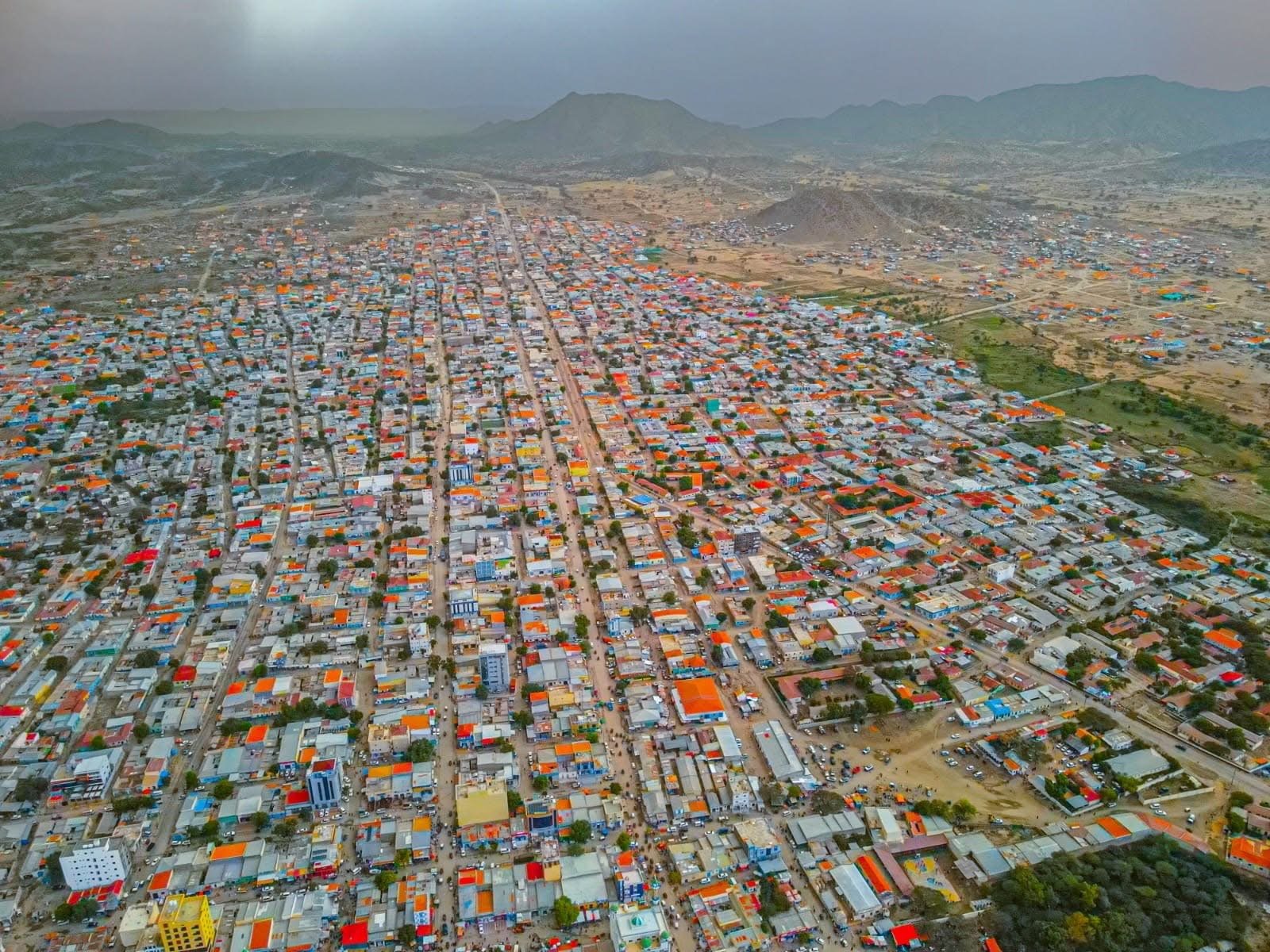
Most visitors to Somaliland stay around Hargeisa and the coast at Berbera. Head west instead, towards the borders with Ethiopia and Djibouti, and you reach Borama. It is a regional capital and a university town, with medieval ruins in the hills around it.
Somaliland declared independence from Somalia in 1991 and governs itself. Somalia regards it as part of its territory. Israel (December 2025) is so far the only UN member state to recognise it (see Somaliland’s foreign relations).
Borama at a glance
Here are the key facts in one place.
| Region | Capital of Awdal, one of its four districts |
| Neighbours | Awdal borders Djibouti and Ethiopia |
| Altitude | About 1,430–1,450 metres above sea level |
| Population | More than 400,000 (UNICEF, 2026) |
| Climate | Hot semi-arid, mild for the region |
| University | Amoud University, founded 1997 |
Location and population
Borama lies in Somaliland’s far west, near the border with Ethiopia. It is the largest city of Awdal, the region that runs from the Ethiopian border up to the Gulf of Aden. Awdal has four districts: Borama, Baki, Lughaya and Zeila.
The town has grown fast. In August 2026, UNICEF reported that its population had grown from about 50,000 to more than 400,000. Estimates vary, though. In 2023, a local report put the city at about 300,000 people.
Growth brought challenges, and water shows how the town has met one of them. Water once came into town on tankers. Today a piped network, run on solar power by day and diesel at night, reaches about 80 per cent of households, the same report says.
A short history of Borama
The area’s history runs deep. In the Middle Ages it was ruled by the Adal Sultanate, whose name lives on in “Awdal”. That state was originally centred on Zeila, the old port on the coast to the north.
The modern town is younger. It was established in 1921, under British direction, and became a district in 1925.
Borama also has a place in the story of written Somali. In 1933, Sheikh Abdurahman Sheikh Nuur, son of the town’s qadi (judge), devised a script for the Somali language. It is known as the Borama or Gadabuursi script, and merchants in Borama and Zeila used it.
The 1993 Borama conference
A turning point came in 1993. After the civil war, clan delegates met in the town. One study calls it the Grand Conference on National Reconciliation. It had 150 voting delegates, and about 2,000 people attended as observers, among them 17 women.
The conference closed in May 1993 with two founding documents. A Peace Charter covered security, including demobilising militias and setting up local police. A National Charter created a two-chamber parliament, with the House of Elders, or Guurti, as the upper house. That gave traditional elders a formal place in the state.
Delegates also agreed on an executive presidency, and Mohamed Haji Ibrahim Egal became president. Sources describe this slightly differently. Wikipedia says the conference elected him, while the Graduate Institute study says the Guurti appointed him in June 1993.
Recent years
Borama’s recent history has also had difficult moments. In December 2025, protests over a planned book launch in Zeila turned deadly, and after talks with clan elders the government halted the launch. Smaller protests followed in May 2026, with no casualties reported.
Amoud University
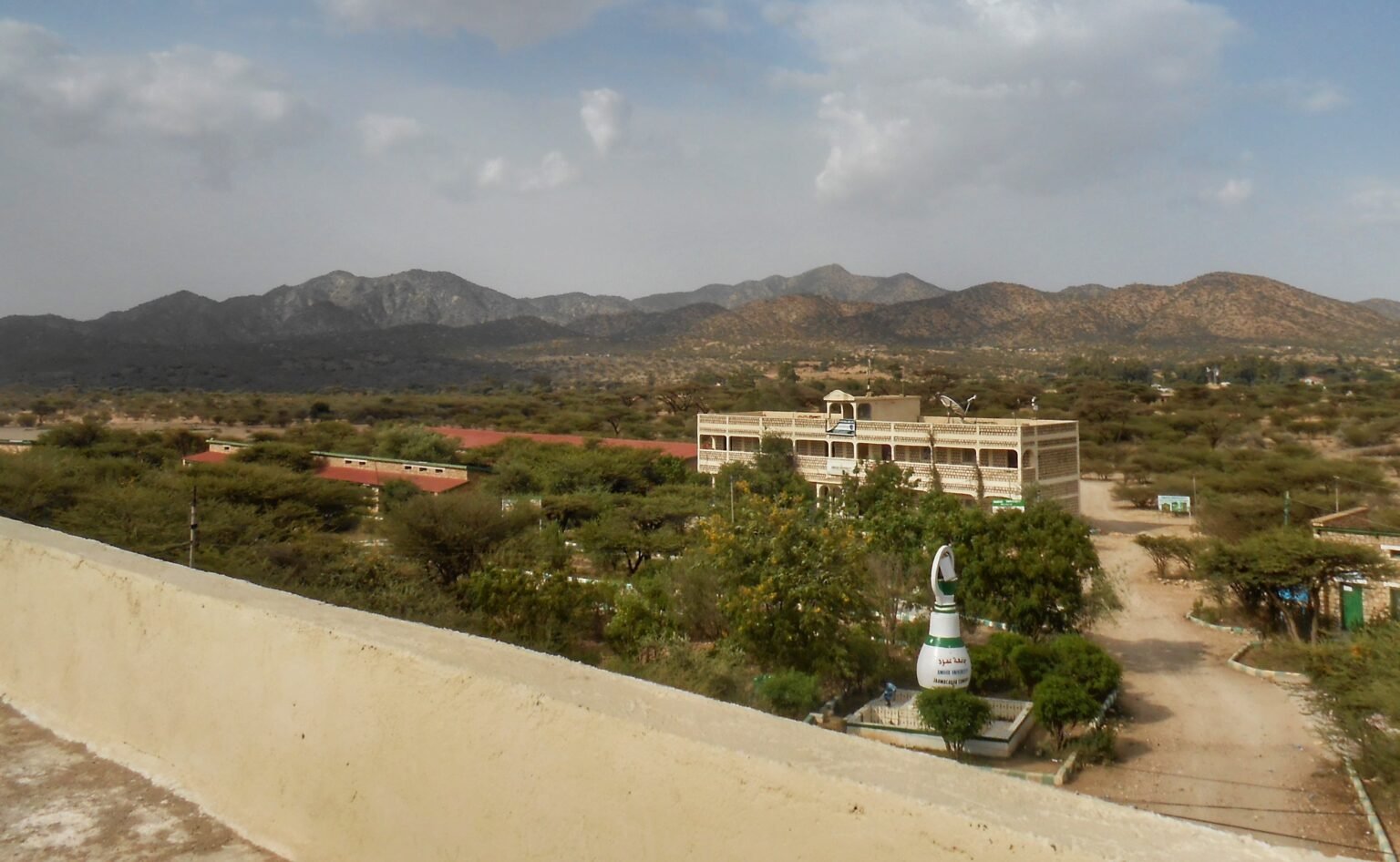
Borama is a university town. Amoud University says it was founded in 1997. Teaching began, according to Wikipedia, on 4 November 1998, with 66 students.
The main campus is in the Amoud valley, about 4.5 km east of Borama. Today the university says it serves over 6,000 students across 14 faculties. Its first medical graduates qualified in June 2007.
Landscape and climate
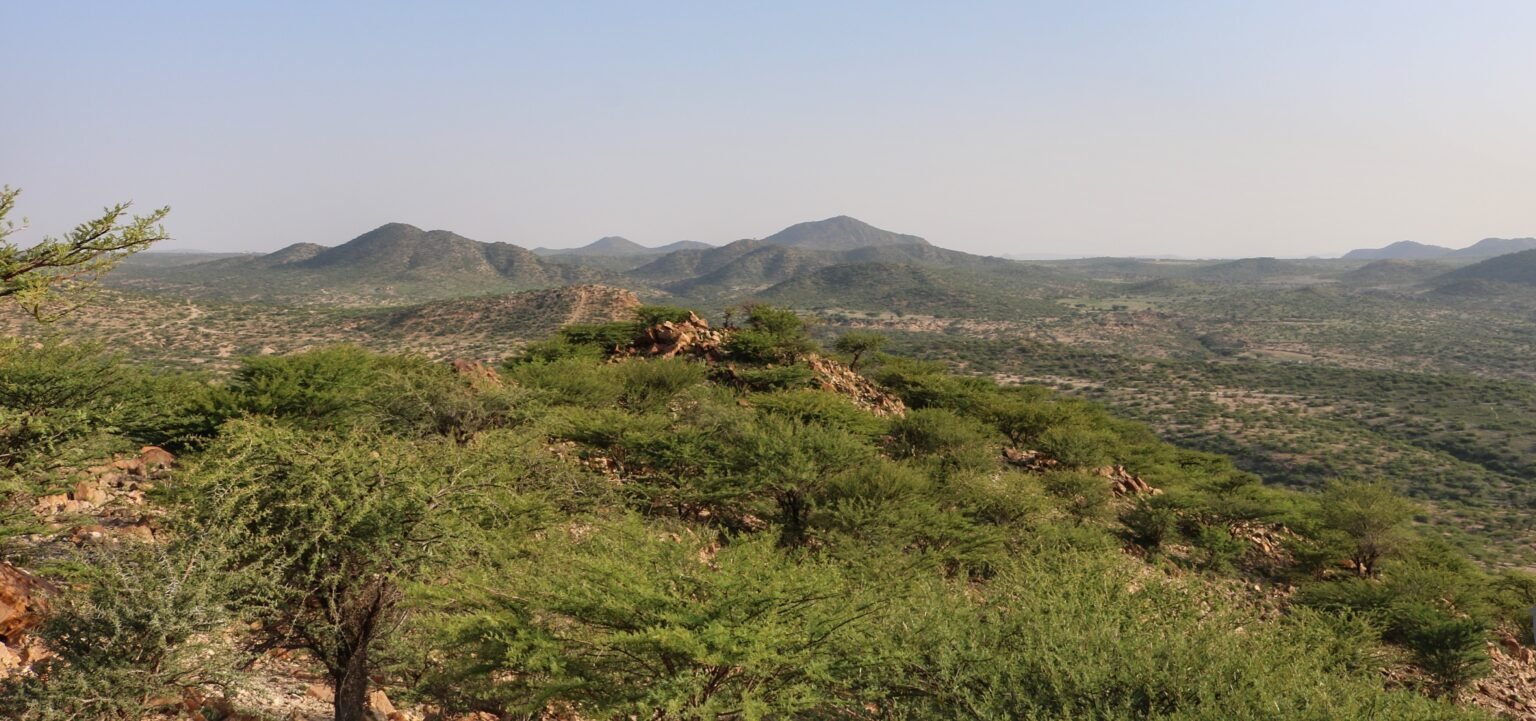
Borama sits high, at around 1,430 to 1,450 metres above sea level. Its climate is hot semi-arid. June averages about 24 °C and January about 17 °C.
Rain is modest, at around 548 mm a year in the figures Wikipedia quotes. December is the driest month, and August the wettest. These are modelled averages from Climate-Data.org, not records from a local weather station.
Ruins near Borama
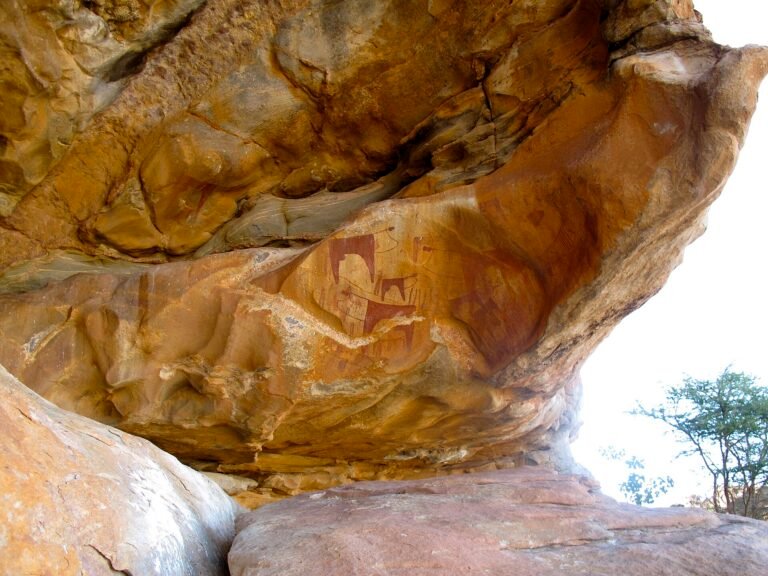
The country around Borama holds important medieval sites. In the words of the explorer Richard Burton, quoted on Wikipedia, the area along the Ethiopian border is abundant with ruined cities.
Amud. This ruined town lies around 10 km south-east of Borama. In 1930, the scholar G.W.B. Huntingford counted more than 200 stone houses, with a mosque and a cemetery. A 2023 study dates the town to around the 13th century and links it with the Ifat and Adal sultanates.
Abasa. This site is about 50 km north of Borama. Its old town once had more than 200 stone-walled houses, and its ruined mosque has large columns. Archaeologists have found Islamic pottery and Chinese sherds from the 14th to 16th centuries there.
Zeila. Borama and the ancient port share a region and a history. Read our guide to Zeila, the ancient port on the Gulf of Aden.
None of these sites has visitor facilities that we could confirm. Go with a local guide arranged through your hotel.
Getting there
Borama’s airport is not in use, though there are plans to revive it. So the way in is by road, usually from Hargeisa. The bus operator Sahal lists Borama among its destinations.
Road travel for foreign visitors works differently from what many expect. Read Getting Around Somaliland before you plan the drive.
Planning your visit
- Base: Many visitors start in the capital. Our Hargeisa travel guide covers where to begin.
- Before you go: Awdal is one of the western regions where most visitors travel. Have a look at the latest UK travel advice and read Is Somaliland Safe?
- Weather: Monthly averages run from about 17 °C to 24 °C, so pack a light layer.
- Etiquette: Always ask before photographing people.
Borama rewards travellers who look beyond the capital. It offers a university town, medieval ruins and a key chapter in Somaliland’s history. From here, the coast at Zeila is the natural next step.
Sources
- Borama, Wikipedia (accessed 28 October 2026).
- 2.8.1 Awdal, COI Report – Somalia: Security Situation, European Union Agency for Asylum (EUAA), May 2025.
- From Water Pans to Household Taps: How a Public-Private Partnership is Transforming Lives in Borama, UNICEF Somalia, 23 August 2026.
- SDF funded Borama Water Supply Expansion Project Commissioned, Horn Diplomat (Mohamed Duale), 12 October 2023.
- Awdal, Wikipedia (accessed 28 October 2026).
- Gadabuursi Somali Script, Wikipedia (accessed 28 October 2026), citing Laitin (1977) and Lewis (1958).
- Women in Peace and Transition Processes: Somaliland (1993), Anne Zachariassen, Inclusive Peace & Transition Initiative, Graduate Institute Geneva, July 2017.
- Somaliland Peace Process, Wikipedia (accessed 28 October 2026), citing Lyons & Samatar (2010) and Ali, Mohammed & Walls (2007).
- Somalia: At Least 19 Killed in Borama Protests, Somaliland Authorities Say, Shabelle Media Network via AllAfrica, 19 December 2025.
- Tension in Borama persists after deadly unrest amid calls for accountability, The Standard (Lilian Mutavi), 7 December 2025.
- Protest Against Somaliland’s May 18 Celebrations Erupts in Borama, Garowe Online, 18 May 2026.
- Amoud University Honors Distinguished Leaders with Professorship Titles at 24rd Graduation Ceremony, Amoud University, 8 September 2025.
- Amoud University, Wikipedia (accessed 28 October 2026).
- Amud, Wikipedia (accessed 28 October 2026), citing Huntingford (1930) and de Torres Rodríguez (2023).
- Abasa, Awdal, Wikipedia (accessed 28 October 2026), citing de Torres (2020) and Chittick (1975).
- Booking, SAHAL Transport (accessed 28 October 2026).
- Somalia travel advice and Regional risks, UK Foreign, Commonwealth & Development Office (updated 4 June 2026; accessed 28 October 2026).
Last checked 28 October 2026. Found an error or something out of date? Tell us.